
Industrial Brush Quotes: Compare the Parts You Will Actually Receive
Compare industrial brush quotes for the same parts, finished quantities, assembly, packing and delivery scope, with a worked sleeve-versus-assembly calculation.
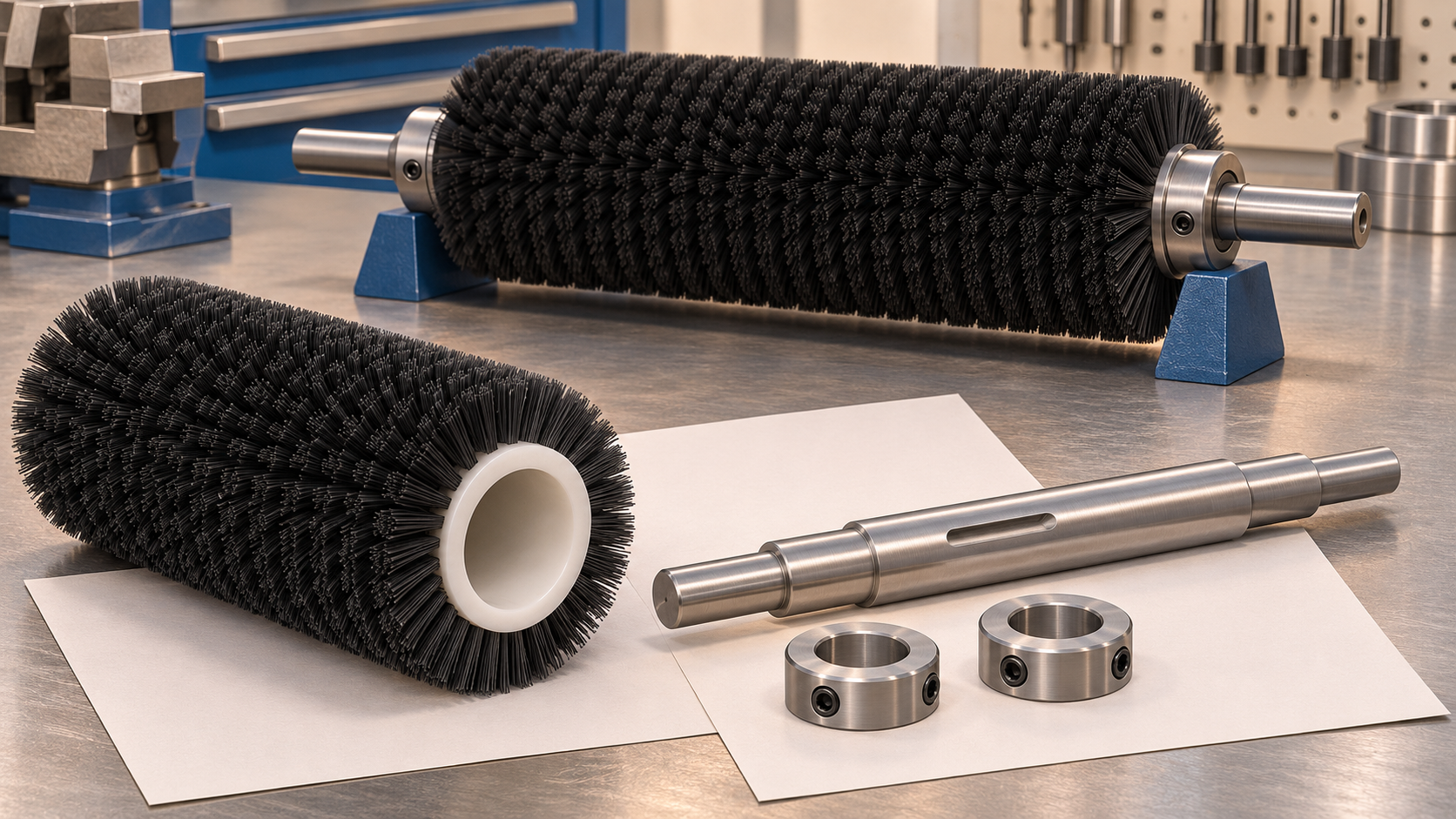
Compare quotations for the same usable supply, not simply the lowest price beside the word “brush.” A sleeve, a complete roller and a set of replacement elements can share a working width while leaving very different work for the buyer. Put the required configuration, included components, quantity unit and delivery scope on one basis before adding the charges.
This becomes important when a shutdown requires four assembled rollers, a door-seal order requires finished lengths, or a replacement coil must be fitted to a retained core. The lowest visible unit price may belong to a different deliverable from the one maintenance expects to install.
Is the price for a sleeve, a complete roller or replacement elements?
Read the physical supply boundary first. A sleeve may provide the brushing surface and mounting bore while relying on a separate shaft. A complete roller may include its shaft and specified end features, but bearings, couplings and mounting hardware still need to be named if required. Replacement strips or coils may arrive as elements that someone must assemble into a retained body.
The price comparison should show who supplies each required component and who performs the associated assembly work. If the buyer retains a shaft, its condition and interface are part of that choice. If a new shaft is required, a sleeve-only price cannot stand in for the complete assembly cost.
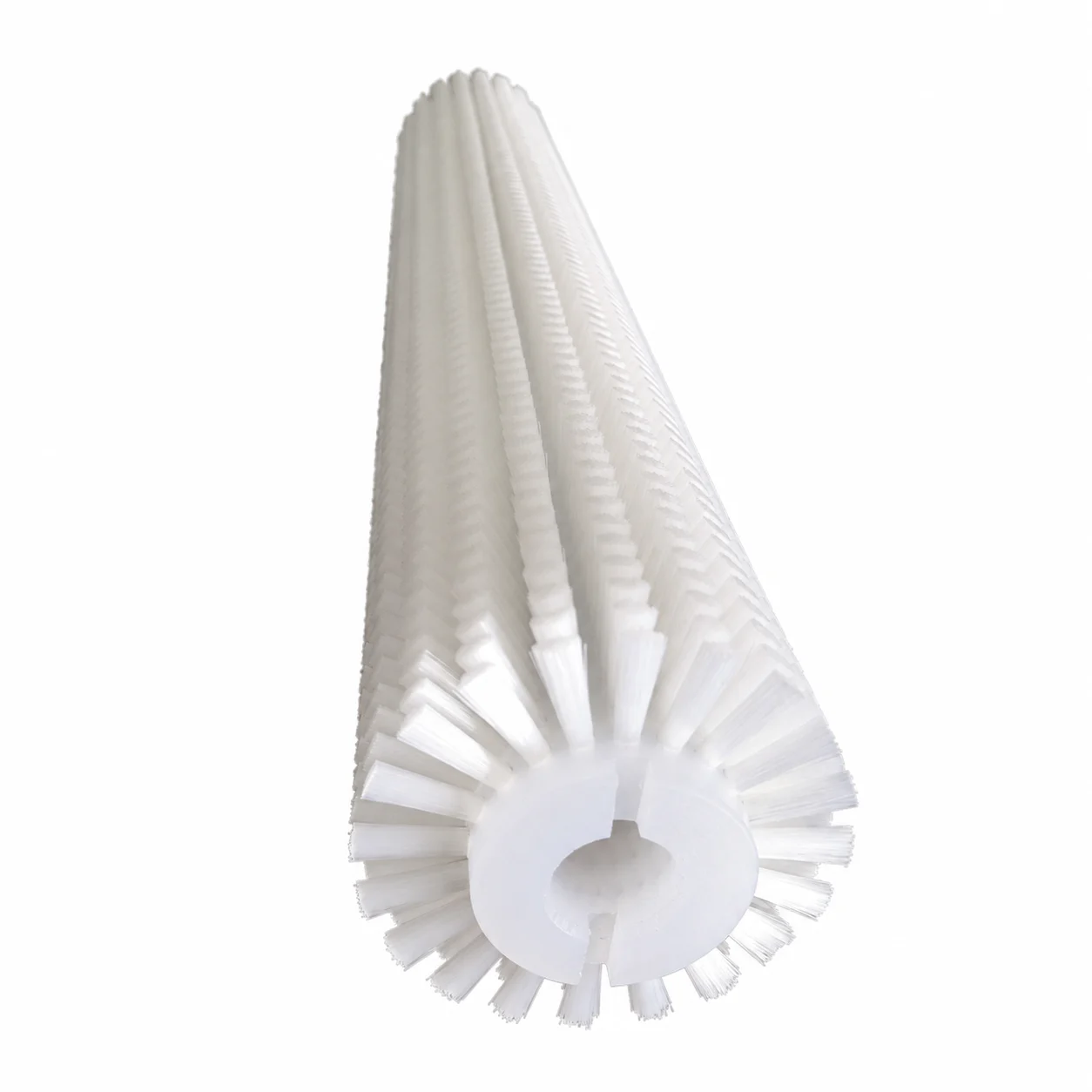
The keyed opening identifies an interface, not an included shaft. The quotation should state which matching components are supplied.
The SB-RL-0013 white nylon roller has a reference 600 mm brush face, 150 mm outside diameter, 90 mm core, 40 mm bore and 30 mm free fill. Its key geometry and axial retention are matched to the shaft drawing. Those fields help define the brush body; they do not make every quote an offer for a complete shaft assembly.
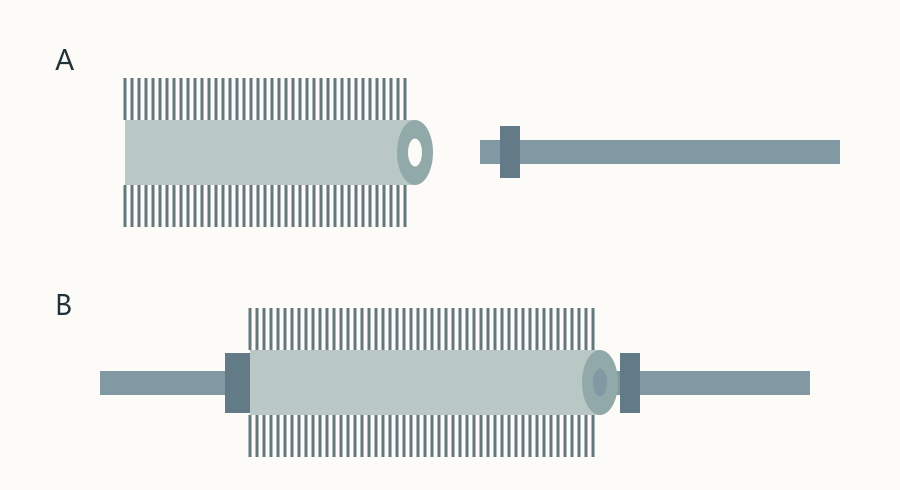
A shows the separate supply elements; B shows the assembled unit. Price the deliverable required by the order, including any assembly and interface checks it needs.
Use the roller supply guide to settle which form is needed. Once that decision is made, ask each supplier to price the same boundary. Otherwise, a comparison spreadsheet may merely put different products side by side.
Do matching outside dimensions mean the brush specifications match?
No. Face length, outside diameter and bore describe important geometry, but they do not define all contact variables. Filament material and diameter, free length, density, tuft layout or winding pitch can differ between offers. A similar white nylon surface can therefore conceal a different construction.
Compare the mounting detail as well. A nominal bore and the word “keyed” do not define key size, position, fit or axial retention. If one supplier prices a standard bore while another includes the required machining, their unit prices cover different work. Ask for the proposed drawing or a clear statement of conformity to the enquiry drawing.
For example, a quote for a long sleeve with the correct overall dimensions may use a different core diameter. The free fill length then changes even if brush outside diameter remains the same. On a strip seal, two offers can share total height while providing different exposed fill because their holders occupy different heights. These are technical differences to resolve before calculating which is cheaper.
Record accepted alternatives explicitly. An alternative can be worth evaluating, but its lower price does not make it the same product. Keep a separate comparison for the proposed configuration and the evidence needed to use it, as described in the replacement substitution guide.
Is the quoted unit a metre, a finished piece or a working set?
Read the quantity unit alongside the dimensions. A per-metre strip price describes supplied length; a finished-piece price may include cutting, end treatment and identification. Ten metres of stock does not necessarily become ten acceptable one-metre parts after the actual cutting and finishing arrangement. The usable output depends on the supplied stock lengths and the required finished pieces.
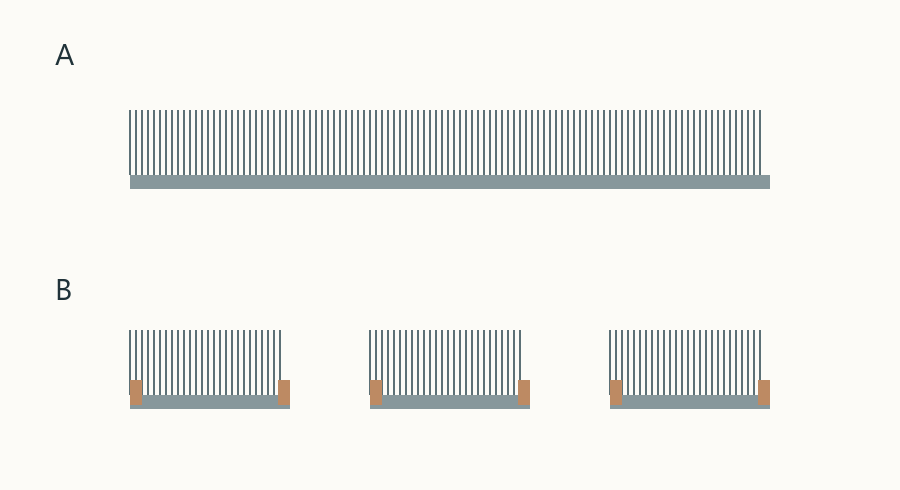
Stock length and finished-piece quantity describe different purchases. The cut layout, end treatment and required output belong in the comparison.
For a set of rollers, define whether one unit means one roller or all positions in the machine. A line may use different left/right or upper/lower configurations that look similar from a general photograph. “Four sets” can mean four complete machine sets or four individual brush bodies unless the order lists the positions.
For replaceable modules, identify whether the price includes the connector, backing or holder. A low element price may be appropriate when the retained components are usable, but it should not be compared directly with a ready-to-install module. Include the number needed to complete one changeout, together with any distinct end or transition pieces.
The enquiry should therefore state a countable output: four complete assemblies to the listed positions, or twelve finished strips at their individual cut lengths. This lets suppliers quote the same requirement without guessing how the buyer intends to divide stock.
Which extra charges change the comparison most?
List charges according to the work they buy. Separate recurring brush supply from one-time setup, tooling or drawing work. Identify assembly, the required inspections or documents, protective packing and freight to a named delivery point. Include taxes or import charges in a final buying calculation where they apply and are established for that purchase.
Do not assume a blank row is free. A quotation may omit a required item because the supplier expects the buyer to provide it. Ask for a revised offer or an explicit inclusion statement. A number borrowed from another order is an estimate, not a confirmed price for the missing work.
Consider the difference between installation checks and application trials. Checking that a sleeve and shaft fit as specified is not the same as evaluating the cleaning result on the buyer's workpiece. If sample qualification is required, show its cost and responsibility separately. This prevents an assembly-inspection charge from being interpreted as full process validation.
Packing also follows the supplied construction. A complete shaft roller and a loose coil can require different supports and protection. The coil packaging guide explains why a strong outer box alone does not define a suitable inner arrangement. Compare the agreed protection for each deliverable rather than a generic “packing included” phrase.
How does a lower sleeve price change after the missing scope is added?
For example, suppose the requirement is four complete assemblies, with the same accepted geometry, fill and receiving requirements. Shaft reuse is excluded. If the quotations contain the following amounts, the comparison is based on these inputs; they are calculation examples, not published Spirvobrush prices.
The same four-assembly requirement | Offer A | Offer B |
|---|---|---|
Four complete assemblies at $280 | $1,120 | — |
Four sleeves at $185 | Included above | $740 |
Four new matching shafts at $55 | Included above | $220 |
Assembly and specified fit checks for the lot | Included above | $80 |
One-time order setup | $80 | Included above |
Agreed packing | Included above | $60 |
Freight to the same named point | $120 | $180 |
Comparable quoted subtotal | $1,320 | $1,280 |
A totals 4 × $280 + $80 + $120 = $1,320. B totals 4 × $185 + 4 × $55 + $80 + $60 + $180 = $1,280. B is $40 lower on this scope. Comparing $185 with $280 alone would hide $540 of the other charges in B and confuse a sleeve with an assembled roller.
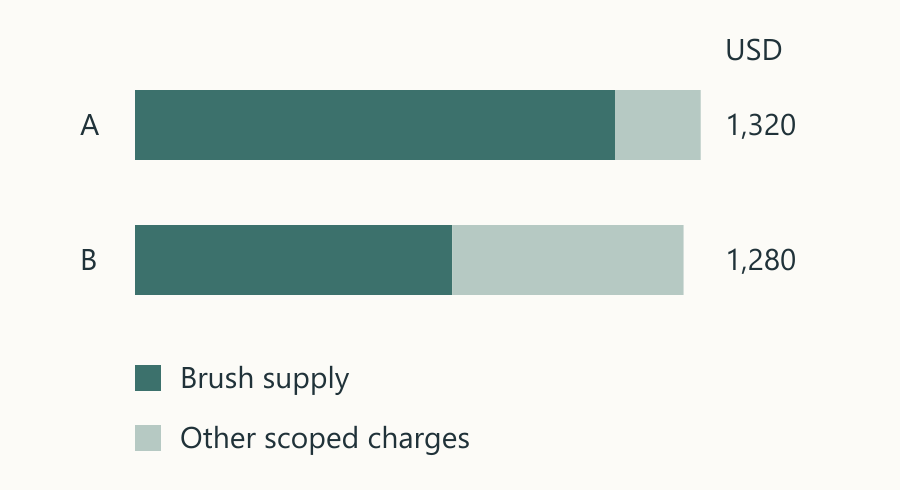
The bars use the table's example inputs. The sleeve line is only part of B's comparable total; the final difference is $40.
This subtotal includes the stated supply and delivery scope. It does not establish taxes, import charges or application qualification costs absent from those inputs. If those items differ between the actual offers, add the established amounts before making the final buying decision. A correct subtotal is useful only when its boundary is clear.
The example also depends on B's shafts, assembly and fit checks being confirmed inclusions at the listed prices. If the real offer leaves those items open, request them. The table's $80 assembly input is not a default allowance to insert into an unanswered quotation.
Should sample and repeat-order prices be compared together?
Keep the sample route visible. Establish whether the sample is an additional unit or one of the production units that may enter service after acceptance. Ask whether special sample or setup charges are credited against a later order and under what conditions. A one-piece development price and a repeat lot price represent different work.
For a new configuration, the sample may require a distinct drawing iteration, material choice or workpiece evaluation. For a repeat order with an unchanged accepted definition, that work may not recur. Compare both suppliers against the actual stage of the purchase rather than assuming that the lowest repeat price includes the first article effort.
If a supplier proposes skipping the sample because a catalogue brush looks similar, examine what remains unproven: fit, contact, protected surface or the represented product range. Conversely, do not automatically pay for a new process trial when the requirement is a documented unchanged repeat. The sample approval guide helps define what the existing evidence covers.
Which date does the quoted lead time start from?
A quoted production period needs a starting event. It may begin after drawing confirmation, sample acceptance or another agreed commercial condition. Two identical “four-week” production estimates can therefore lead to different arrival dates if one offer still requires an unfinished sample stage.
Distinguish production completion, dispatch, transit and usable receipt. A brush arriving before a shutdown is only useful if the required configuration, documents and incoming checks can be completed in time. A quoted ship date does not by itself promise availability at the machine.
For a replacement using a retained core or shaft, include the time needed to make that component available if it must be sent to the supplier. An attractive rebuilding price may depend on return transport and inspection of the existing body. The schedule comparison needs that route as well as the manufacturing period.
State the required arrival point and date in the enquiry. Ask suppliers to show the events that control their schedule. This makes a timing difference concrete instead of reducing it to a vague preference for the offer with the shortest number of weeks.
When can a higher quotation still be the more practical purchase?
A higher comparable price may buy a required supply scope or a delivery route the lower offer cannot provide. The reason should be specific: the complete assembly avoids a separate machining operation, a confirmed arrival meets the maintenance window, or the quote includes the required material evidence. Do not assume that a higher price proves longer life or better cleaning.
Likewise, the lower price can be the right choice when both offers meet the same technical, timing and receiving requirements. In the worked comparison, B is lower by $40 after its extra scope is included. That is a usable price finding, but it does not establish a service-life advantage or a total operating-cost result.
If life, downtime or replacement labour is the deciding issue, use evidence for those items rather than inventing a saving from the purchase price. The brush cost threshold guide separates the price premium from the performance improvement needed to justify it.
What should I send to obtain quotations that are easier to compare?
Send one configuration definition with the drawing and fill specification, the required supply unit, component list, quantities and machine positions. Include the sample requirement, receiving checks, packaging needs, delivery point and required timing. Show retained parts clearly so neither supplier includes or omits them by assumption.
Ask for deviations and exclusions beside the relevant line, plus a separate list of one-time and recurring charges. Then carry the selected supplier's final scope into the purchase order. A clear enquiry to Spirvobrush custom manufacturing should let another buyer reconstruct what was bought without relying on the original sales conversation.