
Long Coil Brush Packaging: Prevent Bent Turns, Snagged Ends and Crushed Fill
Protect long coil brushes with suitable backing supports, movement restraint and end separation. Check local pitch, fill and arrival condition as well as length.
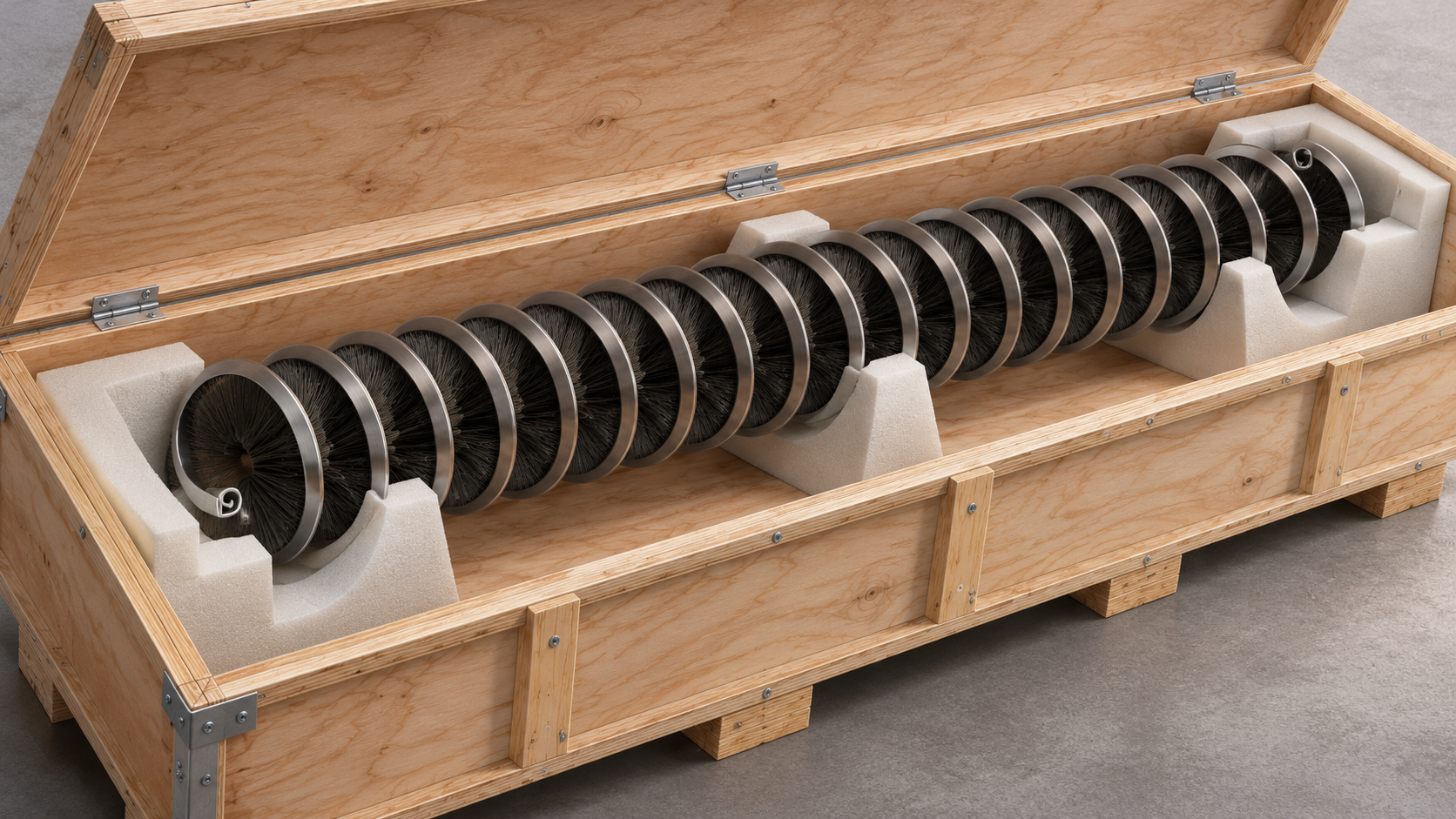
A long coil brush needs packaging that carries its metal backing, limits movement and keeps the working filaments clear of neighbouring parts. A strong outer crate alone cannot do those jobs. If the brush can slide inside, if a strap squeezes its turns together, or if loose ends hook into the next coil, the delivered shape can change while the carton still looks intact.
The right arrangement depends on whether the shipment contains a free-standing inward coil, a separate outward coil or a complete brush roller with a rigid core and shaft. Start by identifying that construction. Then protect the features that must still fit the holder and contact the workpiece when the brush arrives.
Why is a loose coil harder to pack than a brush roller?
A roller with a rigid core has structural surfaces that can carry its weight when the packing is designed for them. A separate coil may have no such central member. Its formed channel establishes the helical shape, while the filaments provide contact. Treating both products as cylinders and binding them tightly to the same type of pallet can put force into very different parts of the brush.
An inward coil has its fill inside the channel envelope. That can make the outside backing accessible for a shaped support, but it does not make the whole coil rigid. An outward coil has working filaments outside its channel; placing it directly on a flat base can load the tips instead of the backing. A core or transport fixture may be needed to provide an appropriate load path for the particular outward construction.
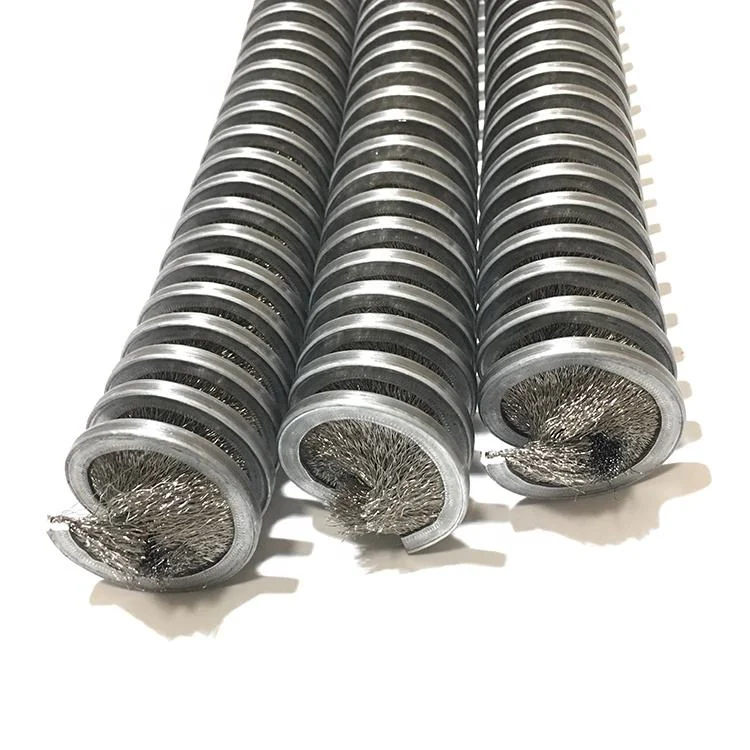
The continuous channels and exposed ends explain two packing concerns: shape support along the length and separation between pieces. This product photograph shows the construction, not a shipping layout.
The SB-SC-0012 inward steel-wire coil is listed with a 60 mm reference outside diameter, 5 mm channel width and 10 mm pitch; axial length is custom. Its close-centre fill is not a rigid bore that can automatically accept a packing mandrel. A rod pushed through that fill may change the working profile unless it is part of an arrangement designed for the ordered brush.
For an outward coil, establish whether a core travels with it. The coil-versus-complete-assembly buying guide explains that supply boundary. Packaging should follow the part actually supplied, rather than an assumption that every cylindrical brush includes a shaft.
Where should a long inward coil be supported inside the crate?
Use the intended structural surfaces and distribute support along the ordered length. A shaped cradle beneath the outside channel can prevent the entire weight from resting on a few turns. Its contact width, lining and position must suit the channel profile. A hard narrow edge under one turn can concentrate load; a broad but poorly shaped pad can still push the coil into an oval section.
Look along the length as well as at the end view. Long unsupported spans allow the coil to sag or move relative to adjacent supports. Support only at the ends may leave the middle exposed to bending during handling. Conversely, supports positioned at arbitrary intervals can catch the channel at unsuitable points. The layout needs to follow the actual coil, not a universal rule such as “one block every half metre.”
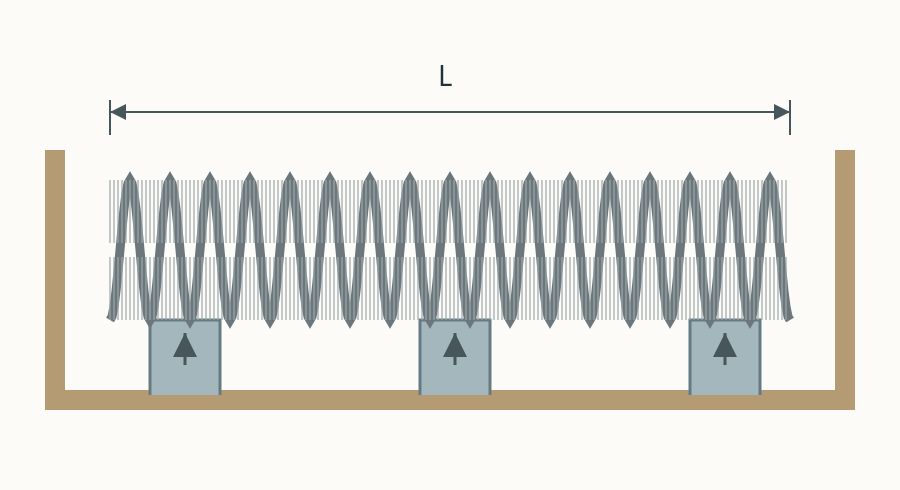
The supports carry the outer backing at selected zones. Their number and spacing depend on the ordered construction; the drawing shows the load path rather than a universal packing specification.
For example, a long narrow coil supplied without a rigid core needs support against lengthwise distortion. A short formed ring may instead need a recess that preserves its circular backing and isolates the split ends. The same foam block is not automatically suitable for both. Ask for a packing view that makes the contact surfaces visible before the lid conceals them.
How can the brush be restrained without crushing the bristles?
Support and restraint solve different problems. The support carries the part; restraint limits its movement when the package changes direction or orientation during handling. A coil resting neatly in cradles can still slide lengthwise and strike the end wall. Tightening a strap until it cannot move can introduce a new problem if the strap compresses the coil or bears on working fill.
Use the specified backing, core or fixture as the restraint interface. On an inward coil, ensure a band cannot fall between turns and hook the channel. On an outward coil, a band around the brush face presses directly on the filaments unless a suitable protective arrangement carries the load elsewhere. Describe where the restraint reacts against the part, not merely the number of straps.
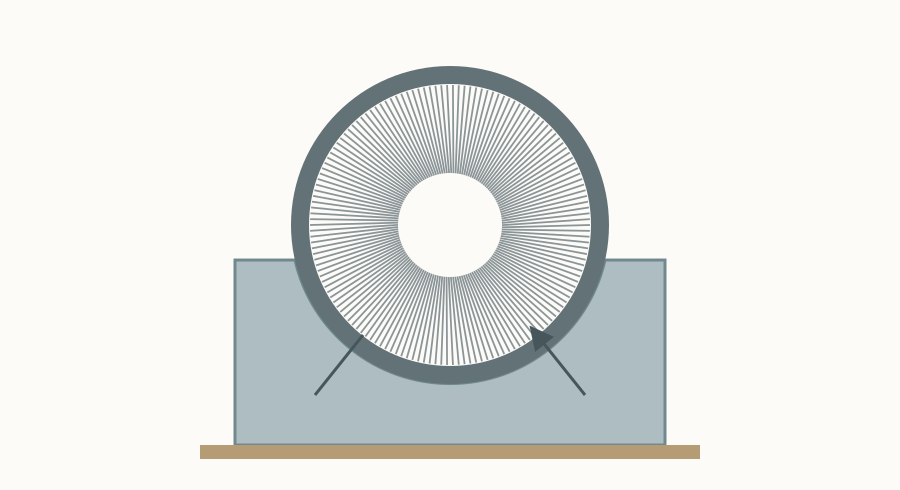
The grey outer ring represents the backing; the inward strokes are the working fill. A shaped support contacts the outside, leaving the centre and bristle tips free.
Consider a shipment containing several coils of different lengths. If the shorter piece can move within a shared compartment, it may strike the longer one's ends despite both being wrapped. Individual compartments or suitable separators can address that relative movement. Simply filling the unused space with loose material may hide the ends without controlling where the force goes.
The package should also open without dragging restraints across the fill. Make the release points accessible and identify any lifting or support arrangement that belongs to the pack. The receiving team should not have to pull on a channel end to discover how the brush is held.
Why do the two channel ends need their own protection?
A channel end is both a fit feature and a snagging point. It can hook into neighbouring brush fill, catch a sleeve during removal, or bear against a crate wall. If the end is bent while separating two coils, the damage may occur after an otherwise uneventful journey. Protect each end while keeping it identifiable for unpacking and inspection.
Separate neighbouring pieces so that their ends cannot interlock. For a loose inward coil, avoid nesting one exposed end into another coil's working opening. For an outward coil, avoid laying exposed backing ends against adjacent filaments. A divider must stay in position; a thin sheet that shifts away from the contact point provides little separation where it matters.
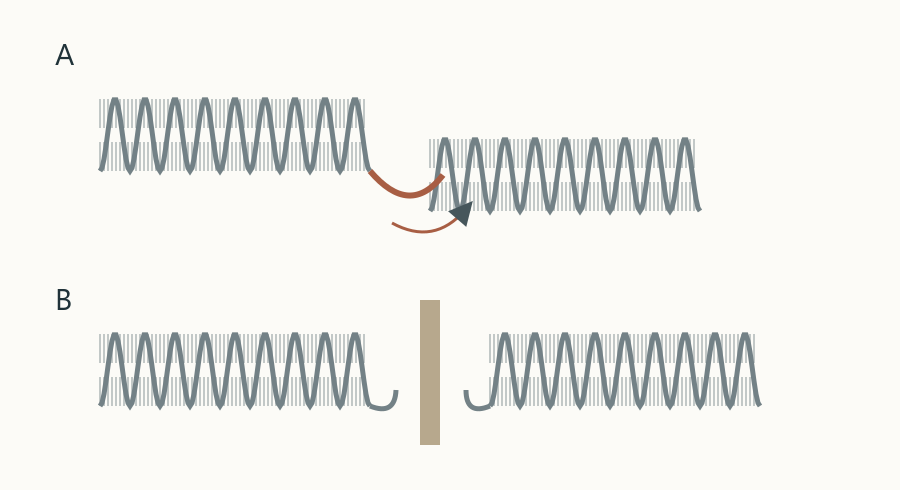
A shows the route by which one end can catch a neighbouring brush. B keeps the ends in separate spaces. The useful feature is separation at the end, not extra wrapping over an entanglement.
A sleeve can be useful when it fits the construction and can be removed without pulling across exposed ends. It should not force an end to lie flat merely to close the pack. Likewise, end protection should not conceal which way the brush is oriented if the ends differ. Mark the relevant end on the part identification or packing drawing so the receiver can relate it to the holder.
Can moisture or packing material create a problem during storage?
Brush condition includes more than shape. Moisture, process residue or incompatible contact material can affect the channel and fill during storage. Choose the wrapping and corrosion-protection arrangement for the specified metals, expected transport and storage conditions. “Steel wire” alone does not identify the grade or establish a universal storage treatment.
A recently washed part enclosed while moisture remains trapped is a different packing problem from a dry part shipped in a controlled inner pack. Similarly, a brush intended for a cleanliness-sensitive process should not arrive with loose fibres or particles embedded in its working face. Describe any restrictions on oil, loose padding or surface residue with the order so the packer can choose suitable materials.
For a replacement held in stores for a later shutdown, make the identification visible without repeatedly opening the protective pack. Include the brush configuration, quantity and order reference. If several openings or fill materials look alike, a generic label such as “coil brush” invites the wrong item to be unpacked or installed. Storage orientation should preserve the intended support rather than leave the coil standing on an unprotected end.
What should be checked before the crate is closed?
Ask for a view of the full packed arrangement and a closer view of each end. The photographs should show supports, restraints, dividers and the part identification. A photograph of the closed crate cannot show whether the coil is suspended between supports or touching another brush inside.
Dimensional checks should use the condition defined for that part: resting on specified supports, fitted to a defined fixture, or otherwise located as shown on the drawing. Do not compare a free-resting flexible coil at dispatch with one pulled straight by hand at receipt. The difference in measurement conditions can obscure what actually changed during transport.
For a long coil, distinguish overall axial length, outside envelope, local pitch and end orientation. One tape-measure reading cannot describe all four. In an inward brush, also preserve the specified free-opening reference; do not replace a fine or close-centre fill description with a rigid plug dimension that was never ordered.
Feature | What the check explains | What it does not establish alone |
|---|---|---|
Overall axial length | Whether the two defined end references remain correctly spaced | Whether every local turn retains its pitch |
Outside envelope | Whether the coil can occupy its intended holder space | Whether the working opening or fill is correct |
Local turn spacing | Whether a region has closed up, stretched or shifted | Whether both channel ends are correctly formed |
End position and shape | Whether the locating features remain usable | Whether the brush performs the required cleaning task |
The supplier's dispatch views and the receiver's checks should refer to the same part and drawing. For a mixed shipment, identify each configuration separately rather than photographing one coil as evidence for every item in the box.
The total length is correct—can individual turns still be damaged?
Yes. One section can close up while another opens out, leaving almost the same overall length. A kink can also be local enough that the end-to-end reading barely changes. This is why a correct label and total length do not establish that a coil will sit correctly throughout its holder.
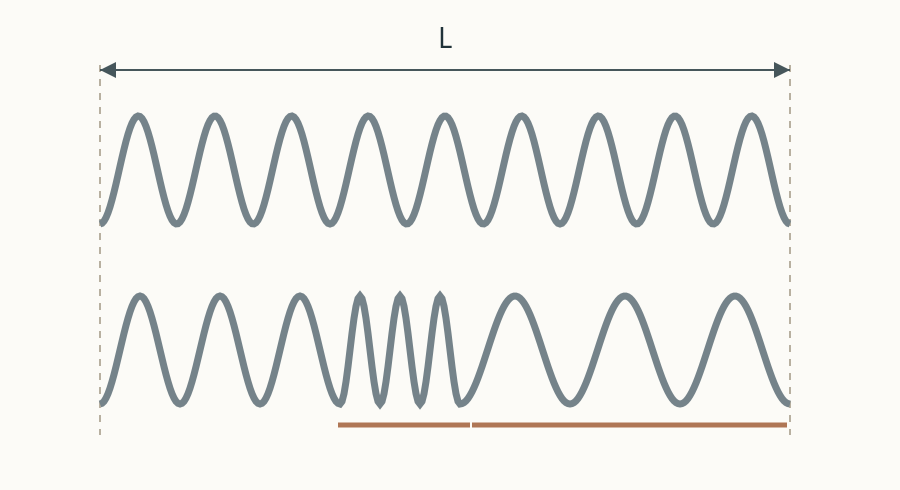
Both outlines occupy the same axial span. The lower example contains a crowded region and an opened region, so overall length alone misses the change.
For example, if one restraint has shifted into the turns during transit, the nearby channel may be displaced even though both ends remain in their original compartments. Compare the affected region with the adjacent turns and with the drawing's specified geometry. Record its position from a defined end so the supplier can find the same region in photographs and measurements.
Another situation is a coil that looks bowed when supported differently after unpacking. Place it in the defined inspection condition before deciding that the shape has permanently changed. Flexible resting behaviour and a damaged channel are not the same diagnosis. A visible crease, displaced end or crushed working fill deserves its own close view rather than being reduced to “length within tolerance.”
How should a questionable shipment be unpacked and assessed?
Look at the outer package before moving its contents. Then examine the internal arrangement as it is found: displaced supports, a loose separator, end-wall contact or a restraint that has moved. These observations can help explain the location of damage, although they do not prove the cause by themselves.
Release the package using the intended support and handling method. Keep the whole coil supported as it comes out; lifting a flexible long part by one exposed end changes the load condition immediately. Avoid pulling turns apart, squeezing the coil to its nominal length or bending an end back before its delivered condition has been assessed.
Compare the part with the agreed drawing and receiving requirements. If a feature is outside those requirements, separate the affected unit and send its identity, measured feature and photographs to the supplier. A clear message is “the channel end at the labelled inlet side is displaced toward the opening,” not simply “the brush looks bent.” Any re-forming proposal should address whether the original channel, fill retention and required geometry can be restored and checked.
Receiving inspection confirms the delivered configuration. It does not replace the workpiece and holder checks described in the inward-coil sizing guide or the changeout guide. Keep those questions connected without asking the packing crate to prove application performance.
What packaging details belong in the purchase enquiry?
Send the coil drawing and identify whether the part travels alone, on a supplied core or as a complete roller. State the ordered length and quantity, configurations sharing the shipment, transport method, storage conditions and any cleanliness or corrosion-protection restrictions. Show the channel ends and the surfaces available for support.
Ask for a packing arrangement that identifies support contacts, axial and lateral restraint, separation between pieces, end protection and the way the package opens. Include the receiving measurement condition so both parties compare the same geometry. These details give Spirvobrush custom manufacturing a practical basis for matching the inner pack to the brush rather than selecting an outer box from length alone.