
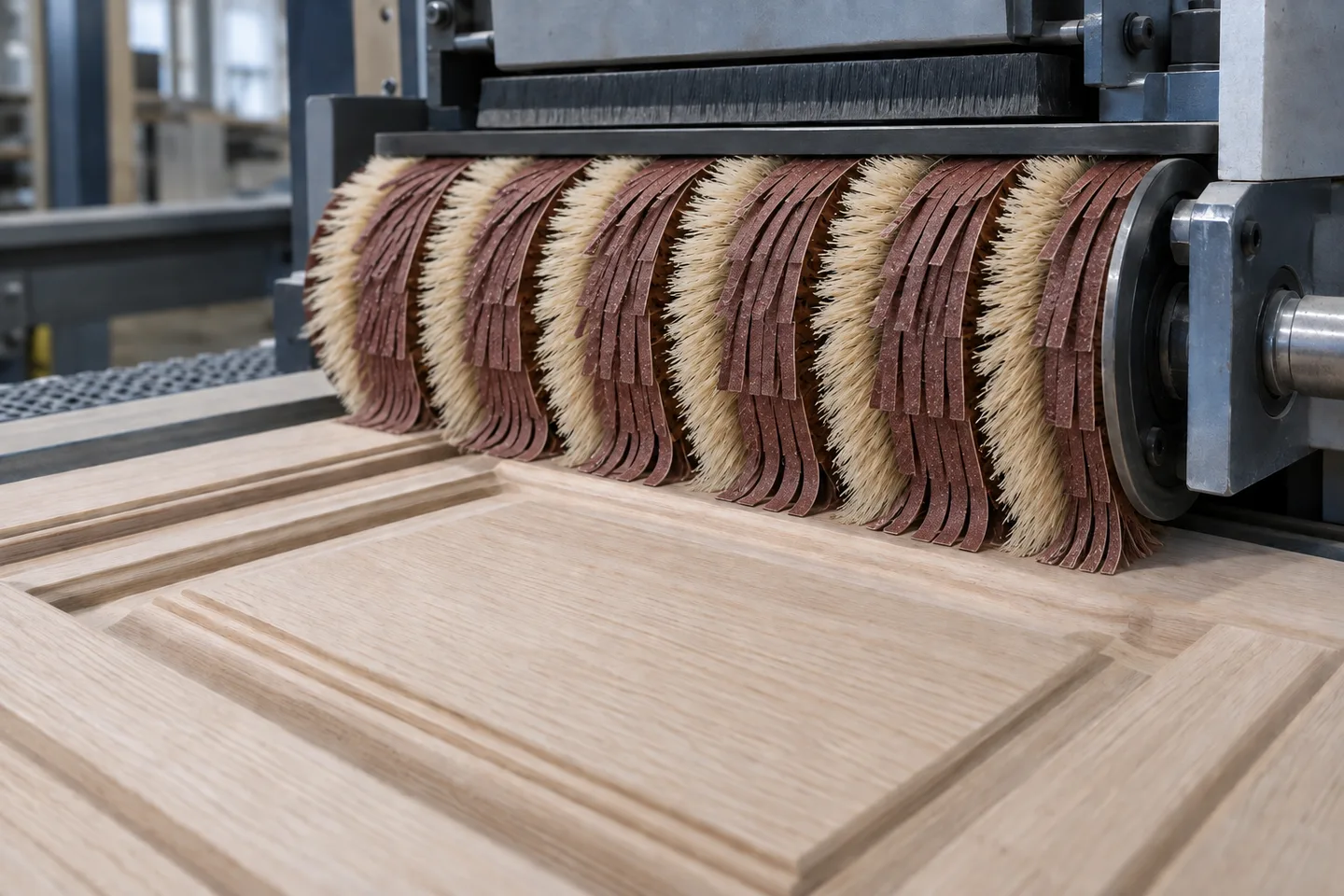
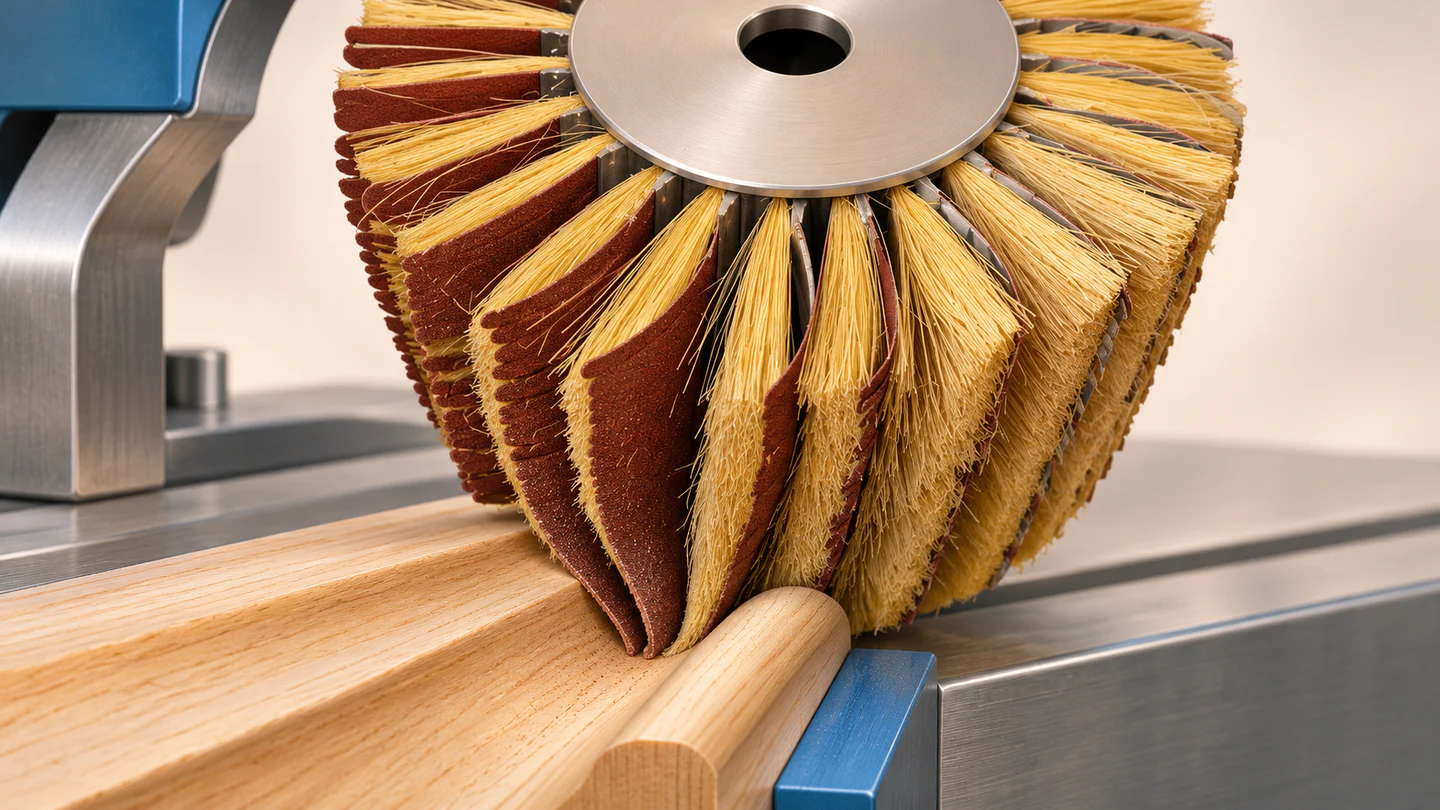
How Do You Choose a Sanding Brush for a Profile Without Damaging Its Edges?
Choose a profile sanding brush by checking groove access, edge retention and face finish. Compare raw wood, sealer coats and vulnerable veneer on real profiles.
Read articleArticles on choosing sanding brushes and replacing brush-backed abrasive strips for wooden door panels and profiles.
Choose a profile sanding brush by checking groove access, edge retention and face finish. Compare raw wood, sealer coats and vulnerable veneer on real profiles.
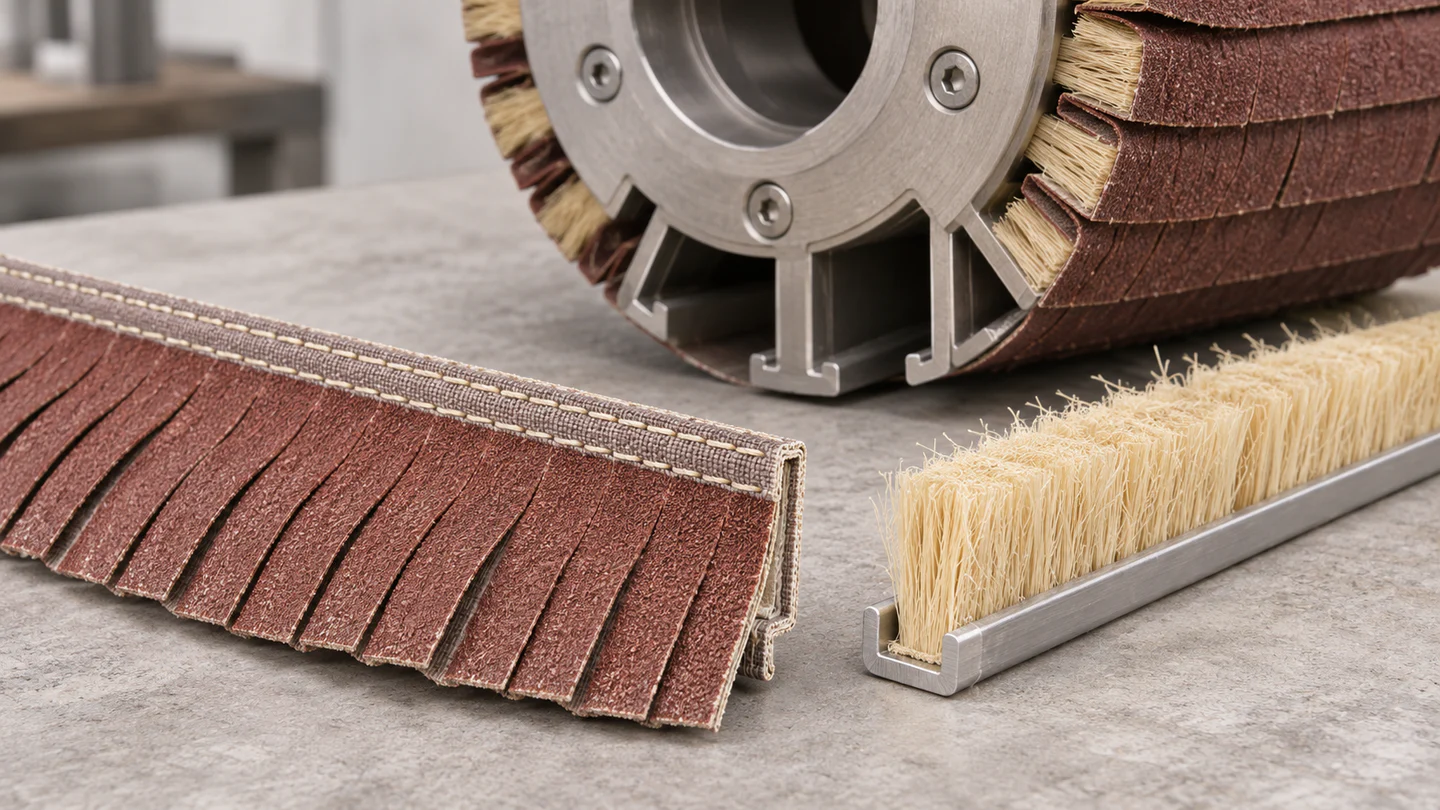
Read articleMatch sanding-strip mounting edges, exposed abrasive and sisal support to the retained head. Distinguish fit, profile access and complete spare sets.
Read articleIf the head and mounting parts stay in service, start with a strip replacement enquiry. If the head is new or also being replaced, include the complete roller interfaces and state which parts are required.
No. Include the abrasive length and cuts, support-brush height, backing, head arrangement and workpiece profile with the grit.
Length is only one check. Confirm the backing cross-section, groove, retaining method and working projection against the actual head.
Use a representative panel that includes a broad face, a recess and an edge transition. State the initial condition, intended next operation and acceptable result.