How to Measure an Industrial Door Brush Seal That Reaches the Gap and Lets the Door Move
Measure uneven door gaps, holder offsets and door travel. Choose insert or complete brush-seal supply and order the finished lengths each opening needs.
Measure the opening, the brush mounting position and the door's travel together. A brush that reaches the widest closed-door gap can still drag across a raised threshold as the door opens. A replacement with the correct exposed filament height can also miss the surface if its holder places the filament roots somewhere different.
For an ordinary industrial door or machine guard, begin with the location of the unwanted gap: bottom, side, top or meeting edge. Then decide whether the existing holder can remain. Those two choices determine the measurements needed for a useful quotation. The aim is a defined brush-and-mounting arrangement that maintains the intended coverage without obstructing the required movement.
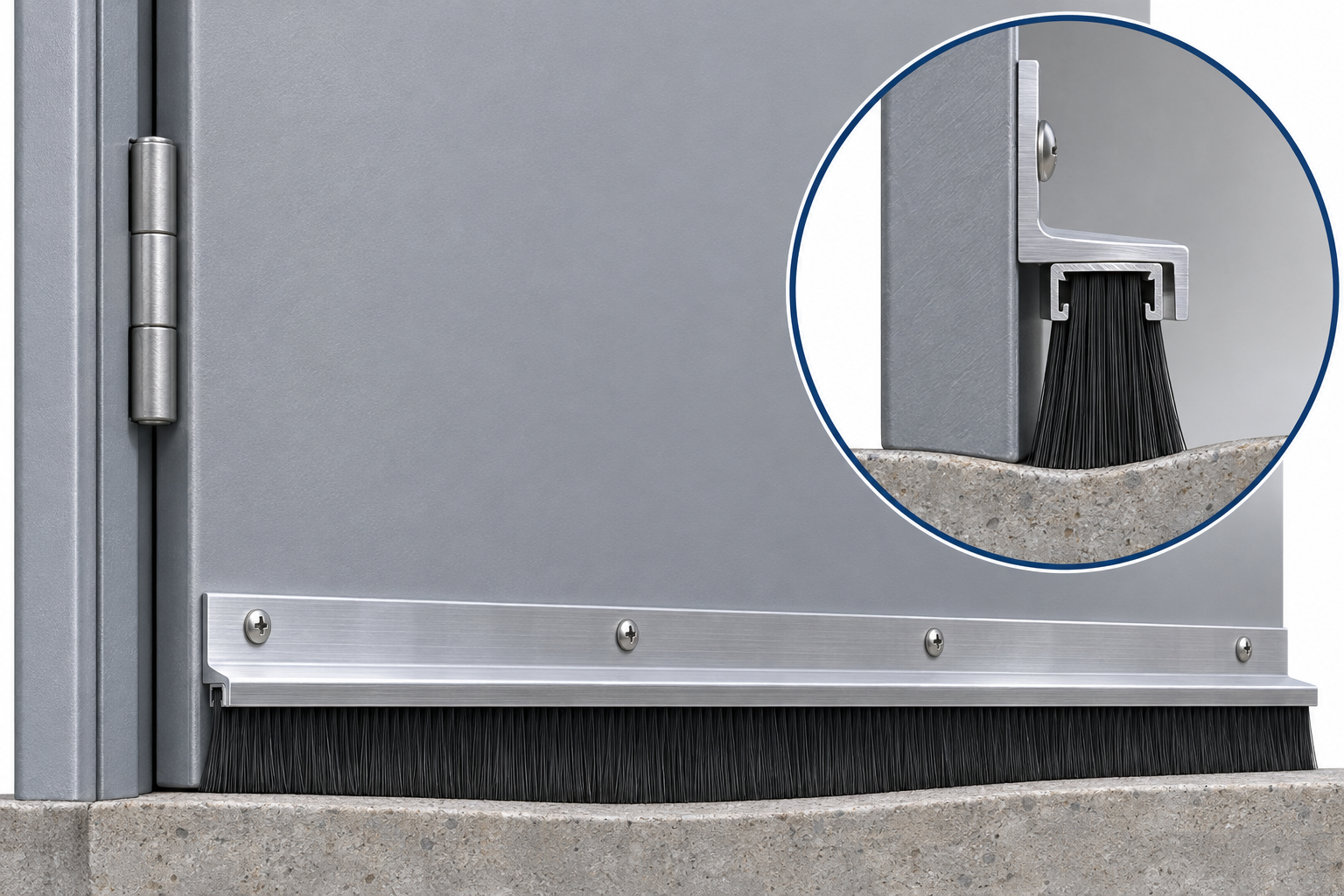
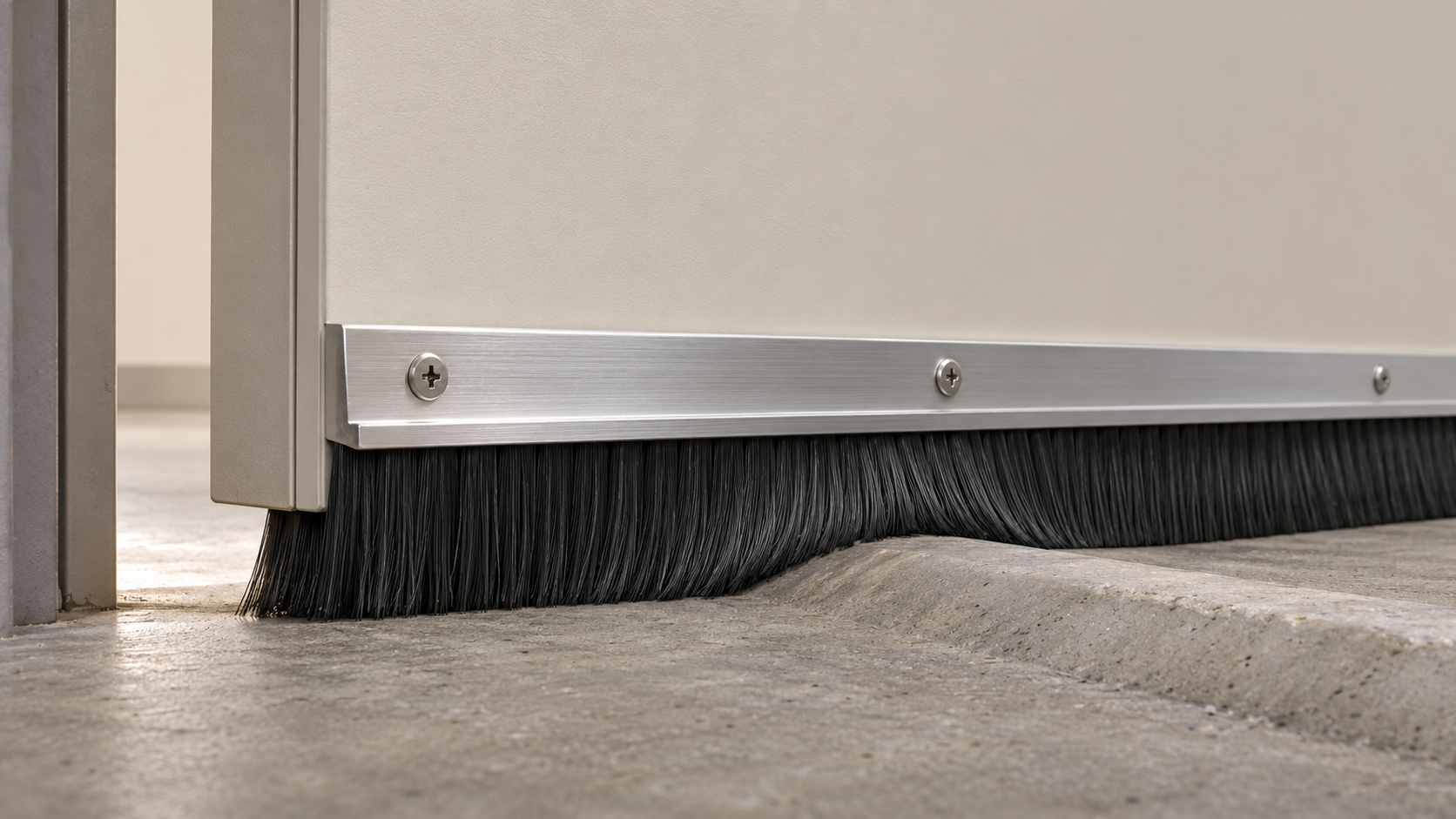
Door-bottom installation illustration. The fixing flange, brush roots and threshold are separate reference surfaces; changing their relationship changes contact even when the brush itself stays the same.
Is brush height the same as the door gap?
No. Exposed fill height runs from the specified brush-root reference to the free filament tips. Overall assembly height also includes the backing or holder. The gap at the door is measured between surfaces on the opening. These dimensions coincide only in a particular mounting arrangement, so the enquiry needs an end view showing how the brush sits.
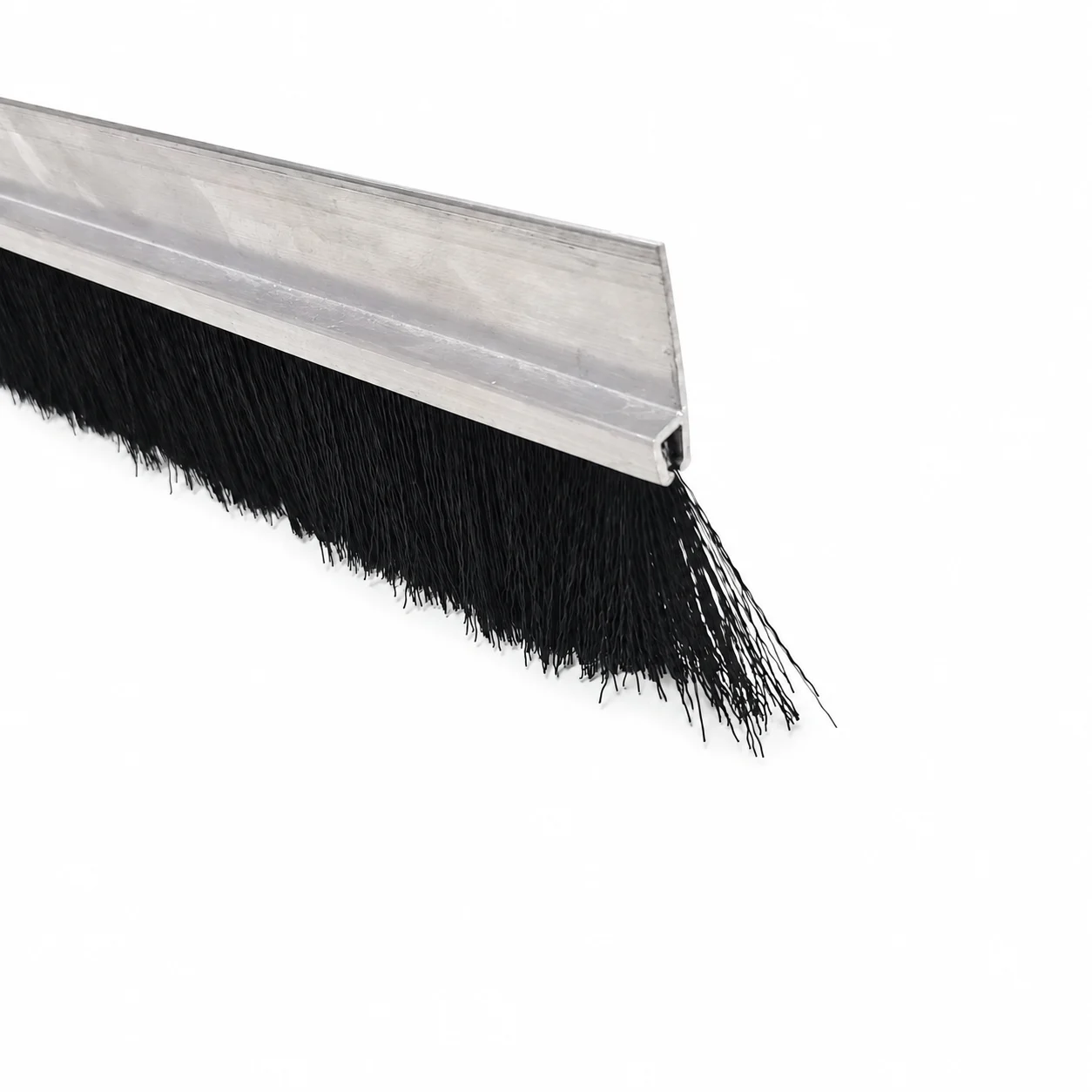
The SB-ST-0010 L-profile Nylon brush seal gives a useful example: its reference configuration has a 20 mm holder height and 30 mm exposed fill, producing 50 mm overall height. The 50 mm is not 50 mm of flexible material available to fill a gap. Its aluminum flange sits beside the contact line, so the installer also needs its direction and offset from the door face.
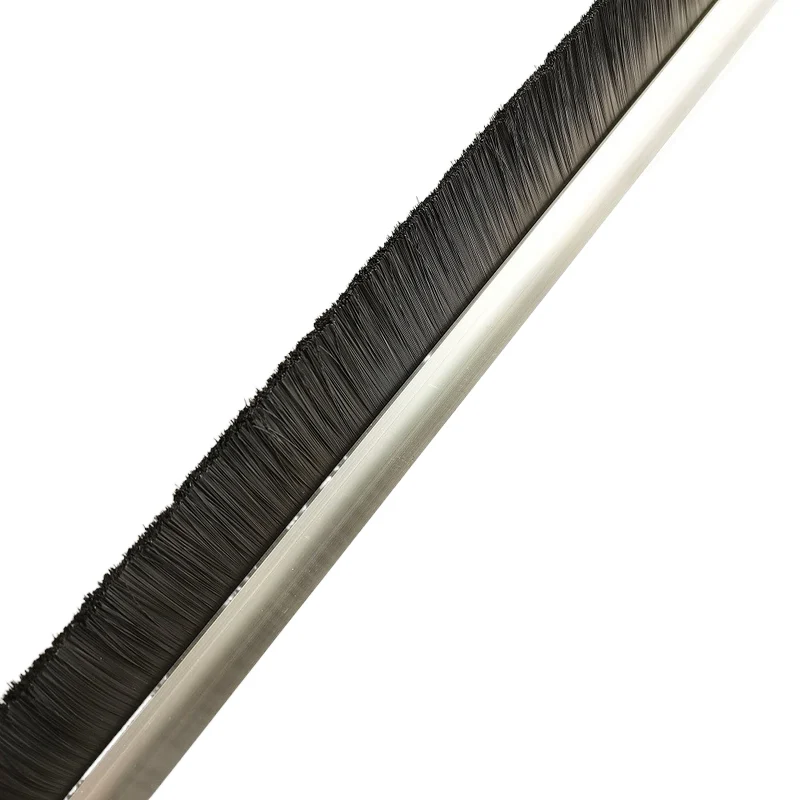
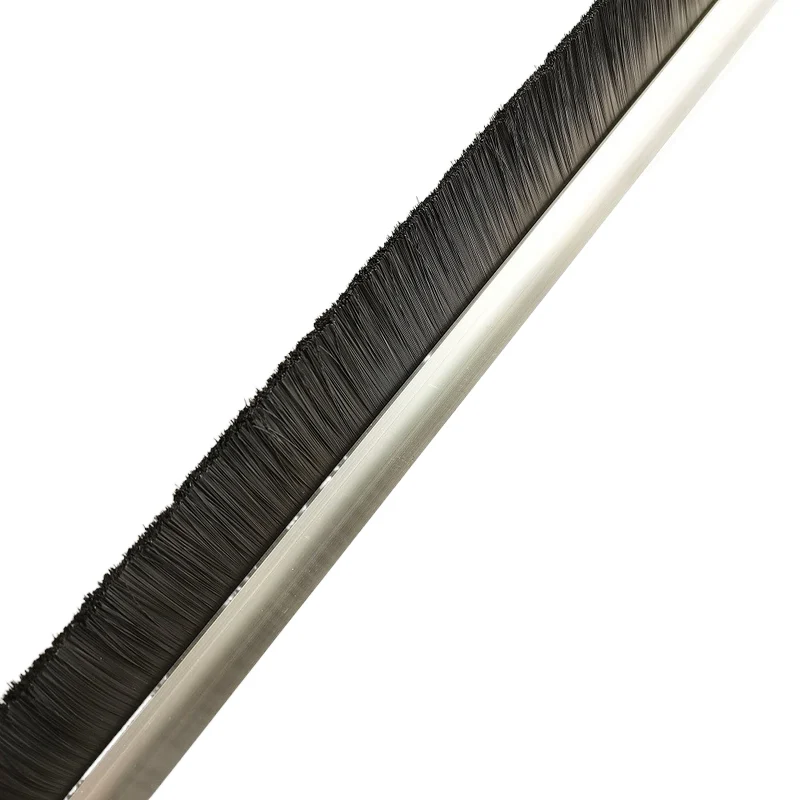
SB-ST-0010. The continuous aluminum flange provides a fixing face. Use an end view to specify which way that face and the bristles point.
A second reference, SB-ST-0007 with flexible white backing, also has 30 mm fill, but a 5 mm-high, 5 mm-wide polymer backing and 35 mm overall height. Its nominal filament diameter is 0.15 mm; the L-profile reference uses 0.20 mm Nylon. Matching the 30 mm figure therefore matches neither the attachment nor the whole contact configuration.
The direction of the bristles matters too. A brush mounted at an angle reaches across and along the gap; its full free length is not a perpendicular reach measurement. At a meeting edge, that angled contact can interact with the opposite leaf differently during closing. Show the intended angle in the section instead of compensating by choosing an unexplained extra trim allowance.
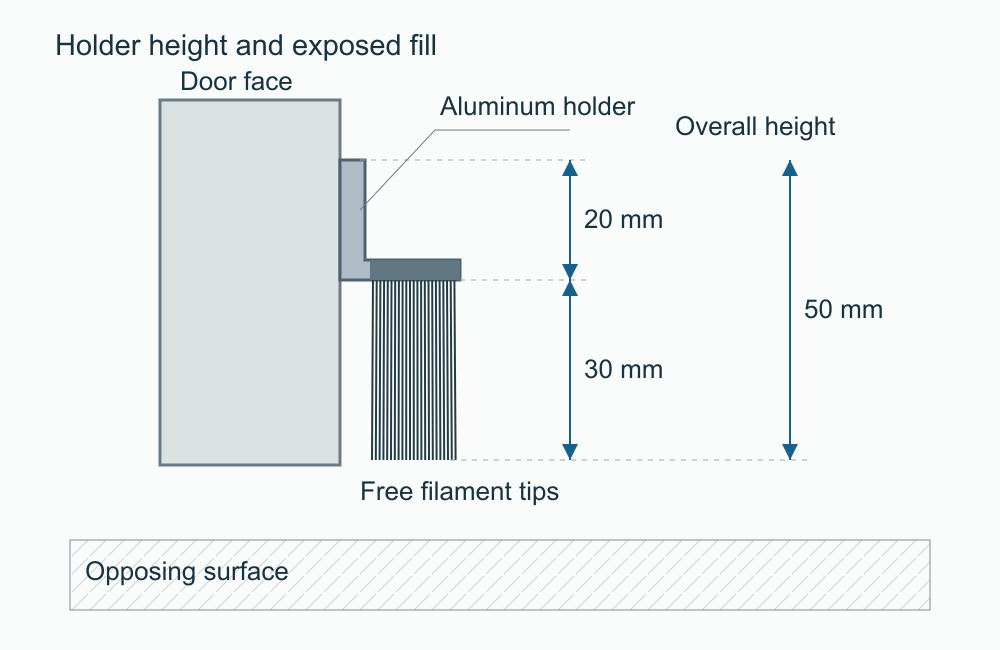
Height references for the SB-ST-0010 configuration, with the mounting position shown schematically. The drawing explains dimension endpoints; it does not prescribe where to drill a particular door.
How do I measure an uneven gap under a door?
Measure from identified positions, with the door in the position relevant to sealing. For a bottom sweep, include the left end, centre, right end and any visible high or low spot in the threshold. On a long opening, three points alone may miss a local dip. Add a side view of the mounting face and photograph the threshold profile rather than sending only the largest measurement.
Consider a door bottom measuring 16 mm at the left, 21 mm at the centre and 18 mm at the right. The 5 mm variation tells the supplier that a uniform brush will encounter different contact conditions along its length. It does not say to order a 21 mm brush: the height of the brush roots relative to the door bottom is still unknown.
If the roots were level and the filaments were long enough to reach the lowest threshold point, they would meet the higher points with more deflection. That can be acceptable within a suitable assembly, but increasing trim is not automatically the solution. A distorted holder, displaced door or damaged threshold may be moving the contact line away from its intended position. Correcting that geometry can be more effective than asking the bristles to absorb all the variation.
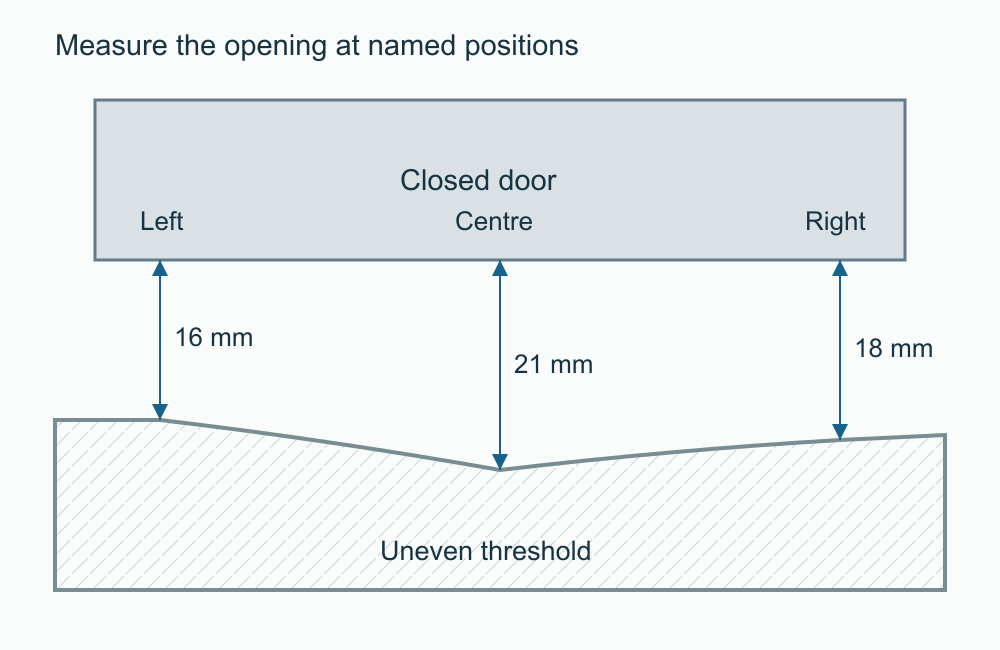
Example measurements at the closed door: 16, 21 and 18 mm. The variation belongs to the opening; a holder position and contact check are still needed to choose the fill.
Next examine the required travel. A swing door follows an arc across the floor, so a raised patch away from its closed position can become the tightest point. A sliding guard may pass a joint in the adjacent machine surface. A sectional door changes its relationship to side and header seals as its panels move. These are different paths, and a photograph taken only at rest cannot describe them.
For a worn replacement, distinguish current condition from original intent. Shortened bristles, bent backing or a holder that has slipped can explain the present gap. Measuring those parts remains useful for identification, but copying their damaged dimensions into a new purchase can reproduce the failure.
Are bottom sweeps, side seals and meeting-edge seals selected in the same way?
They share the need for controlled contact, but the opposing surface and movement are different. SEALEZE's door-seal range separates sweeps, jambs and astragal seals for this reason. These are useful application distinctions, not interchangeable names for one strip.
At a warehouse swing-door bottom, the brush contacts the threshold. Investigate the whole swept floor area if drag changes during opening. A taller trim that closes a central dip may add contact at both ends. The candidate needs to cover the dip while allowing the leaf to open, close and latch as required.
At a sectional or sliding door side, the brush contacts a door face or edge moving past a stationary mounting position. Here, flange orientation and the surface's changes during travel can matter more than the floor gap. A brush touching the intended face at one panel may meet a joint, step or protrusion elsewhere. Show those features in the path information, including where the holder can physically be fixed.
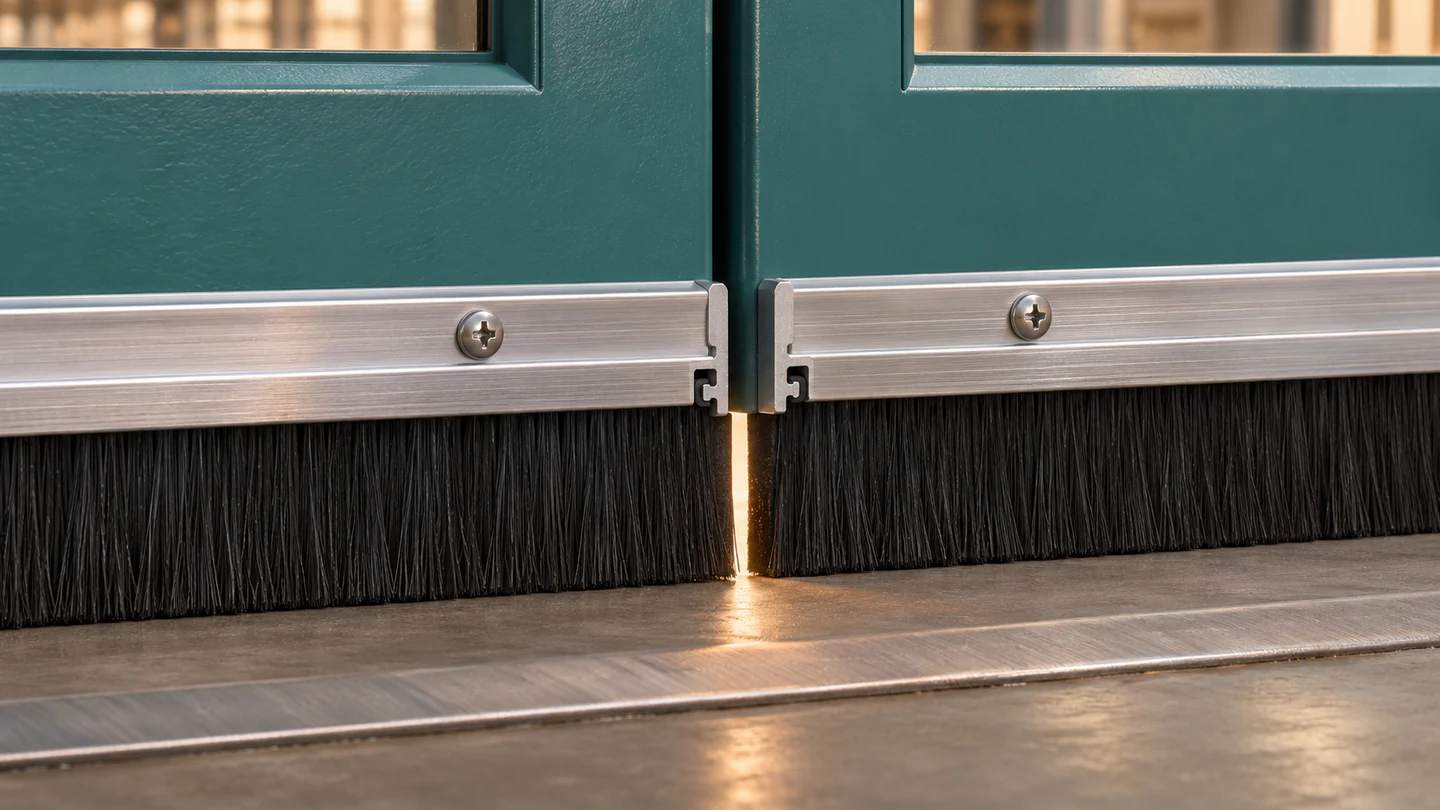
At a double-door meeting edge, the two leaves introduce another moving interface. If the design uses opposing brushes, the intended meeting line must be clear; two long fills pushed heavily into each other can alter closing resistance. The opening sequence, leaf overlap and latch hardware all affect the available space. Do not copy a bottom-sweep arrangement into the centre gap simply because the visible width looks similar.
For a door with a required fire, smoke or other rating, use the specified replacement assembly and its applicable requirements. Ordinary gap measurement helps describe geometry but does not establish rated performance.
Can I replace just the brush insert and keep the holder?
Often the first useful question is whether the holder is still straight, securely retained and in the correct position. If its channel is crushed, its fixing flange is bent or the mounting offset must change, a new insert may leave the underlying problem intact. In that situation, quote the complete holder-and-brush arrangement.
Where the holder can remain, identify its receiving section. Measure the insert backing width and height separately from the external holder dimensions. Show the channel mouth, any retaining lips and the end through which the insert is installed. An insert that appears to fit the outside envelope can still fail to enter a narrower mouth or have insufficient retention in a different internal profile.
SEALEZE's holder guidance matches its brushes and holders by a common section series before selecting the flange angle. For a cross-brand replacement, obtain the actual section drawing; a supplier's series letter is not a universal fitting size. Also explain how the ends are retained and whether access permits an uninterrupted replacement insert to slide in.
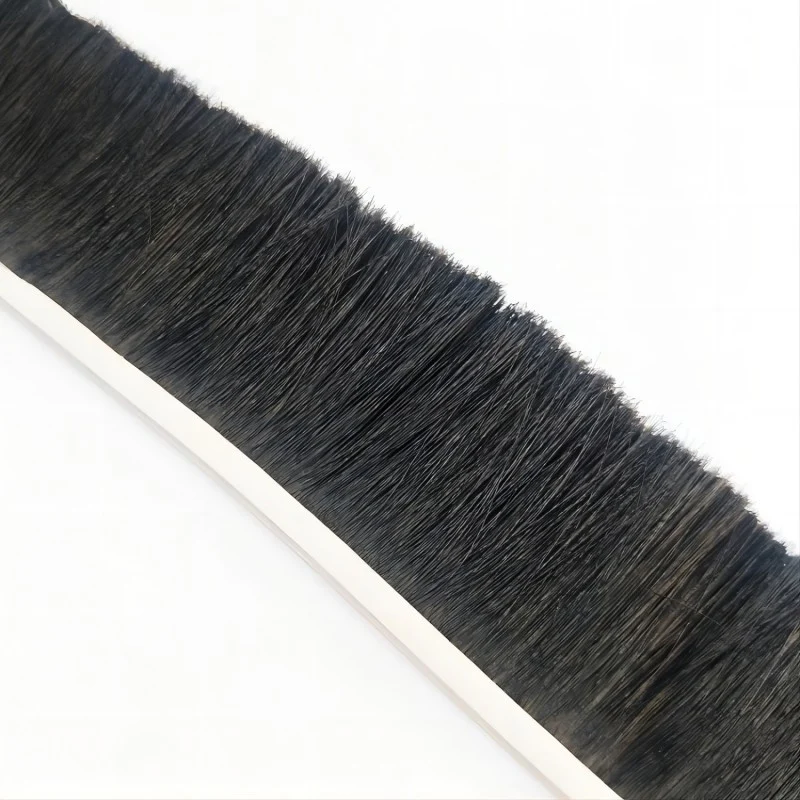
SB-ST-0007 uses a flexible polymer backing. Its section and retention requirements differ from a metal channel or an aluminum L-holder.
A flexible backing can be useful around a supported curved machine opening. It still needs a compatible retaining route. A tight kink changes the direction of the backing and the local fill; flexibility does not mean the strip can turn any corner freely. Supply the curve or radius and the support arrangement for the proposed construction. For a manufactured rigid arc, use the formed-strip drawing guide to define the backing curve and ends.
Why does a longer or stiffer brush make the door harder to close?
Contact begins when the tips reach the opposing surface. Additional interference bends more of the filaments and can bring more of the fill into contact. The resulting resistance depends on the complete configuration: free length, filament diameter and material, density, mounting angle and the surface being touched. It cannot be predicted from trim height alone.
Suppose a new bottom sweep reaches an uneven threshold but the door no longer latches normally. First locate where the resistance appears. Resistance over the full width suggests reviewing the overall mounting/contact relationship; a problem confined to one end suggests examining that local threshold, alignment or end detail. Ordering softer material without looking at those locations may hide the cause while opening a new coverage gap elsewhere.
Do not solve every complaint by cutting the filaments shorter. Shortening changes both reach and bending behaviour, and the cut condition may matter for the chosen construction. Use the supplier's agreed configuration and installation provisions. If the available adjustment cannot provide both coverage and movement, revise the holder position, profile or fill configuration instead of forcing a nominally correct part into service.
Environment also belongs in that choice. An outdoor entrance may combine sunlight, rain and repeated cycling; a machine enclosure may meet oil mist or cleaning fluid. SEALEZE's filament-selection guide treats water response, recovery after bending and abrasion as separate properties. State the actual exposure and cleaning medium rather than asking for a material that is simply “harder” or “more durable.” A material-level description is not a service-life promise for the assembled seal.
How do I order usable lengths for several doors?
Make a finished-piece list by door position. Include the brush and holder configurations, required length, end treatment and whether a joint is permitted. Different flange directions or end details can make equal-length pieces non-interchangeable. The total metres are a useful check, but they are not the purchasing unit unless the cutting and finishing work is deliberately assigned elsewhere.
For example, three bottoms each need one uninterrupted 1200 mm assembly. The installed requirement is 3600 mm, but four 1000 mm assemblies provide no uninterrupted 1200 mm piece despite containing 4000 mm in total. Ask for three finished 1200 mm assemblies, or agree a stock-and-cutting plan that actually produces them.
The 1000 mm length on the SB-ST-0010 page is a reference configuration, with other lengths available for quotation. Do not introduce an unapproved joint merely to follow that example length. If joints are allowed, locate them in the opening and define the brush and holder ends together. A joint is a local contact detail, not just the arithmetic sum of two lengths.
The cut-strip order guide covers cutting allowances, remnants and matched packs. For this enquiry, send:
The door or guard type, seal position and required movement.
A gap map and a section locating the mounting face, brush roots and opposing surface.
The retained holder section, or the complete proposed holder scope.
The surface, moisture, cleaning chemicals and relevant contact requirements.
Finished lengths and quantities by position, with permitted joints and end details.
Ask the supplier to return the proposed section and supply form against those inputs. Once a candidate is installed, the whole-opening acceptance guide helps separate a passing straight run from a failed corner or joint. The purchase is ready when it describes the arrangement that can perform the required contact and movement together—not merely a strip with enough nominal height.