
Ordering an Outward Coil Brush: Keep the Core, Replace the Right Parts
Order an outward coil brush with the right core interface, axial space, winding and working-face position. Compare coil-only, core-mounted and complete supply.
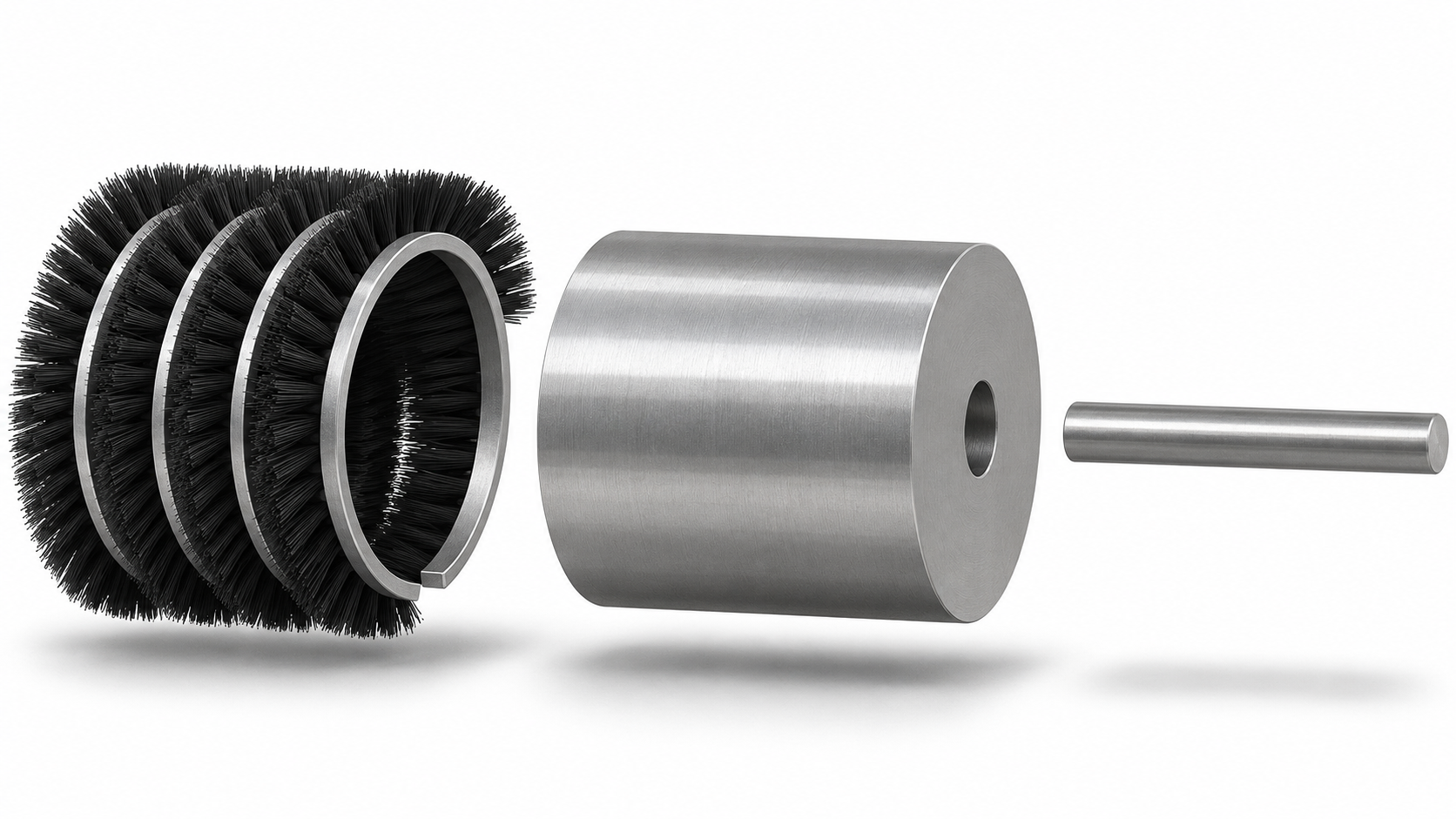
When the fill wears out but the support body remains usable, buying only the coil can be sensible. The difficult part is identifying what “coil” includes. A loose wound brush, a brush already mounted on a tube and a complete shaft assembly can all appear in a replacement enquiry, yet they leave very different work for the maintenance team.
For an outward-facing brush, separate the working outside diameter from the coil seat, core outside diameter and shaft bore. Then locate the working face and its end-retaining arrangement. Those details determine whether the delivered parts can become the replacement you actually need.
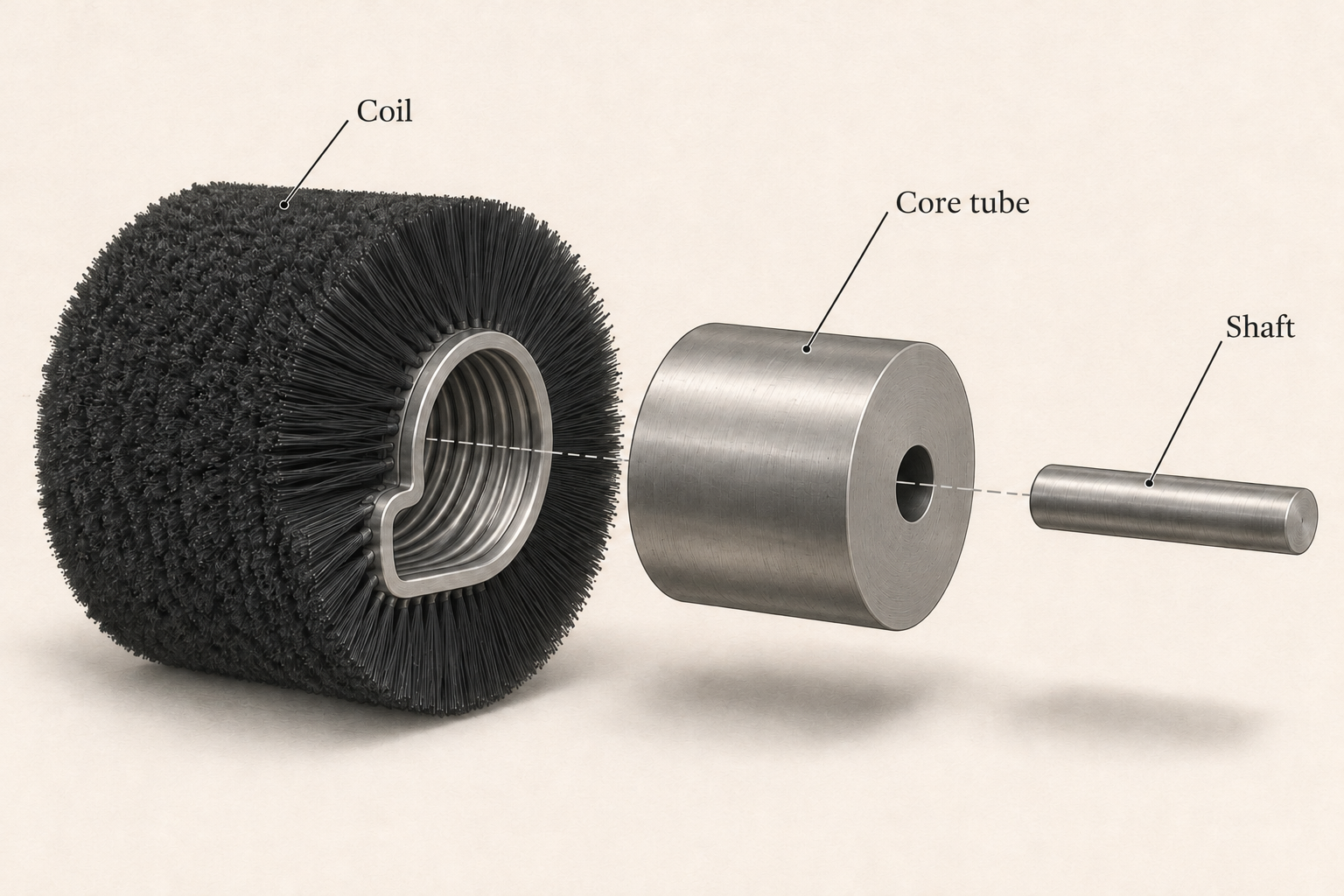
The coil, core and shaft are separate purchasing boundaries. This component view makes the boundaries visible without prescribing a retaining method.
Does “replacement coil” include the core and shaft?
Ask for the supplied components to be named before comparing quotations. If the order is for a loose coil, the existing core must provide the right seat and the assembly work must be available. If it is for a finished core-mounted brush, the supplier performs the agreed mounting work, while the buyer still needs the bore or adapter to match the machine. A complete roller adds shaft ends, drive features and support interfaces.
This distinction matters most during a shutdown. A box containing the correct brush element does not restore the station if the reusable core is still attached to the old brush and no removal or mounting arrangement has been agreed. Conversely, ordering a whole shaft assembly may replace usable parts unnecessarily when the machine was designed for an exchangeable brush element.
Spiral Brushes describes separate shaft, disposable-core, refillable-core and unmounted-refill options. These are examples of distinct supply models, not interchangeable installation methods. Define your own boundary in the enquiry: who removes the old element, who checks the core, who mounts the new coil and what assembled condition is delivered?
What you buy | What remains on your side of the order | The interface that makes or breaks the purchase |
|---|---|---|
Loose coil | Suitable core and agreed assembly work | Coil seat, winding and end retention |
Brush on a tube or sleeve | Compatible shaft or adapter | Bore, drive connection and axial location |
Completed roller | Machine supports and drive | Shaft ends, working-face position and assembly requirements |
If your enquiry includes shaft ends, the roller supply guide and shaft-drawing guide cover those interfaces. Keep this article for the coil-to-core decisions within that larger assembly.
Why can two products both say 35 mm and still be incompatible?
The SB-SC-0005 dense nylon coil is a separate metal-channel helix. Its listed reference dimensions are 120 mm axial length, 100 mm brush outside diameter and 35 mm coil inside diameter, with PA66 fill. The 35 mm dimension describes the opening that receives a support.
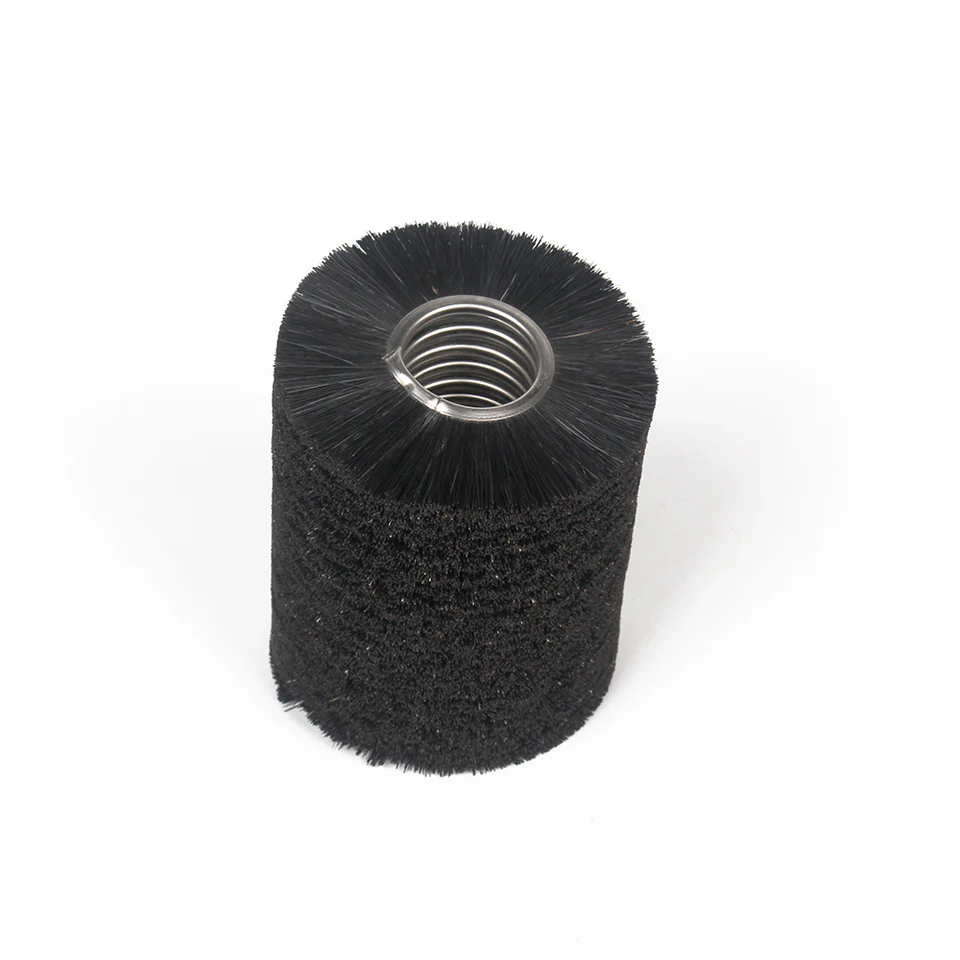
The center belongs to the loose coil. It is not a supplied shaft bore and is not the diameter of the surface being brushed.
The SB-SC-0007 hollow-core roller instead lists a 12 mm core bore, 35 mm core outside diameter and 60 mm brush outside diameter. Its axial length is 300 mm and its pitch is 10 mm. Here, the 35 mm dimension describes the support body beneath the fill; the 12 mm opening receives the specified shaft or adapter.
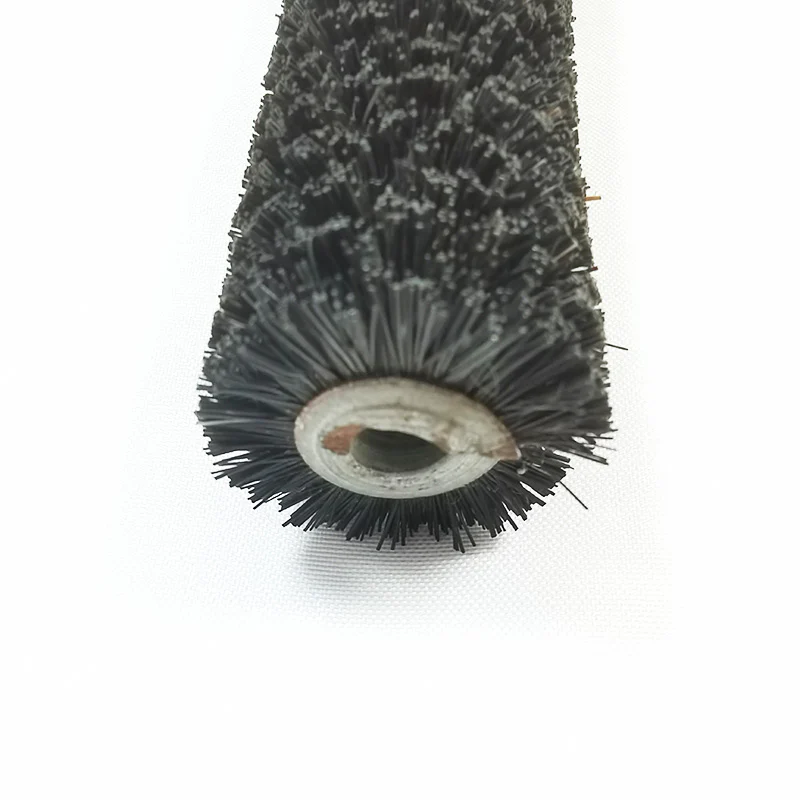
This product already includes a core. The bore and the brush envelope answer different fit questions.
The repeated number does not establish that the separate 35 mm-ID coil fits the 35 mm-OD core. Nominal values say nothing about the necessary fit, tolerances, surface condition, channel geometry or assembly method. Nor does the finished hollow-core product disclose the dimensions of an independently replaceable loose coil.
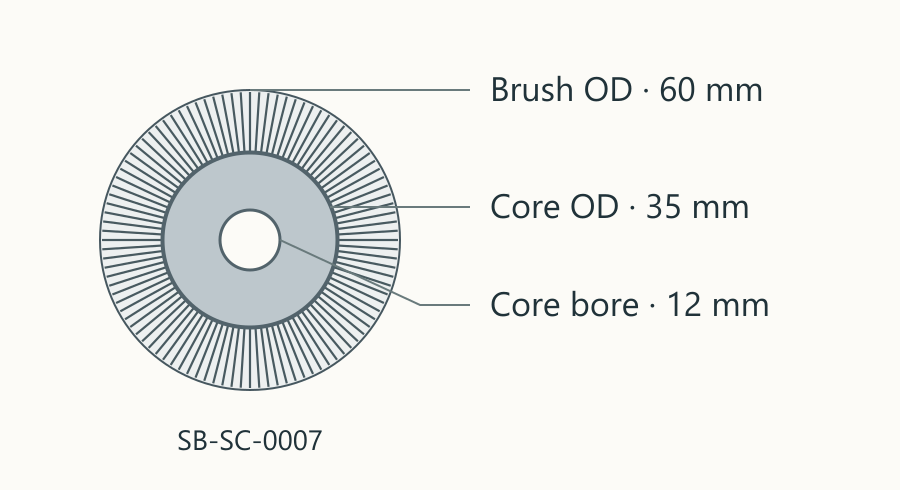
Three diameters from one published configuration. Keep their names attached to the numbers throughout the quotation.
Use an end view to name each cylindrical surface. “Inside diameter” without naming the part can refer to the coil opening, a tube bore or an adapter. That ambiguity can survive a price comparison and only become visible when the parts arrive.
How do I decide whether to reuse the existing core?
Start with what the core must still do: locate the coil, transmit the intended motion, remain supported by the machine and hold its axial position. A reusable body must meet those requirements after the old brush is removed, not simply look substantial enough to keep.
Examine the seating surface and the features that locate the ends. Damage at a retaining shoulder can matter even when the main cylindrical surface remains intact. A damaged drive feature or worn shaft interface is a different problem from worn filaments. Record those conditions separately so a coil-only quotation does not silently assume that every retained part is serviceable.
Where the brush is permanently attached, removal may involve work on the backing or body. Establish the appropriate refurbishment route with the supplier or equipment owner instead of treating the coil as a universal slip-on refill. SIT's construction guide illustrates body-mounted, interchangeable and tube-mounted arrangements, showing why the attachment design matters.
For procurement, compare the complete replacement route. A less expensive loose coil can require core inspection, mounting, trimming and machine-specific assembled checks. A finished spare may cost more to purchase but arrive at a different stage of readiness. Those are scope differences to include in the quotation comparison, rather than assuming the lower component price is the lower replacement cost.
Is the catalogue brush length the space I need between retainers?
Not necessarily. The assembly contains a working face, backing ends, retaining parts and any specified clearances. A brush length cannot be selected reliably from the distance between two visible machine surfaces unless those surfaces are the actual drawing references.
Consider an available axial span of 150 mm. If the assembly reserves 12 mm at each end for its retaining parts, the central allowance is 126 mm. A 130 mm coil exceeds that allowance. A 120 mm coil leaves 6 mm to allocate; it is not automatically correct, because the drawing still has to locate the brush and account for the remaining space.
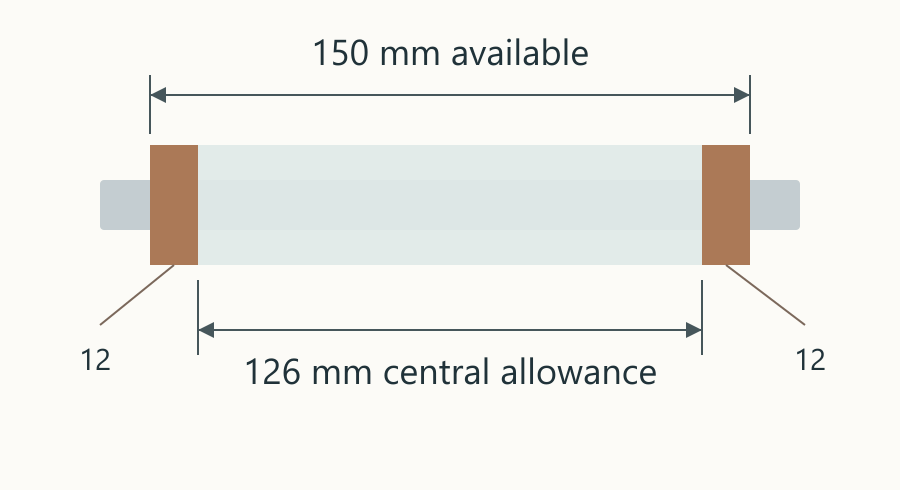
Subtract the occupied end zones before selecting the brush envelope. The central allowance includes the specified brush and remaining axial space; it is not a universal cut length.
The same issue appears when a supplier offers a slightly longer brush at the same price. Extra length can cover a protected edge, interfere with an end feature or move the active surface away from its intended position. “More brush” is not an upgrade until the contact and mounting layout still work.
Specify a datum end and dimension the start and finish of the working face from it. Keep overall assembled length and brush-face length separate. For a machine with handed or unequal ends, add a viewing direction so the drawing cannot be installed as a mirror image.
Where should the working face sit relative to the product?
Put the workpiece path on the same drawing as the brush. A 120 mm working face can be correctly located on the core yet miss a narrow target if the workpiece runs near one end. It can also reach an edge or adjacent feature that was meant to stay untouched.
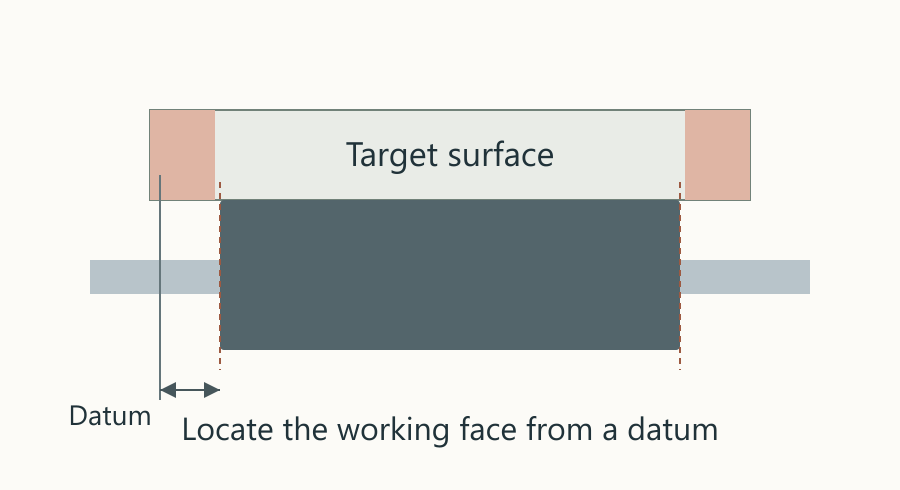
Working width and working position are separate dimensions. Identify both relative to the product path.
At a small transfer or guide station, check the actual product positions, including narrow pieces and lateral movement. A centered drawing of the largest product may hide the position where a smaller one meets an end of the brush. The question is which parts of the product touch the working face, not just whether the roller spans the nominal conveyor width.
For a broad surface-cleaning station, identify whether the target includes the full face, a local band or a profiled region. If a recessed area needs contact while raised edges must remain unchanged, a larger outside diameter alone does not solve that geometry. A shaped profile or a different contact arrangement may be the relevant comparison.
In a conveyor-return application, the removed material also needs a destination. A coil that reaches the belt can still leave the collection problem unresolved. Use the conveyor residue-path guide for that application rather than assuming any outward nylon coil is a complete belt-cleaning system.
Should I order a dense winding or an open pitch?
Dense and spaced windings change where the filaments meet the passing surface. A close-wound brush presents a more continuous face; an open winding leaves intervals between the helical rows. The useful choice depends on the desired contact and what should happen to removed material.
For a flat surface with a wide brushing requirement, compare whether the workpiece path receives the intended coverage through the whole contact zone. For loose debris that must leave the station, inspect the intervals and collection route as well as the cleaning result. For a profiled part, look at which features the fill can reach and which surfaces it also touches.
Winding direction can interact with rotation and the direction in which material is moved. SIT and Spiral Brushes describe this relationship in their spiral-brush designs. It is a reason to specify rotation, viewing direction and material destination together, not to copy “right hand” from a photograph. If two helical sections meet at the center, show the junction on the drawing.
When comparing alternatives, retain the same workpiece path and evaluation conditions wherever the comparison requires them. Otherwise a different result may come from a changed position or contact setting rather than the pitch. The fill-layout guide develops that comparison without treating dense fill as automatically superior.
Can I keep the same nylon and change the core, pitch or diameter?
“Nylon” identifies a family of fill materials, not an entire brush specification. The grade, filament dimensions, working length and layout contribute to contact. The support body and retained parts also determine where that contact occurs.
The PA66 label on the loose SB-SC-0005 reference should not be silently transferred to SB-SC-0007, whose page identifies Nylon and asks the buyer to agree the specific grade. If a wet, heated or chemically exposed station is involved, include the actual environment when choosing both fill and core material.
A changed core outside diameter can change the available filament length at the same finished brush diameter. A changed brush diameter changes the working envelope. A changed pitch changes contact distribution. These are different modifications, so “same nylon, same length” is not enough to justify substitution.
State which dimensions and materials remain fixed and which are proposed to change. Then evaluate the affected surface result and assembly features. Keep the outcome tied to that combination; a previously successful fill does not establish that a different support arrangement will reproduce it.
What should I check when the replacement arrives?
Check the supplied boundary first. Is it a coil, a core-mounted unit or a complete assembly? Are the retainers or adapters that were included in the order present? This prevents a visually convincing brush from being counted as a usable spare before the missing components are noticed.
Then compare the named interfaces: coil seat or bore, overall envelope, axial working-face position, winding arrangement and end features. Examine the channel ends for deformation and the fill for crushed regions. Keep visible transport damage separate from normal filament appearance; a uniform-looking outside surface cannot establish an undamaged backing underneath.
Where the machine requires assembled runout, balance or other checks, identify the required condition and deliverable with the supplier before shipment. A generic supplier capability or a certificate for a different mounting state is not the same as the requested check on the delivered assembly.
For storage and shipping, the packing should support the identified structural features and protect the fill. A heavy core pressing against an adjacent brush can damage the working face before use. The coil packaging guide explains how shape and end condition enter the arrival check.
What belongs in a coil-only request for quotation?
Send the retained-core drawing or a clearly identified dimensional survey; show the seat, end features, axial datum and machine interfaces that remain relevant. Add the workpiece path and desired surface result. State the new coil's material, filament specification, outside diameter, inside seat, working length, pitch and winding orientation, together with the agreed attachment responsibility.
Photographs help most when they show a specific interface: an end view of the open center, a side view of the working face, the retaining feature and the original brush in its machine position. A single oblique photograph is useful for identifying construction but poor at separating the seat, bore and end details.
The quotation should state what arrives assembled, which parts are included and which checks accompany it. On a repeat purchase, retain that scope with the drawing version and use the substitution review for a changed interface or fill. A useful coil order leaves no doubt about which part is being replaced and who turns the supplied parts into the working assembly.