Inward Coil Brush Sizing: Match the Rod, Holder and Cleaning Task
Choose an inward coil brush by rod size, free opening, holder fit, pitch and fill. Diagnose uneven cleaning and check joints, coated stock and wet wiping.
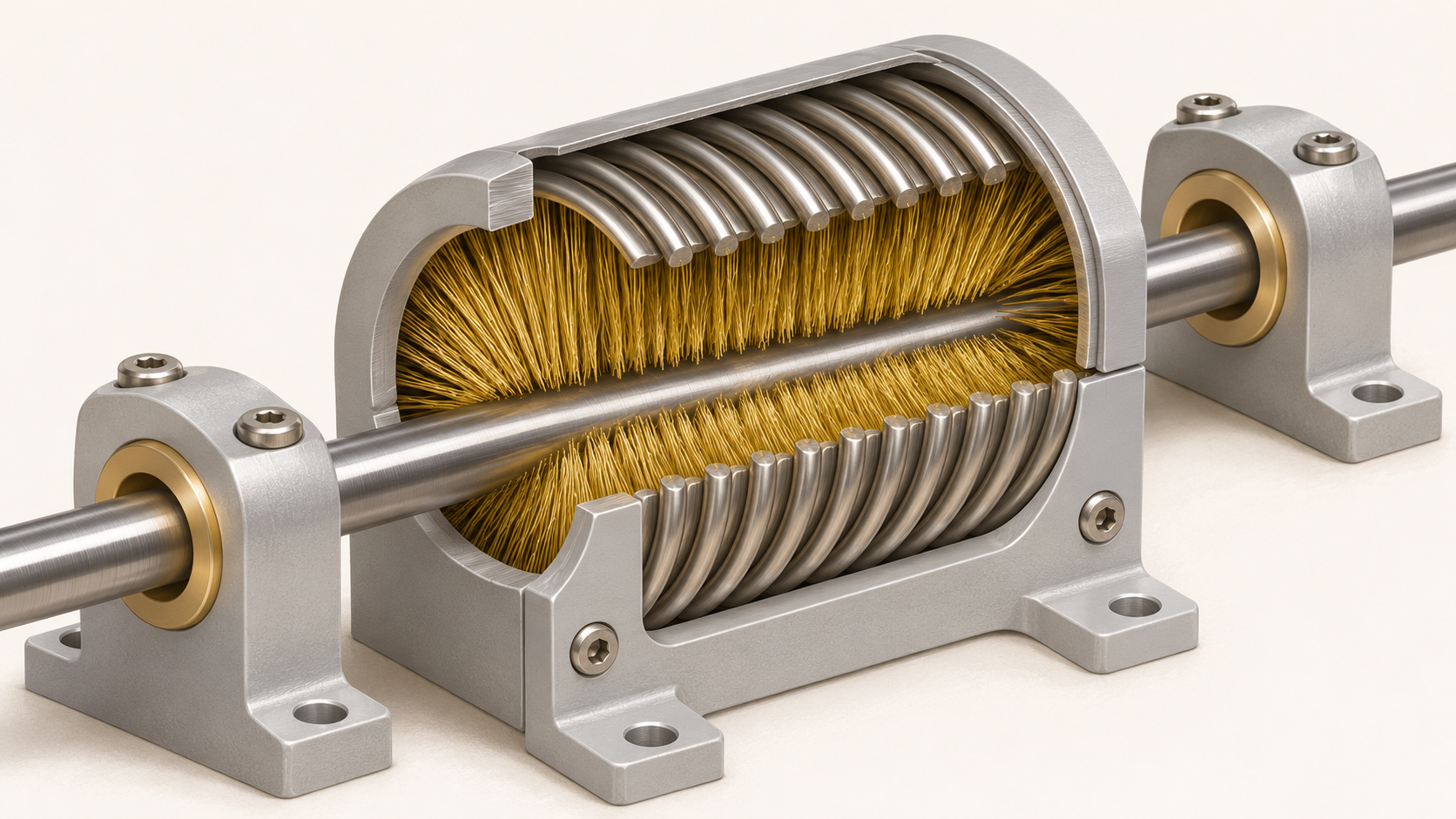
An inward coil brush is selected around the workpiece passing through it, the fixture holding it and the surface result required. A catalogue opening is only one part of that decision. A replacement can fit the housing and still rub unevenly, leave residue or make the stock harder to feed.
Start with the actual rod diameter range and the largest feature that passes through the station. Then compare the brush opening, outer envelope, channel profile, pitch and end retention. Choose the fill for the residue and the surface that must remain. The questions below connect those dimensions to what happens at the brush.
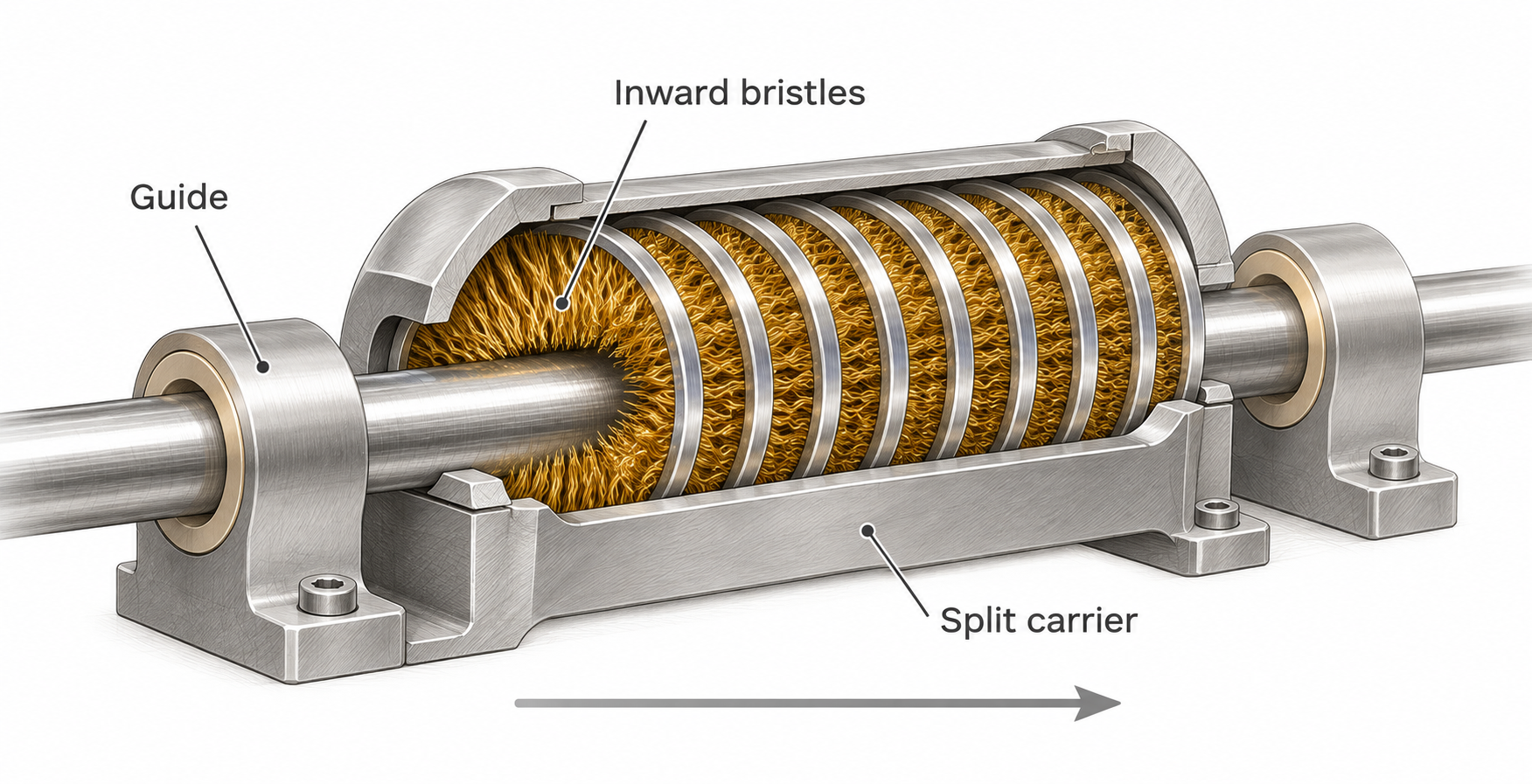
The guides establish the rod path; the carrier locates the brush. The section view exposes their different jobs and the inward contact region.
Is an inward coil brush right for rod cleaning, wiping or liquid control?
An inward coil presents bristles around a central passage. It suits a task in which the outside of continuous stock moves through that passage: removing loose residue, wiping a cable or controlling liquid remaining on a rod. The workpiece is inside the brush; a tube-cleaning brush works inside the workpiece. That distinction determines which surface receives contact.
SHOWA's inside-coil overview describes wire-rod uses including adhesion removal, liquid draining and liquid application. These are different jobs even when the brush shape looks similar. For residue removal, the useful question is what remains on the metal after brushing. For liquid control, ask where the displaced liquid goes, whether it returns downstream and how the fill behaves in the liquid concerned.
Consider three purchasing situations. A bare rod carrying loose machining debris needs contact that removes the debris without creating an unacceptable new surface. A finished cable needs its jacket and any printed identification preserved. A rod leaving a rinse needs a suitable wet-contact arrangement and a route for the liquid it displaces. Buying the same brass coil for all three because their diameters match skips the main material decision.
Tightly bonded scale is a further distinction. A brush sold for loose residue is not automatically a substitute for a descaling process. Establish whether the task is sweeping away detached material or breaking a bonded layer before comparing openings and prices.
Does a 5 mm free opening mean the brush is for a 5 mm rod?
No. The free opening describes the unloaded space between inward-facing filament tips. Rod diameter describes the solid workpiece entering that space. Their relationship establishes nominal geometric overlap; it does not establish a permissible operating setting.
For a centred circular rod, the nominal radial overlap is half the difference between rod diameter and free opening. Thus an 8 mm rod presented to a 5 mm free opening has a geometric overlap of 1.5 mm per side. This calculation describes the geometry only. It does not tell you the force, feed resistance or finish that this combination will produce. Filament length, diameter, material, crimp, density and support still matter.
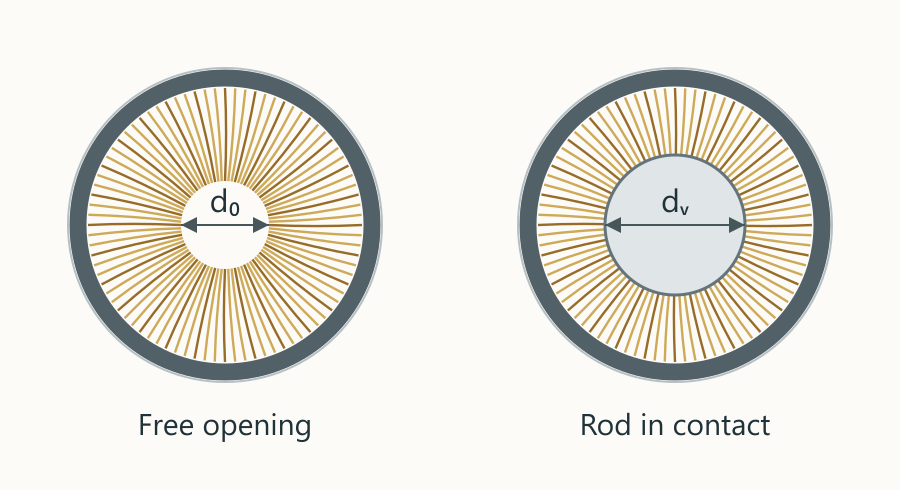
The opening d₀ is measured without the workpiece; dᵥ is the rod diameter. The views separate the two measurements rather than prescribing an engagement.
Do not choose the opening from nominal stock size alone. Include the smallest and largest actual stock diameters, ovality where relevant and the permitted finish. If several rod sizes use one station, the smallest size may receive insufficient contact while the largest produces excessive resistance. That is a reason to compare configurations or changeover arrangements, rather than assume one opening covers the entire range.
A worn brush adds another trap. Its present opening describes its present condition. It may have enlarged through wear or become uneven after deformation. Use an original drawing or an unused reference to identify the replacement target; use the worn brush to understand the failure and the mounting arrangement.
Which dimensions must match an existing holder?
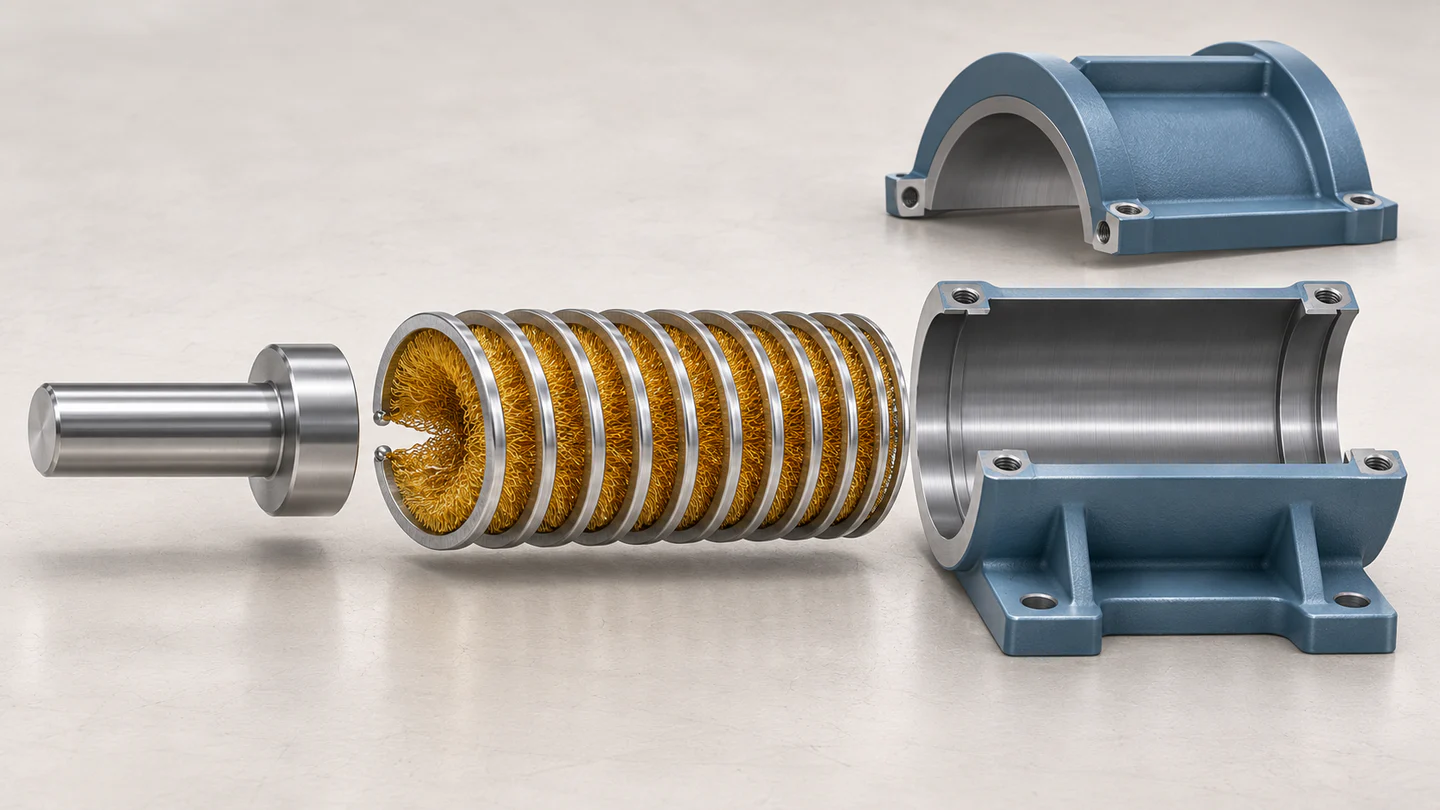
The SB-SC-0019 brass inward coil provides a concrete reference for reading a specification. Its listed configuration is 175 mm long, with a 50 mm coil outside diameter, a 5 mm free opening, 17 mm pitch, a 3.8 × 3.9 mm channel and 0.20 mm brass wire.
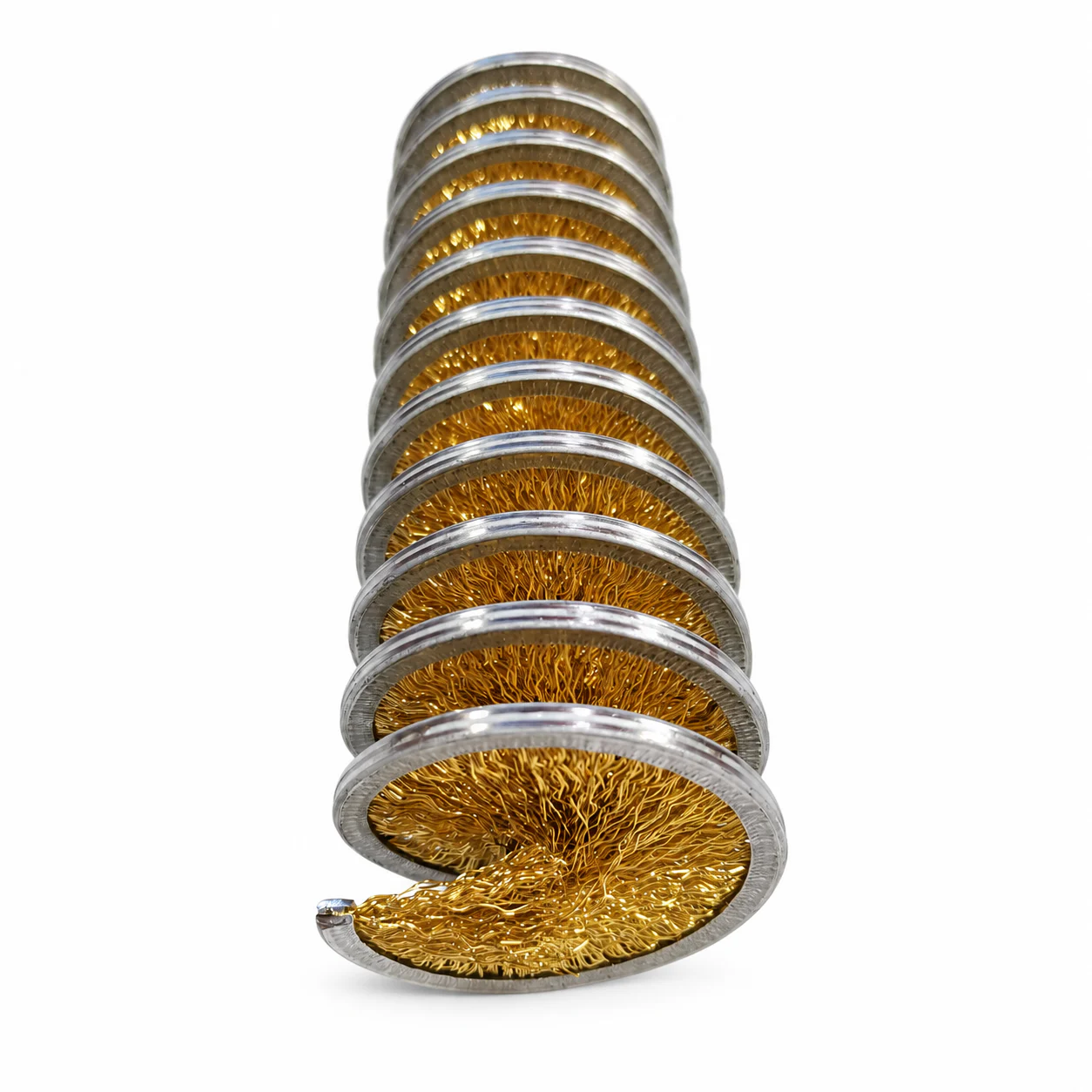
The channel carries the filament roots around the central passage. The photograph helps identify construction; use dimensions and drawings for the fit.
Measurement | What it controls in the assembly | What to compare on the retained equipment |
|---|---|---|
Coil outside diameter | External brush envelope | Holder bore, support surfaces and specified clearance |
Overall axial length | Space occupied between ends | Available axial space, end stops and access for replacement |
Channel width and height | How the backing is located | Groove or clamp geometry, including orientation |
Pitch | Axial spacing of successive turns | Required contact layout and any support tied to the turns |
End shape and position | Where the coil is located and retained | End pockets, stops, fasteners and installation access |
Free opening and fill | Contact with the rod | Stock range, surface requirement and original fill specification |
A 50 mm outside diameter does not describe the ends. One coil may have an end that locates against a stop; another may project into the space needed for a guide. A coil that fits the cylindrical envelope can still be the wrong replacement at that interface.
Measure the holder with an axial direction identified. Photograph the entrance, exit and both brush ends, then relate those views to the drawing. This prevents an end feature described as “left” in a bench photograph from being placed at the wrong end of the machine. Do not squeeze, stretch or twist a catalogue coil to make its envelope agree with a fixture: that changes more than the outside dimension.
Will a smaller opening clean better, or just increase resistance?
A smaller opening increases nominal overlap for the same centred rod. More overlap is not a reliable shortcut to better cleaning. The useful outcome is removal of the specified residue while retaining the surface and a workable feed condition.
Suppose a loose-residue job leaves a narrow dirty band. Reducing the opening treats the problem as insufficient contact everywhere. If the rod is actually offset, that change also increases contact on the already heavily loaded side. The next useful comparison is the path and the circumferential pattern, not a progressively tighter brush.
Likewise, if residue is tightly bonded, greater contact may alter the rod before it achieves the required removal. Compare the residue mechanism and fill type before making the geometric change. Where a cleaner surface arrives with fresh lines or scuffing, examine whether the marks follow the brushing direction, whether they were present upstream and whether debris is retained in the fill.
Check the complete contact configuration. A material name alone does not reproduce it: wire diameter, working filament length, crimp and density influence how the face responds. Precision Brush explains filament diameter as an individual-strand measurement, distinct from the overall brush size. A 0.20 mm wire specification is therefore a separate order field from a 50 mm coil diameter.
For comparable wire constructions, a thicker wire or shorter working length generally gives a less compliant contact than a finer wire or longer working length. Weiler’s wire-brush guidance explains these relationships for power brushes. They help frame the fill comparison here; its tool angles, test loads and speeds are not settings for an inward-coil station. This is why an unchanged opening can behave differently after a supplier changes the wire specification.
What does the 17 mm pitch change along the rod path?
Pitch is the axial distance between corresponding positions on successive turns. It is not the visible clear gap between channel edges. In the listed SB-SC-0019 configuration, 17 mm pitch distributes successive inward brushing zones along the 175 mm body.
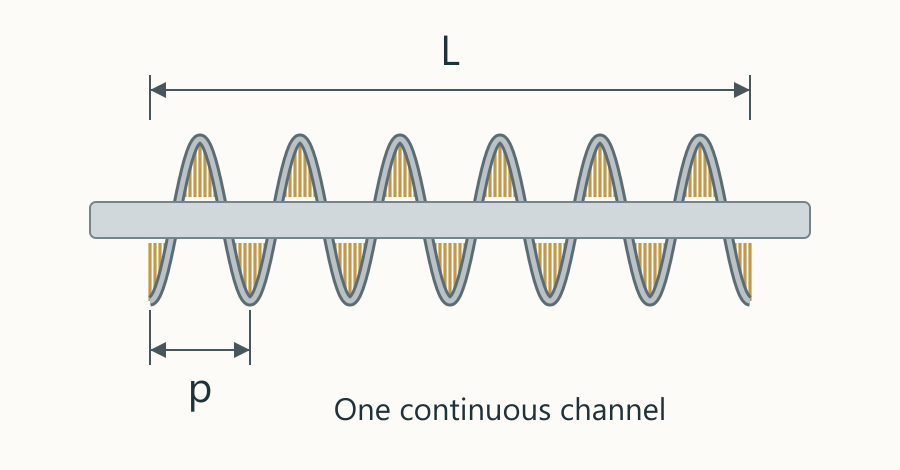
Measure pitch between equivalent turn positions. Overall length also includes the end arrangement; dividing length by pitch does not fully specify the manufactured ends or turn count.
Closer turns place more brushing zones within a given length, but do not by themselves promise a better result. Open intervals, fill density and the path available for removed material also matter. A station that dislodges dirt and then carries it into the next contact zone may behave differently from one that removes that dirt from the assembly.
For wet wiping, look at the underside of the installation and the next downstream surface: is displaced liquid collected, or can it return to the stock? For dry residue, examine where particles leave the contact region and whether the surrounding enclosure retains them. These observations help decide whether the issue is brush layout, collection or the wider cleaning process.
When replacing a coil, keep pitch and channel construction visible in the comparison. Two brushes with the same length and outside diameter can have different contact distributions. If the original arrangement worked, preserve those fields while evaluating a proposed change one at a time.
Should I choose brass, stainless wire or a synthetic fill?
Choose from the surface and residue requirements before choosing a material by reputation. The listed brass reference is intended for loose residue on compatible metal rods. That description does not make brass suitable for every alloy, coating or cleanliness requirement.
For a finish-sensitive rod, look for both residual dirt and new surface change at the same positions. For a coated cable, include jacket damage, visible scuffing and identification legibility in the comparison. A softer-looking fill is a candidate, not proof that an arbitrary contact setting will preserve the coating.
Where contamination is controlled, identify the actual fill material and the tool's previous use. Stainless wire, carbon-steel wire and brass are different purchasing choices; a colour photograph is a poor substitute for the specification. Use the wire-material and contamination guide when transfer from the brush or a previously processed material matters.
In a wet process, include the liquid, concentration, temperature and exposure pattern in the enquiry. These describe the application for material selection; they should not be replaced by a broad label such as “chemical resistant.” Keep material compatibility separate from whether the resulting brush geometry wipes effectively.
Can the same brush pass a stock joint, a leading end or a short part?
The largest passing feature may not be the nominal rod. A joint, upset end, local bead or connector can change the required passage and the way contact begins. Include these features in the workpiece description before ordering a close-fitting coil.
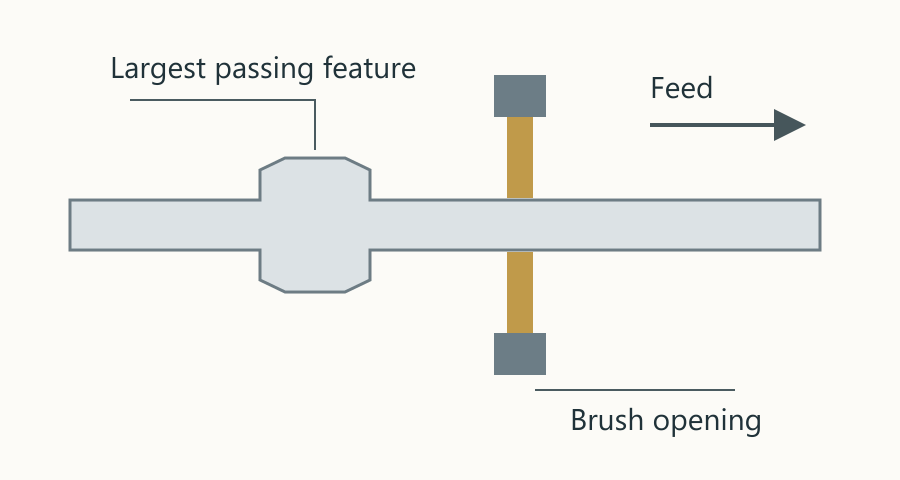
The largest feature on the travel path belongs in the passage check. The diagram identifies the interference question; it does not prescribe forcing a joint through the brush.
For continuous stock with occasional joints, describe the maximum joint envelope and how the equipment handles that transition. For cut pieces, consider what supports the leading end as it enters and the trailing end as it leaves. A long continuous rod supported on both sides and a short piece briefly supported on one side are different arrangements even at the same diameter.
If the stock cannot be threaded through a continuous coil during maintenance, a split ring or another accessible construction may be the relevant comparison. That is an assembly decision, not something to solve by cutting an existing continuous coil. The inward-brush changeout guide develops the access and retained-part questions.
Why is one side clean while the opposite side still carries residue?
First separate a circumferential pattern from a change along the rod's length. A persistent dirty sector with stronger marks on the opposite sector is a reason to inspect the rod path, holder alignment and guides. It is not, by itself, proof that the fill material is wrong.
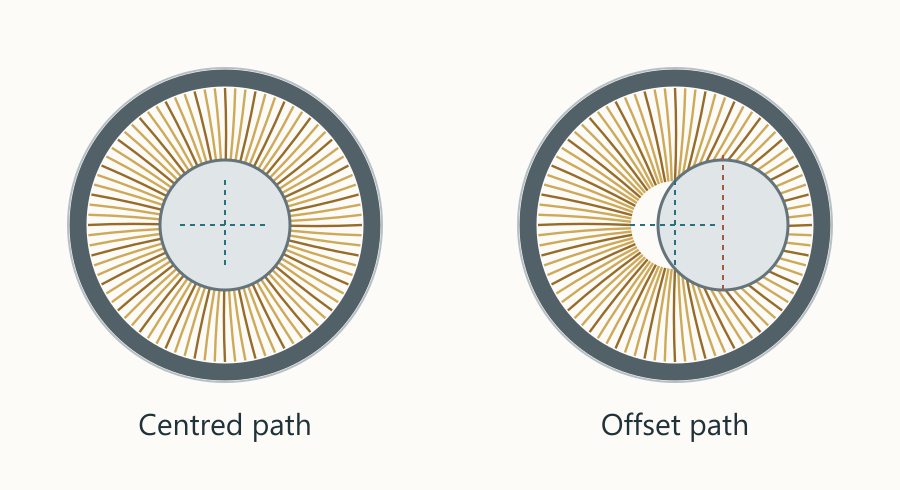
Offset changes contact around the circumference: the nominal diameter can remain unchanged while the contact distribution becomes uneven.
Mark the orientation of observations relative to the machine. Compare upstream surface condition, the rod position through the station and the brush's condition around its opening. Bent stock, worn guides and a displaced holder present different corrections. If a pattern moves with a changed component or appears only on a particular stock condition, that narrows the comparison without justifying an immediate material substitution.
If the result starts acceptably and deteriorates along a run, inspect for accumulated residue, a changed incoming surface and tool condition. If a defect repeats at a joint, examine that local geometry. Keep these patterns distinct: one tighter opening is unlikely to answer all of them.
What should I send for a useful sample and a repeatable quotation?
Send a package that lets the supplier identify the physical problem: the actual stock range and largest passing feature; its material, finish and residue; the holder and guide arrangement; the existing brush dimensions and ends; and clear views of the unwanted result. Include an untouched upstream sample and a representative finished requirement where these are available.
Ask the comparison to answer specific questions. Does residue remain at the identified locations? Has the protected surface changed? Is the feed behaviour acceptable under the machine's permitted conditions? Does the brush stay located as intended? Use representative small and large stock conditions where both are part of the intended order, rather than extending one successful size to the whole range.
For a repeat purchase, retain the agreed drawing version, fill specification, opening, pitch and end arrangement alongside the sample result. The sample-to-order record keeps those details together; the long-coil packing guide explains how to protect the shape during delivery. If you are purchasing an outward-facing coil for a retained core, start with the outward-coil ordering guide, because its contact and mounting dimensions describe a different assembly.
The useful enquiry is not simply “a 5 mm inward brush.” It explains what passes through the brush, what surrounds it and what the cleaned surface must look like. That gives the supplier a defined configuration to quote and gives purchasing a meaningful basis for comparing alternatives.