How Do I Buy a Complete Tube-Cleaning Brush Setup?
Plan a complete tube-cleaning brush purchase from the tube route and deposit to compatible equipment, representative trials, quote scope and replacement stock.
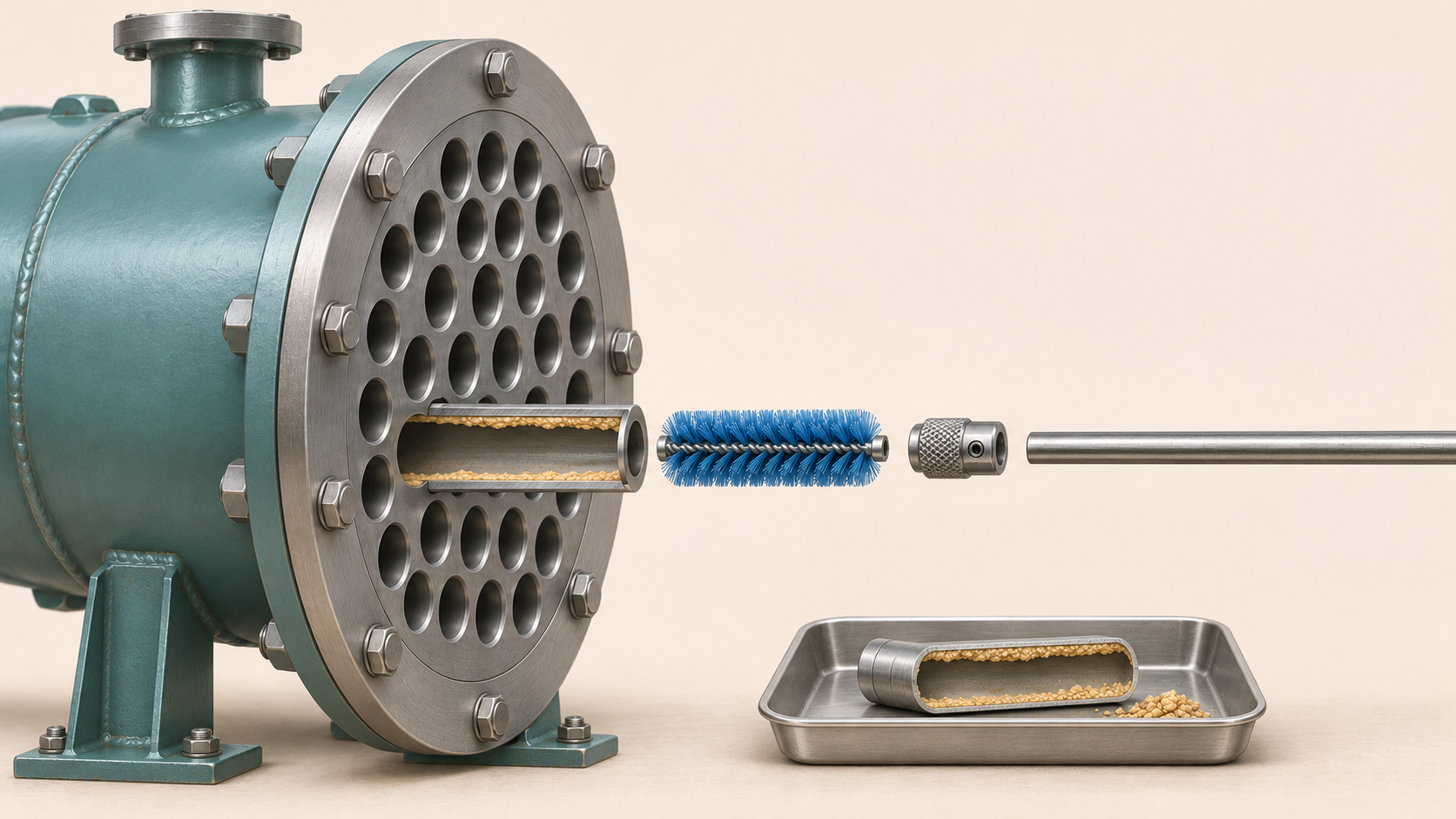
Buy a tube-cleaning brush as part of a defined cleaning route: the tube and deposit, the head that can reach them, its connection to the equipment, the way removed material leaves, and the result that must be checked. A head with the right catalogue diameter is only one component of that route.
For a first purchase, start with the actual equipment and tube condition. For a repeat purchase, use the established configuration while checking whether the task has changed. For an urgent replacement with only an old brush available, identify the interface and original geometry before treating the used part as the manufacturing specification. This article brings those decisions together and links to the detailed guides where a particular question needs more work.
What should I show the supplier about the tube-cleaning job?
Provide a view of the equipment entrance and a section or understandable sketch of the tube route. Identify the tube material, internal surface, actual bore, length, bends and restrictions. Include the deposit in place and explain what has changed since the last successful cleaning where that is relevant.
For a shell-and-tube exchanger, the tube-sheet opening is a practical starting point: it shows how the head and connector enter the tube bundle. The cleaning route may continue through a straight tube or turn through a U-bend. Space outside the entrance affects how the rod or shaft can be introduced. Space at the far end affects access and collection. These are part of the purchasing brief, not details to discover after the heads arrive.
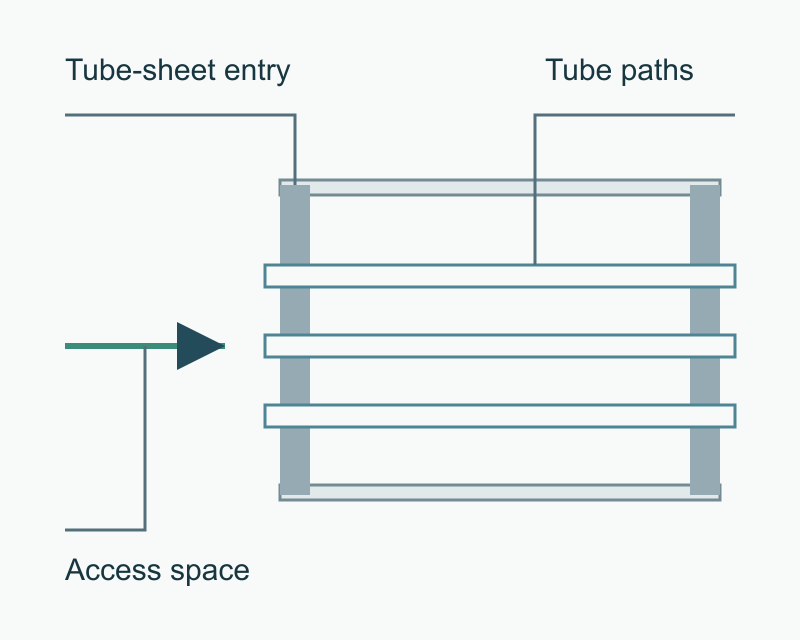
The section identifies the cleaning route through the tubes. It does not show a particular customer's equipment or prescribe a cleaning system.
Describe the deposit by observable behaviour as well as its name. Is it loose, sticky, locally packed or firmly attached? Does it mainly occupy grooves, the full wall or an isolated blockage? TC Wilson's head-selection guidance considers tube size, tube form and deposit together. Those variables help determine whether brushing is a useful candidate or whether the task needs a different cleaning method.
Also identify what must remain: a coating, enhanced internal profile, sensitive finish or other functional surface. Do not combine every tube on a site into one requirement because the outside diameters look similar. The deposit and surface guide develops this part of the enquiry.
Am I buying a replacement head, a manual brush or a complete powered arrangement?
Define the supplied unit before comparing quotations. A threaded head may be intended to attach to a retained rod or a specified flexible shaft. A manual loop-handled brush includes its own handling feature. A complete cleaning arrangement can involve a drive, shaft or rod, connector, head and the equipment needed for the selected debris-removal method.
The supplier needs to know which of those items already exist and which are included in the request. A photograph of an assembled tool does not establish the quotation boundary. Likewise, a compatible-looking thread does not establish that a head is intended for the existing drive or permitted motion.
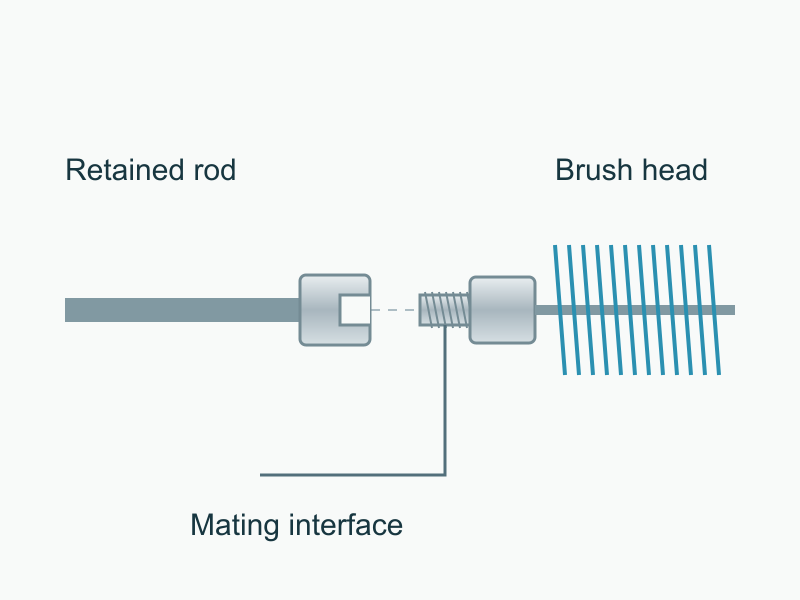
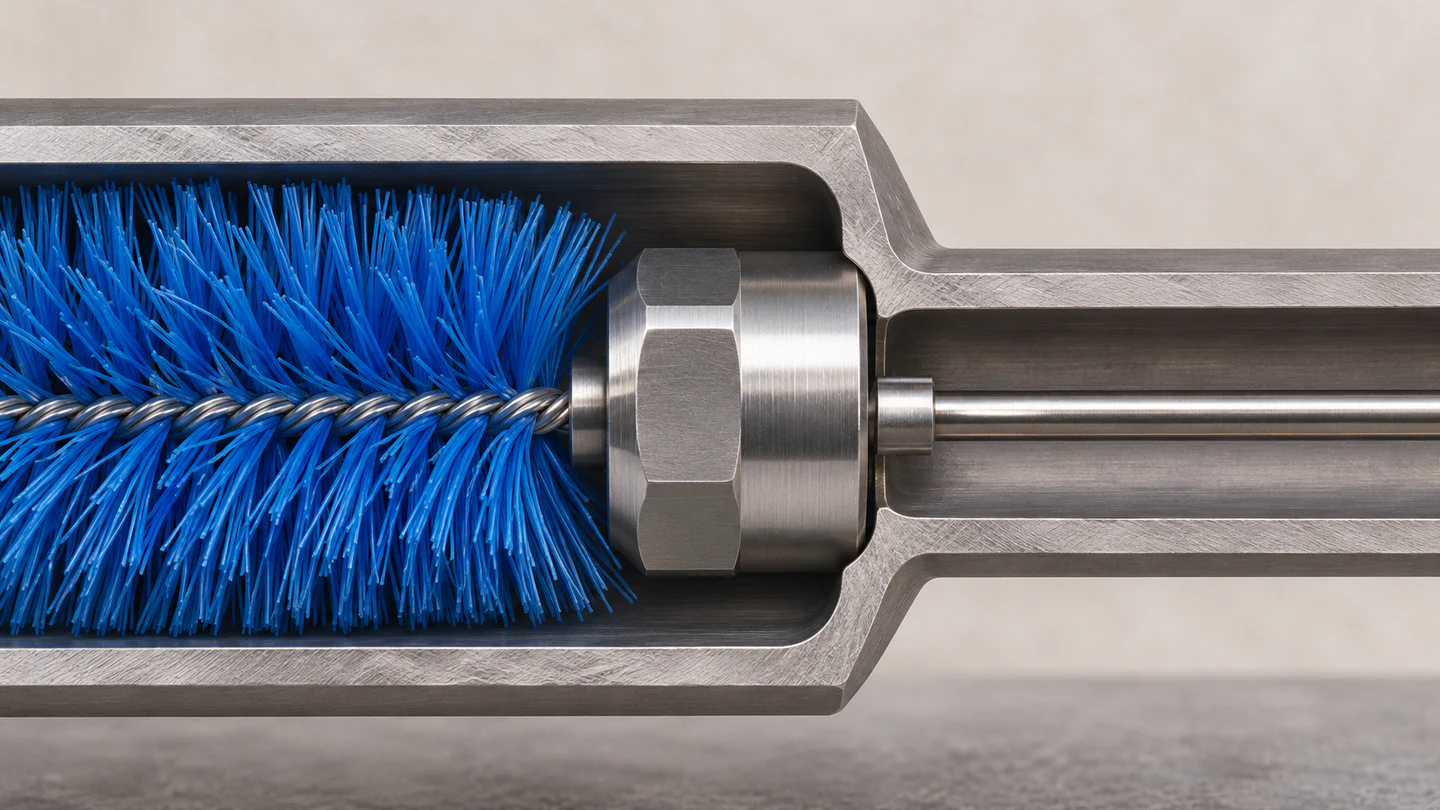
The head and rod remain separate supply items unless the quotation includes both. The space between them exposes the mating interface for review.
For a first exchanger-cleaning setup, provide the proposed equipment and ask how the head and shaft form a compatible system. For a head-only replenishment, provide the existing rod or holder reference and mating-end drawing. For a manual brush, describe reach and handling without adding an unnecessary powered connection.
Regional official supplier Goodway Benelux's rotary-cleaning overview discusses the head, shaft and cleaning equipment together. Use that system perspective while retaining the exact instructions and compatibility of the equipment actually being bought. Wet and dry arrangements have different removal and collection needs; do not assume that a head quotation supplies the rest of either system.
Resolve complete thread, seating and rigid connector clearance through the head-and-rod guide. Resolve brush envelope, entrance and route through the tube-fit guide. These checks prevent a useful cleaning candidate from arriving with an unusable mechanical arrangement.
Which catalogue details can I use directly, and which belong to the order?
Use published details to identify a candidate construction, then supply the application-specific information needed to configure it. Spirvobrush SB-TB-0003 shows a capped nylon head with 20 mm brush OD, 100 mm fill length and a threaded rear sleeve. The page does not state a complete thread designation for your retained rod.
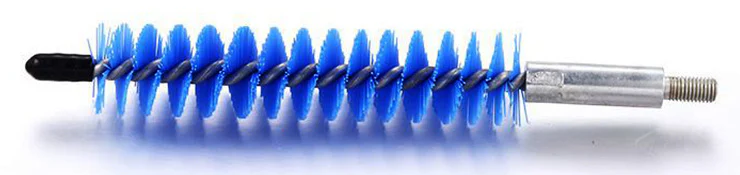
The leading cap, working head and connector each solve a different part of the application. The visible catalogue construction needs an ordered connection matched to the equipment.
By contrast, SB-TB-0024 states M10 × 1.5 male, while the metal-wire grade is selected for the application. One listing resolves more of the connection; the other choice still depends on the material and surface. Copying only the headline dimensions from either page leaves different unanswered questions.
Ask for the proposed fill material and specification, working envelope, leading end, connector or handle, and the dimensions required for the actual route. If a narrow entrance required a particular rigid sleeve envelope, keep that feature in the order. If a protected tube surface required a particular fill, retain it rather than reducing the description to “nylon brush” or “wire brush.”
For a site with several exchanger or boiler types, organize the requested configurations by their real compatibility. The same nominal head diameter can use different connectors or serve different tube surfaces. A clear part reference should help the store select the correct tool for the job, not merely distinguish sizes on a shelf.
What should a representative tube trial actually prove?
It should answer three physical questions: can the complete tool reach the required region, does the chosen process remove the specified deposit, and does the tube retain the required surface condition? Include how detached material is removed and how the result will be observed. Head entry alone answers only a small part of the task.
Choose a tube or representative component that contains the relevant material, surface and deposit condition. A clean spare tube can help investigate fit but cannot establish removal of a deposit it does not contain. A short straight piece can miss a deeper or curved access problem. Explain what the sample represents and what feature of the actual equipment still needs evaluation.
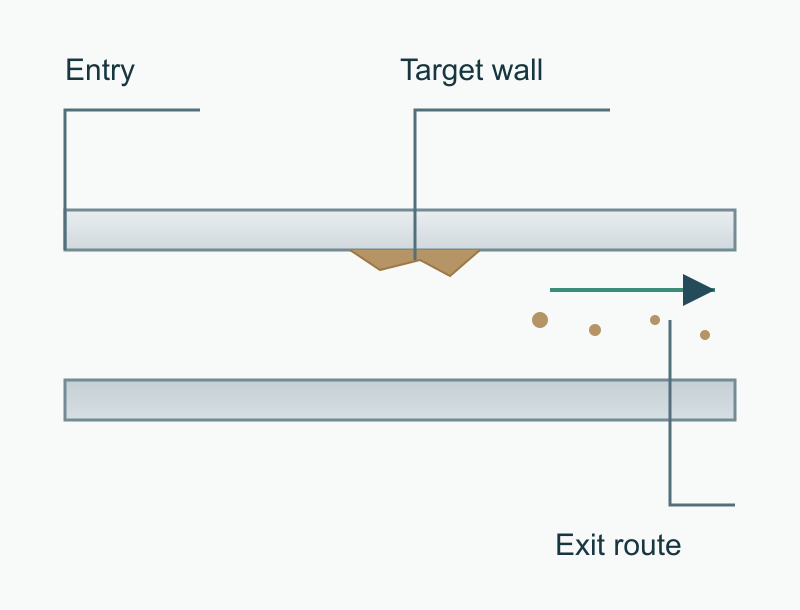
Inspect the target wall and the exit route separately. Material leaving the tube is useful evidence, but it does not show every wall condition.
In a wet muddy application, evaluate the wall after the intended carry-out and cleaning steps, not just the amount of dirty liquid observed. In dry residue service, inspect collection and remaining wall material with the method suited to that system. In a coated or enhanced tube, check the protected layer or recessed features that matter to the job.
Agree the inspection access before the trial. A camera at the entrance may not resolve deeper regions. Where the part requires another suitable observation method, make it part of the evaluation. Keep the selected head, equipment arrangement and representative starting condition identifiable so a successful result can be ordered without reconstructing it from an old photograph.
Use sample-to-order specification for that connection between the physical sample and its supplied configuration. If the target is an attached machining burr, use the separate internal deburring evaluation. If the target is a specified bore texture, use the honing surface trial. A deposit-cleaning result does not automatically establish either of those outcomes.
How should I compare quotations and quantities for a shutdown?
Compare equivalent deliverables. A low head-only price and a higher price including rods and connectors describe different supplies. Identify samples, production heads, reusable equipment and replacement parts separately. State the requested configuration for each equipment group and use same-scope quotation comparison when evaluating the offers.
Do not assume one brush per tube or a fixed number of tubes per brush without site evidence. Consumption depends on the task and actual replacement criteria. For an established process, use the site's recent consumption and condition history under comparable work. For a new process, separate trial needs from the production and spare plan instead of presenting an invented lifetime as a purchasing fact.
The required date should mean available for the job after the relevant receiving and fit checks, not merely delivered to the gate. Include any necessary time to identify configurations, resolve a mismatched connection or verify the first supplied version. The spares-by-date guide develops that availability planning.
A mixed-equipment site needs quantities by compatible configuration. Spare heads for one connector do not automatically cover another machine, even when their fill looks similar. For example, suppose the shutdown plan calls for three heads in connection group A and two in non-interchangeable group B. A delivery of four A heads and one B head totals the required five pieces but still leaves group B one head short. These quantities are an allocation example, not a recommended consumption rate. A returned head whose material or history is unsuitable for a protected tube is not ready stock for that job. Keep those physical restrictions visible when calculating what is actually available.
What should I check when the brushes arrive and when I reorder?
Compare the supplied construction with the ordered version: relevant working dimensions, leading end, fill identity, connector and condition. The agreed receiving plan determines the inspection scope and evidence. It should answer the differences that matter to the job rather than check only the easiest dimension.
If rods or other components were included, verify that the delivered items form the specified compatible arrangement. A carton can contain the correct total number of heads while mixing connector versions. Identify the affected configuration and obtain the correct items; extra pieces of another version do not close that shortage. The complete-set receiving guide explains this distinction across brush assemblies.
After service, compare the brush condition and the task before deciding the next order. A damaged tool on an unchanged application may call for the same new configuration. A different deposit, tube coating or access route may need reselection. Tube-brush condition and replacement separates those situations, while the substitution guide handles a proposed change in the supplied product.
An effective enquiry therefore includes the tube route and entrance, material and protected surface, deposit evidence, existing equipment interface, representative trial requirement and the exact items needed. Those details let a supplier quote a working arrangement and let purchasing replenish the right configuration when maintenance returns.