
How Many Complete Brush Replacements Are Really Ready After a Delivery?
Check supplied components, mating interfaces, complete-set quantities and transport condition before counting industrial brush replacements ready for maintenance.
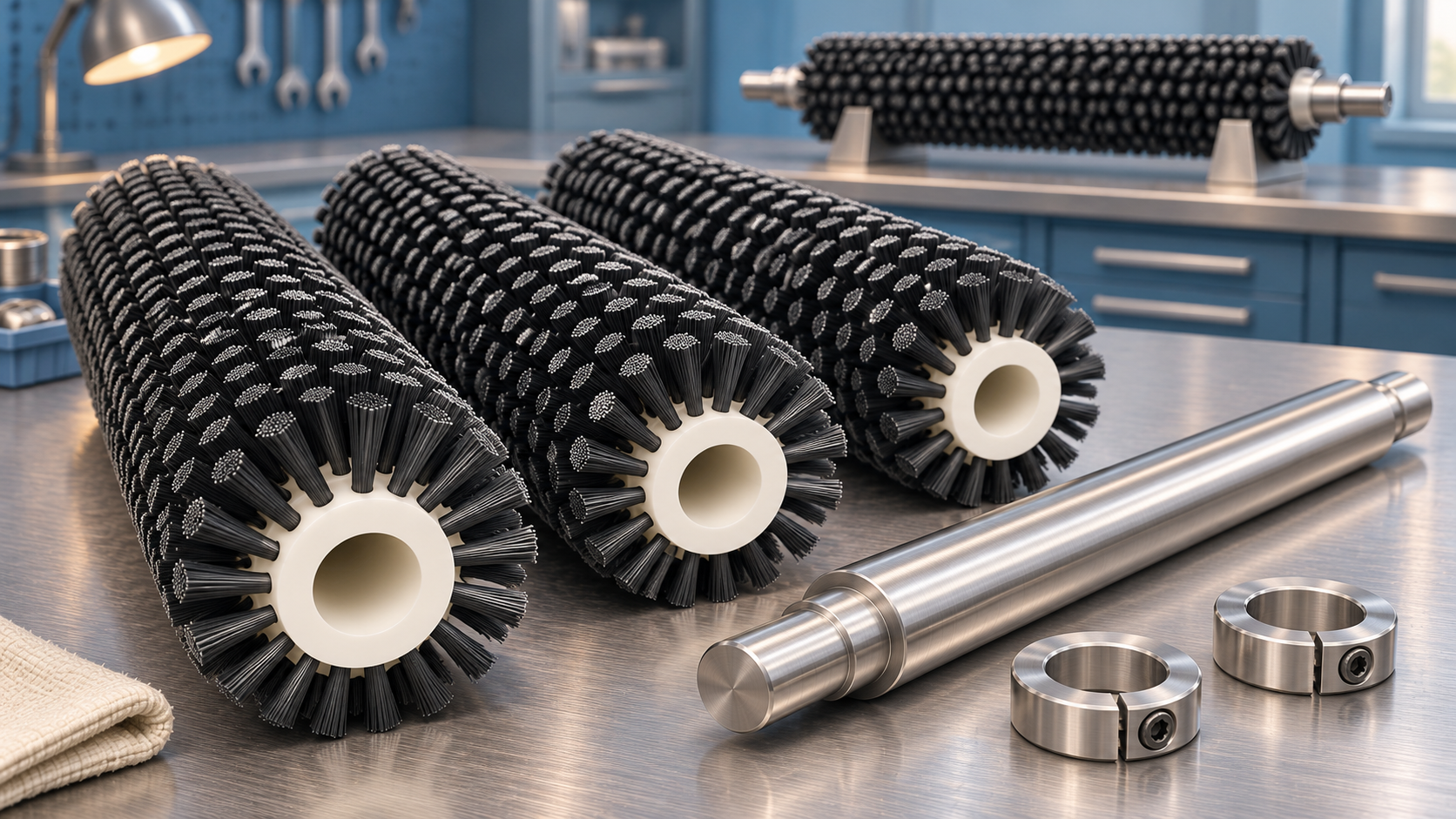
Count complete, compatible replacements for the intended machine, not just the number of brush-shaped items in a carton. A roller sleeve can be correct while its shaft is unavailable. A tube head can be the right diameter but have the wrong mating thread. A set of brush modules can contain every ordered piece yet lack the end part needed by that assembly.
Receiving therefore needs two answers: what actually arrived in acceptable condition, and which of those items form usable replacements for the specified equipment. The distinction is especially important before a shutdown, when parts may come from several suppliers and reusable components are already committed to other machines.
Did I buy a brush component or a complete assembly?
Start with the supply boundary on the order. A sleeve roller is a hollow brush component intended to fit a shaft. A shaft-mounted roller assembly includes more of the mechanical arrangement. A replaceable threaded head is different again from a complete head-and-rod tool. The word brush can refer to any of these in an informal conversation, but the receiving count cannot.
Spirvobrush SB-RL-0003 is a concrete example. Its published reference has a 400 mm brush face, 100 mm outside diameter, 60 mm core diameter, 25 mm mounting bore and 20 mm free fill. The product is a hollow-core nylon sleeve. The page explicitly treats the shaft or other mounting arrangement as something to discuss against the machine drawing.
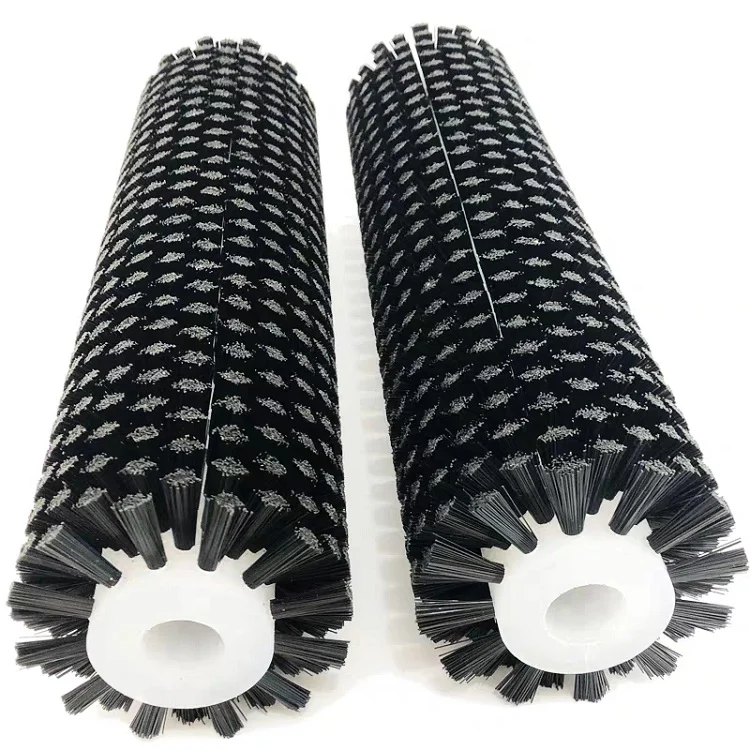
The visible bores identify sleeve components. A photograph of several sleeves does not establish included shafts, retention parts or complete machine sets.
Identify the delivered item by its actual construction and ordered unit. State whether shaft, keys, collars, holders, fasteners or other required parts are included, supplied elsewhere or retained from the machine. Only list components called for by the real assembly; a generic roller illustration does not create a universal bill of materials.
This matters when purchasing replenishes disposable sleeves while maintenance plans to reuse shafts. The new sleeves may be present, but the reusable shafts still need to be suitable for the intended arrangement. Their existence somewhere in the workshop does not make them available for this replacement.
Which interfaces can make similar-looking brushes incompatible?
Check the features that connect the brush to the machine. A roller's nominal bore diameter is only part of that connection. Plain and keyed bores have different torque-transfer arrangements; end recesses, locating shoulders and retention details can also differ. Follow the ordered drawing rather than choosing the nearest-looking part.
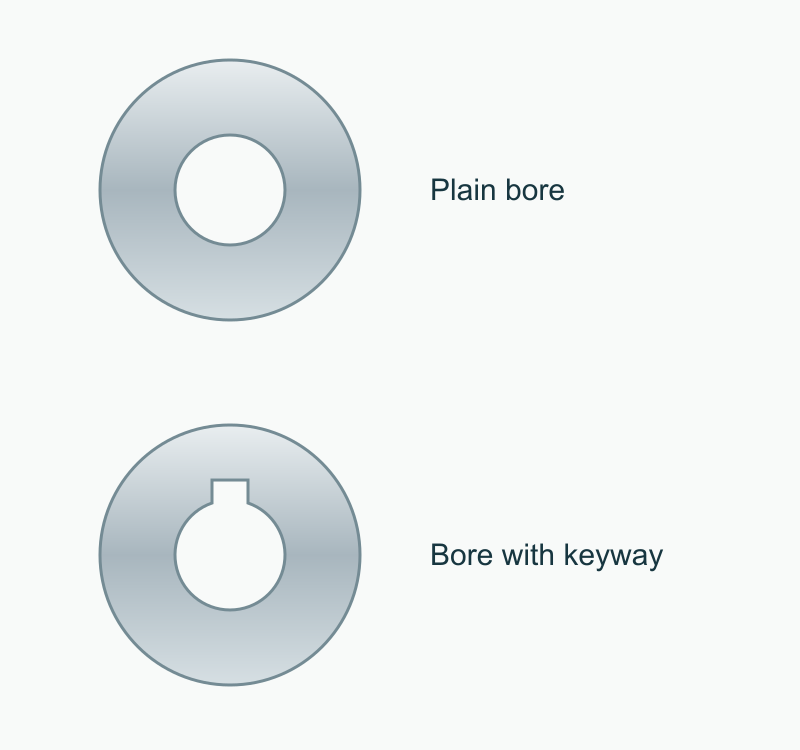
The central opening and its additional features identify different interfaces. The drawing illustrates the distinction without specifying a fit tolerance or key size.
For a threaded tube head, the complete mating thread and seating arrangement matter. Two heads can share a working diameter while fitting different rods. For a strip brush, backing profile and holder engagement can differ even when the free bristle height looks identical. For modular rollers, end pieces and intermediate pieces can have different roles in the stack.
A mixed-machine maintenance store should therefore group parts by compatible configuration, not by appearance or a broad size label. Put the machine or assembly reference where it can be associated with the actual item. A label is useful only when it corresponds to the supplied interface and fill, so compare the relevant physical features during receiving.
Where an existing shaft or holder is reused, compare its identified version and condition with the intended replacement arrangement. A new component should not be forced onto a damaged or different interface to make the count look complete. The replacement and substitution guide addresses a proposed alternative; the threaded connection guide develops tube-head mating details.
How do I count complete sets when some parts are supplied separately?
Write down the actual components needed by one compatible assembly. Then compare the available quantity of each with the number required per assembly. The component that can support the fewest whole assemblies limits the complete-set count. Fractional components cannot create another set, and incompatible groups should be calculated separately.
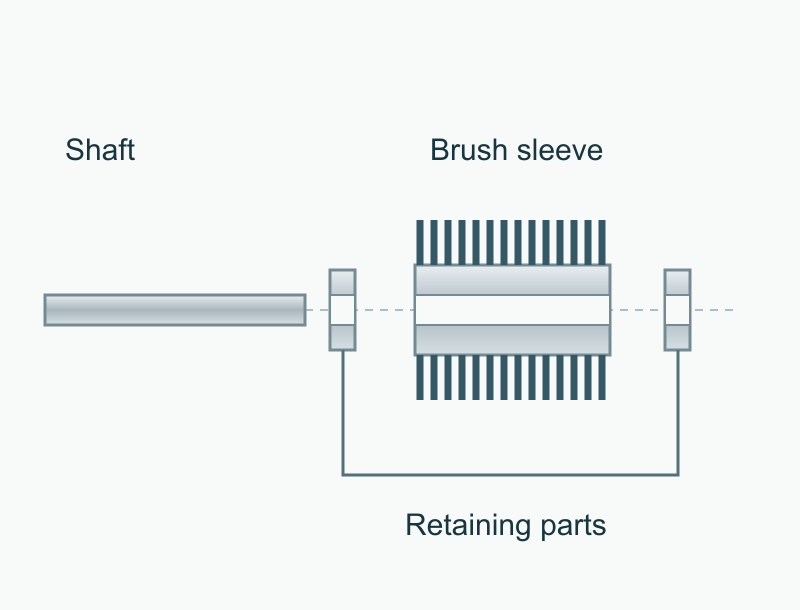
This generic arrangement makes the separate physical items visible. Use the machine's actual composition and supplied scope for the count.
If sleeves are plentiful but the required retention part is missing, more sleeves will not solve the immediate shortage. If the shaft is the limiting item, releasing another box of brush sleeves does not add a complete replacement. Name the actual missing component and its configuration when asking purchasing to expedite supply.
Allocate shared parts only once. A retained shaft committed to a production replacement cannot simultaneously support a ready spare assembly. If a fixture or holder can genuinely be moved between tasks, the schedule must allow that use; the same physical item is still not present in two places at once.
This logic also applies beyond rollers. A strip-and-holder replacement may need the agreed retaining arrangement. A segmented brush may require particular end modules and spacers. A threaded head-only order may rely on a suitable existing rod. Conversely, a complete manual brush may require no separate assembly components. Count the real replacement unit instead of forcing every brush into a multi-part kit.
Keep the units clear when ordering the shortage. A pack of parts is not the same unit as an individual component or a complete set. If the supplier sells a pack, convert the needed component quantity into the confirmed pack quantity and retain any unused remainder as unallocated stock. Do not invent a spare percentage to conceal an unresolved assembly requirement.
Why can 19 delivered sleeves produce only 14 complete replacements?
Suppose a shutdown needs eight A assemblies and seven B assemblies. Each requires one sleeve, one shaft and two retaining collars; the machine drawings make A and B components noninterchangeable. Nineteen sleeves arrive: twelve A and seven B. Two A sleeves are held out of use, leaving ten accepted A sleeves and seven accepted B sleeves. The shafts and collars available for this job are shown below.
Compatible group | Available sleeves | Available shafts | Available collars | Complete assemblies |
|---|---|---|---|---|
A | 10 | 8 | 15 | min(10, 8, floor(15 ÷ 2)) = 7 |
B | 7 | 7 | 14 | min(7, 7, floor(14 ÷ 2)) = 7 |
Total | 17 | 15 | 29 | 14 |
Here floor means keeping only the whole-number result: fifteen collars provide seven pairs, with one collar left over. Allocate seven A sets and seven B sets. Group A then has three sleeves, one shaft and one collar remaining. One additional compatible A collar completes the eighth A assembly. Releasing the two held sleeves alone would not close the shortage, because collars are the limiting component.
The example's bill of materials and quantities define this calculation; they are not the standard composition of the catalogue sleeve. Calculate each actual compatibility group in the same way, then add its complete sets. Combining the loose totals first would conceal which replacement is still missing.
What should be inspected before a delivered component enters that count?
Inspect the characteristics agreed for the ordered configuration. Depending on the item, these may include working dimensions, mounting features, fill identity, end construction, visible condition and required material evidence. The inspection scope and tolerances come from the order and applicable plan, not a universal checklist of catalogue dimensions.
Separate working dimensions from mounting dimensions. A roller's brush face defines axial contact coverage; its outside diameter defines a free working envelope; the bore and ends connect it to the shaft and retention. A matching outside diameter does not prove the bore fit, and a correct bore does not prove that the fill or working width suits the process.
For SB-RL-0003, the published 20 mm free fill is consistent with the difference between the 100 mm brush OD and 60 mm core, divided by two. That helps identify the construction, but it does not supply a receiving tolerance or a machine contact setting. The ordered configuration may include specific fill or core requirements that are not visible in the product photo.
If a delivered item lacks required identity or has a mismatched interface, keep it out of the quantity available for that task until the issue is resolved. When only an identifiable portion of a delivery meets the agreed requirements and the receiving process permits partial acceptance, count that portion specifically. Do not let one conforming sample stand in for an inspection scope it did not cover.
Photograph a discrepancy in a way that shows both identity and the physical feature: the labelled component, its mating end and a useful scale or drawing reference. The supplier can respond more effectively to a shown keyway or connector difference than to the statement that a brush does not fit.
Can transport damage make the right part unusable?
Yes. Correct identity does not establish intact geometry. Inspect packaging and the item for the conditions relevant to the design: crushed or displaced fill, a changed stem or shaft shape, impact at a connector, or damage to a core or mounting end. These observations explain why a carton count and an available-parts count can differ.
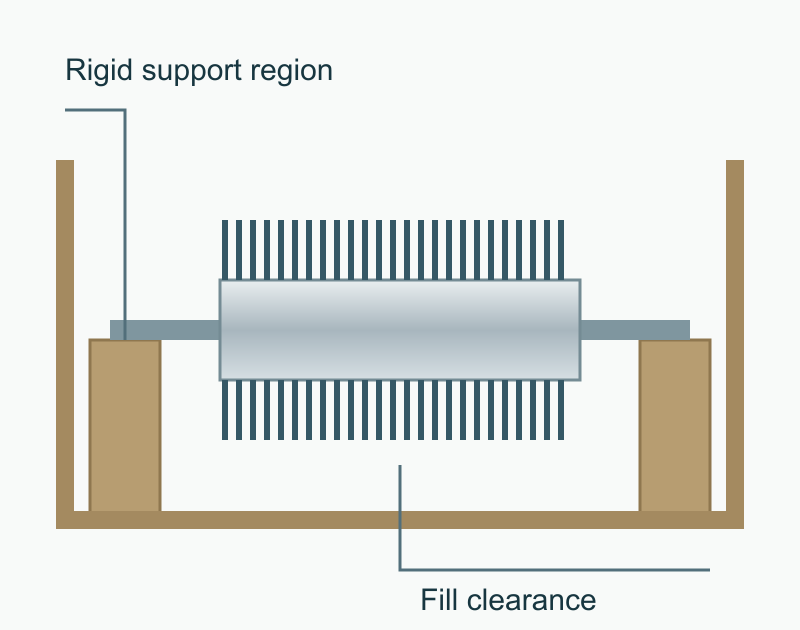
Supports and clearances protect different parts of the roller. The schematic illustrates the inspection principle, not a shipping fixture specification for SB-RL-0003.
For a long roller, check where the package carried the load. If the brush face has supported heavy items, a locally flattened area deserves evaluation even when the core dimensions match. For a compact threaded head, several connectors striking neighbouring fill can create a different damage pattern. A long manual tube brush can have a bent stem while its head still looks full.
Use the supplier's and machine's condition requirements to decide the appropriate response. Do not trim, straighten or otherwise modify a delivered brush merely to make it resemble the order before the discrepancy is understood. Such an action can erase useful evidence and change the supplied construction.
Store accepted components so that their geometry and identification remain intact until assembly. Keep disputed or unidentified items physically separate from parts ready for allocation. This is a practical way to prevent a visually similar but unsuitable spare from being selected during a time-sensitive changeout.
What is the final check before calling a replacement ready for the shutdown?
Confirm the compatible assembly can actually be made from the available parts, then complete the relevant assembly and installation checks under the machine procedure. The parts count does not establish alignment, retention, rotating clearance or the resulting working position. Those are physical features of the assembled tool.
For a sleeve change on a conveyor brush, the receiving result may establish the new sleeve's identity and condition. The assembled check then addresses the existing shaft, locating arrangement and installed position. For a modular brush, it also addresses the stack composition and orientation. For a threaded head, it addresses the specified mating pair rather than only a loose head on a bench.
Tell the maintenance planner what is ready in terms of actual compatible replacements, what component limits any remaining set, and which supplied items need resolution. That produces a concrete next action: obtain a particular matching part, resolve a damaged shipment or finish the assembly check. Asking for more unspecified brushes is rarely as useful.
The next purchase should retain the resolved supply boundary. Use the quotation comparison guide to distinguish components from assemblies, and the spares-by-date plan to place receiving and assembly work before the required use date. With the component identity, compatibility and whole-set count aligned, the stock figure describes what maintenance can actually use.