Which Tube Brush Should I Buy for Mud, Soot or Scale?
Choose tube brush fill by deposit behaviour, tube surface and debris removal. Compare nylon, copper and wire constructions in realistic cleaning conditions.
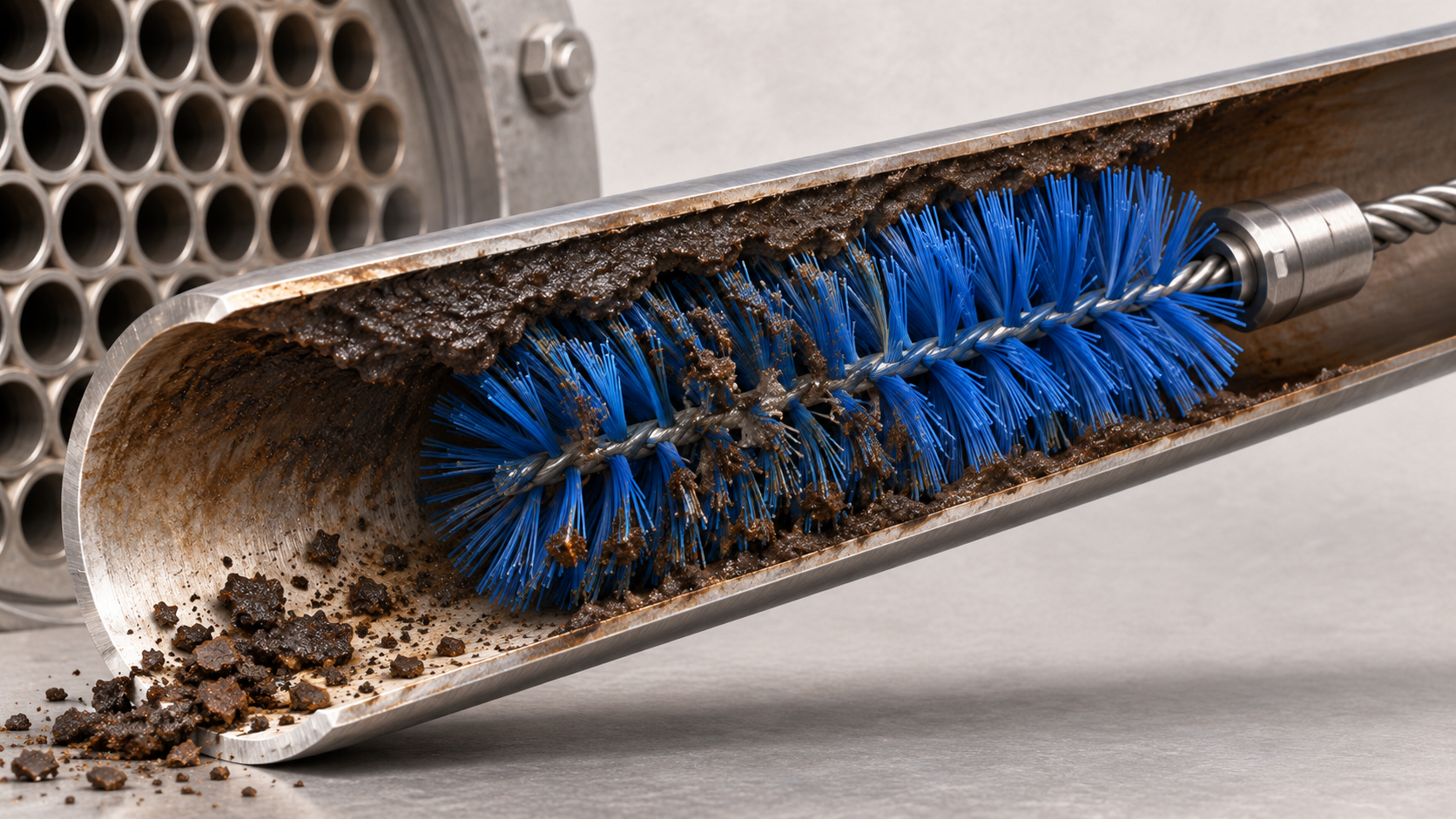
Choose the fill around two things: the deposit that must come away and the tube surface that must remain acceptable. A request for a “stronger tube brush” leaves both unresolved. Loose mud, sticky fouling, dry soot and an attached mineral layer do not present the same cleaning problem, even when the tube diameter is unchanged.
Start with the equipment side being cleaned, the tube material and internal construction, and an observable description of the deposit. Then consider the complete brush: filament, head layout, leading end, core and connection. This guide explains how those differences change a purchase enquiry. The separate tube-fit guide deals with entrance restrictions, bore size and the route the candidate must follow.
Am I dealing with loose particles, sticky fouling or a bonded layer?
Describe the condition before naming a brush material. A loose deposit consists of particles that the cleaning action must detach or move and then carry out. A sticky layer can adhere to the wall and collect between bristles. A firmly attached layer may demand a removal mechanism beyond the useful scope of a particular brush. These descriptions concern observable behavior; color alone cannot establish a deposit's chemistry.
In a water-cooled chiller, mud or biological fouling can occupy the water side. In a fire-tube boiler, dry soot presents a different cleaning environment. An exchanger with hardened deposits may need a staged approach in which opening or breaking the deposit and final brushing are separate operations. The equipment and material conditions determine which approach is appropriate.
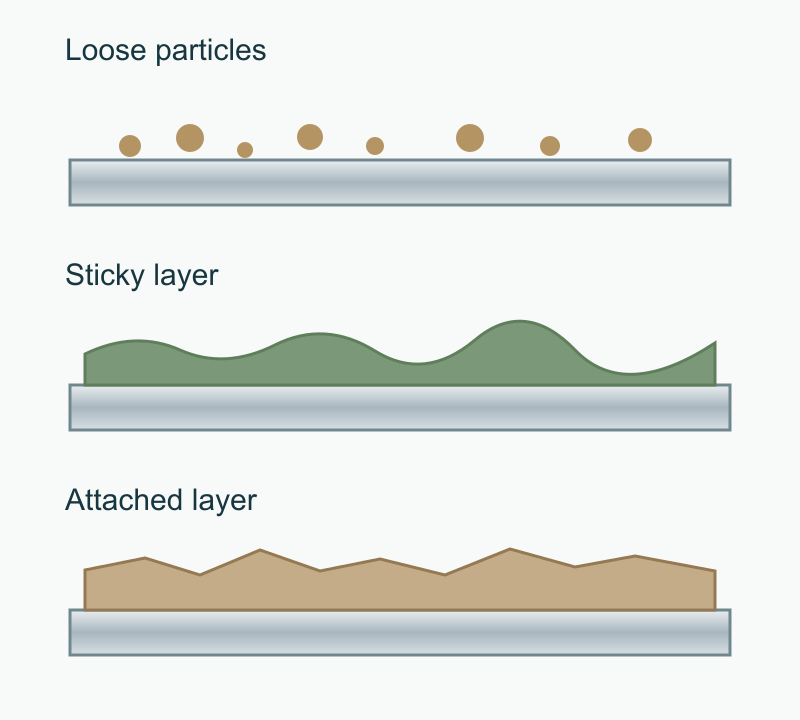
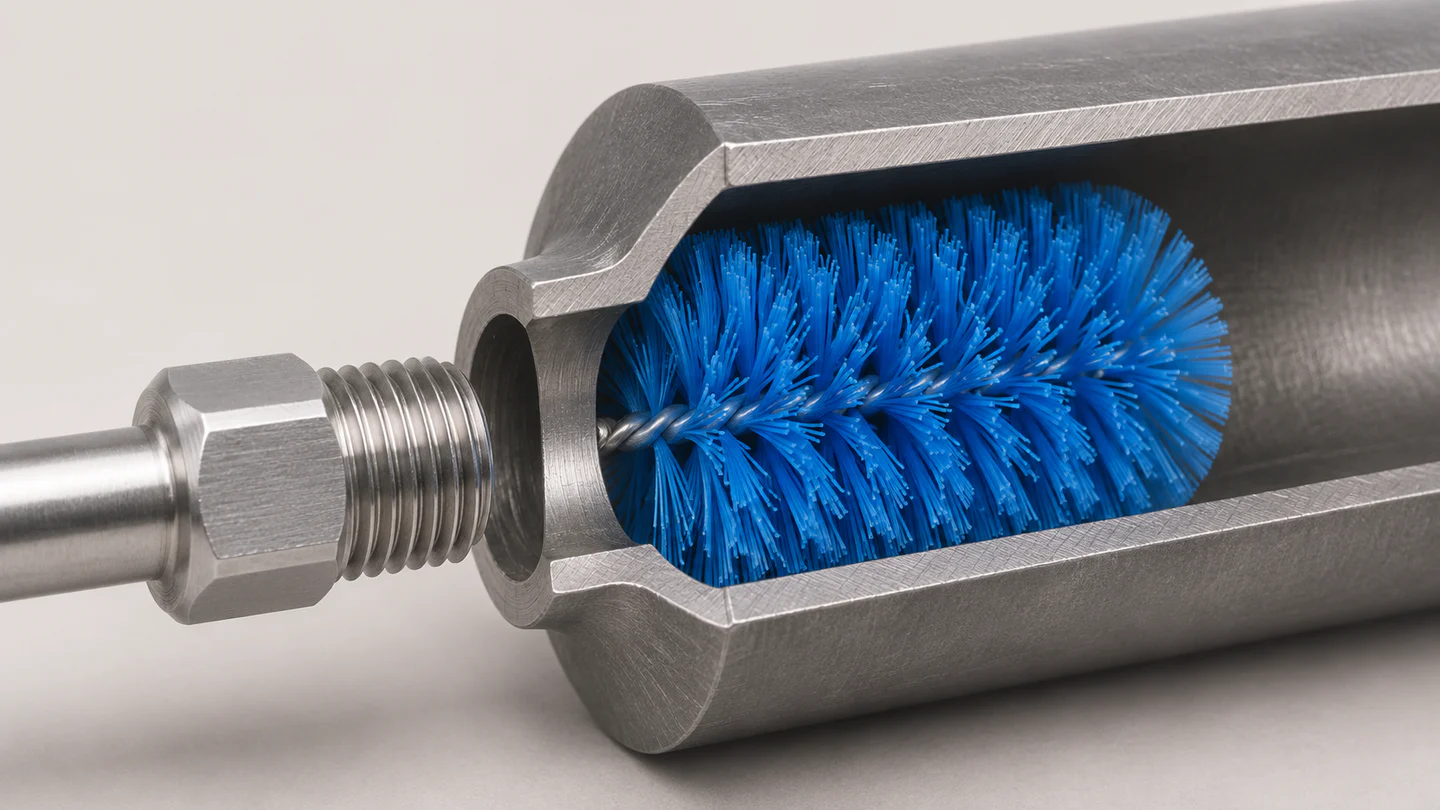
Deposit-section illustrations: loose particles, a soft layer and an adherent deposit create different cleaning tasks.
TC Wilson's cleaning-head guide distinguishes debris, powdery deposits, wet gummy fouling and hard scale when discussing its different heads. Its useful lesson for a buyer is that changing tools can mean changing the removal method, not simply choosing a thicker wire. Do not turn a supplier's examples into a promise that any one brush clears every deposit in that category.
When the deposit is uncertain, provide a representative view of the tube interior, the maintenance history relevant to the change, and a retained sample where the site's procedure allows it. Say whether the material is loose, smears, fills the space between bristles or remains attached after the current permitted process. That description gives a supplier more to evaluate than “dirty tube.”
When is nylon a sensible candidate, and what does the material name leave out?
A nylon head is a candidate to discuss when removing relatively loose residue from a compatible tube under a suitable cleaning method. That does not make every nylon construction interchangeable. Filament diameter, exposed working geometry, head density and the way the fill is held influence how the brush reaches the wall and responds to contact. A material name describes only part of the tool.
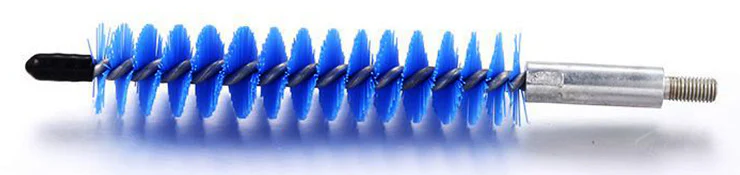
Spirvobrush SB-TB-0003 is a capped blue nylon reference with 0.40 mm filaments, 20 mm brush OD and 100 mm fill length. Its twisted metal core, leading cap and threaded sleeve are visible parts of the construction. If the tube surface or cleaning liquid imposes a material restriction, the core and connector belong in that discussion as well as the blue fill.
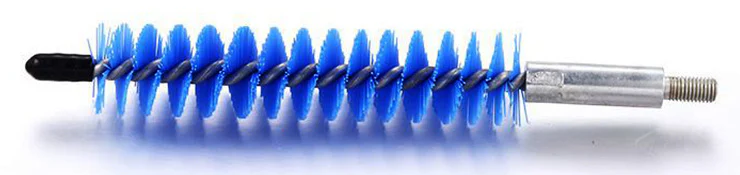
The cap, nylon fill, core and connection each meet a different part of the cleaning environment. “Nylon” alone does not describe all of them.
For routine loose residue in a smooth straight tube, the initial question may be whether a suitable nylon head establishes enough contact without creating an unacceptable surface change. For a lined or coated tube, the question is narrower: what contact and cleaning method does that particular surface permit? The absence of metal filaments is not, by itself, proof that the complete assembly cannot mark it.
A cap can change the leading-end construction, but its dimensions, attachment and path still matter. The cap does not protect against every possible contact by the sleeve, exposed core or retained rod. When requesting a sample, show the sensitive area and identify which part of the assembly might reach it.
Would copper or another wire fill solve the remaining deposit?
A wire candidate should be selected for the actual tube and deposit, not added merely because nylon did not complete the task. First establish why the current result is poor. The head may not reach a groove, the deposit may pack the fill, the target may lie beyond the working section, or the chosen method may be inappropriate for the layer. A material change addresses only some of those possibilities.
SB-TB-0004 uses 0.10 mm copper wire, with a 16 mm brush diameter and 100 mm fill length. Copper is the stated material; a copper-colored photograph does not justify substituting brass in the order. Its M6 male connection is a separate compatibility question.
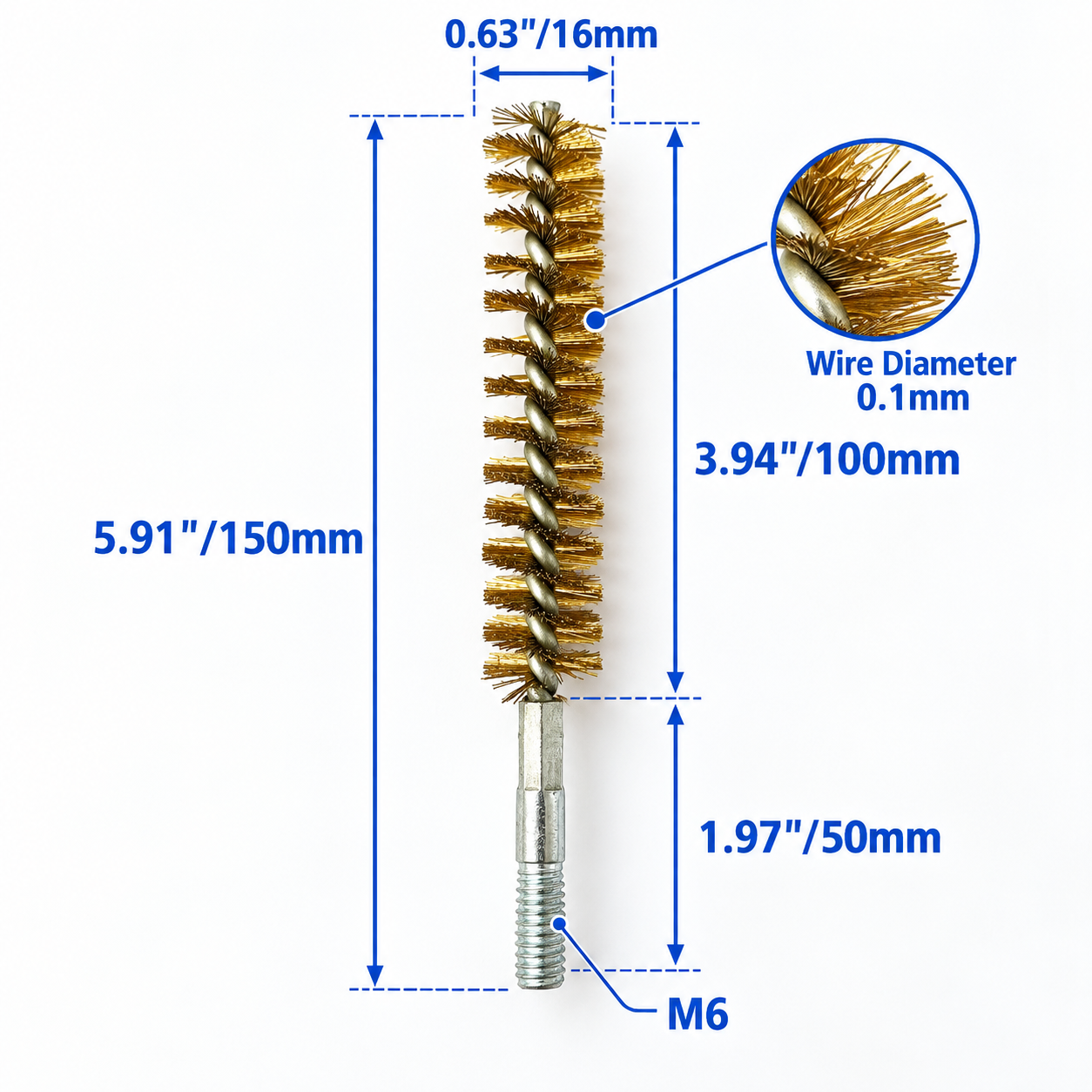
Fine copper-wire product reference: compare its head and connection dimensions separately from those of the larger nylon head.
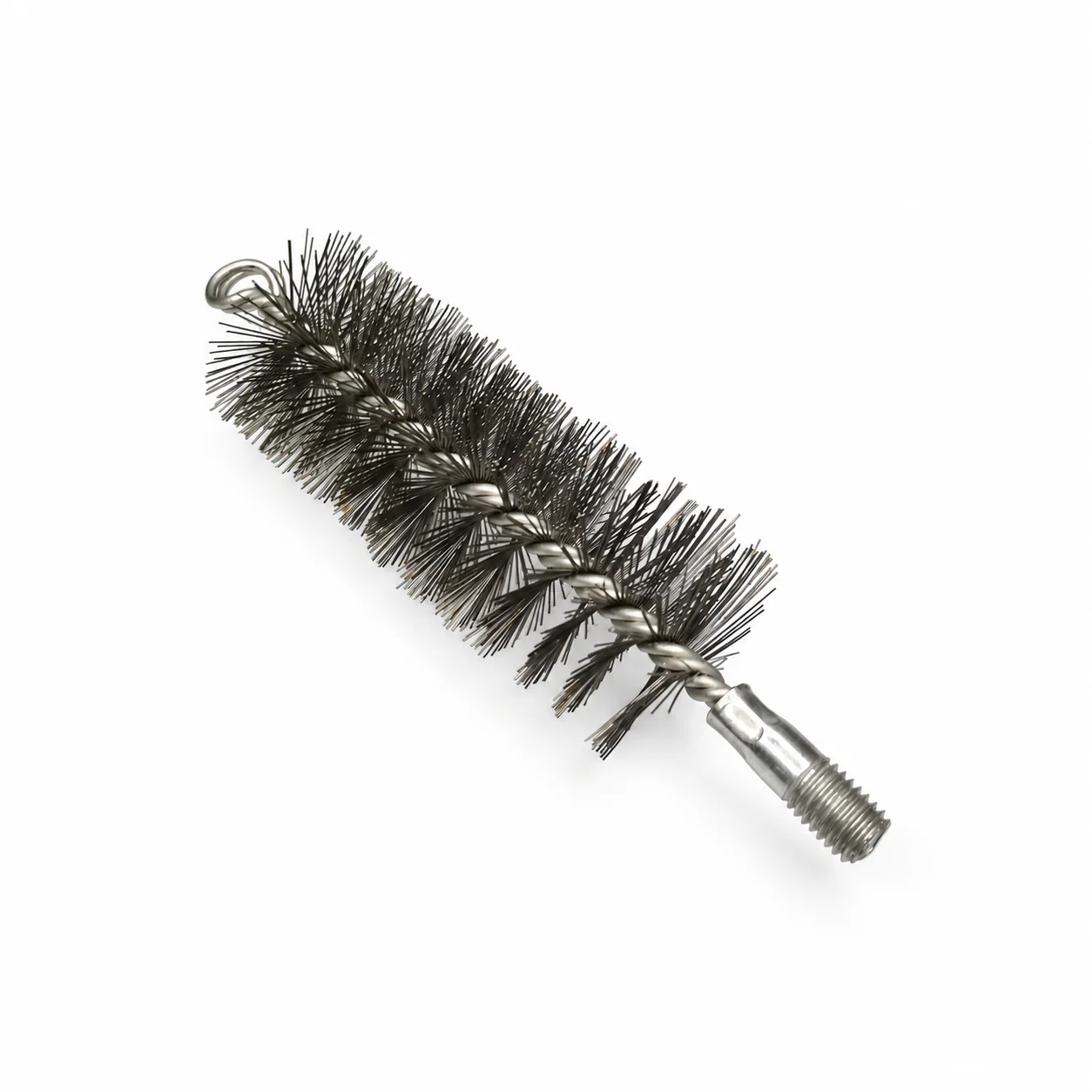
The SB-TB-0024 coarse spiral boiler brush lists a 32 mm OD, 130 mm working length and 0.30 mm metal wire, with M10 × 1.5 male connection. The wire grade is selected for the application. An order that silently turns “metal wire” into carbon steel or stainless steel has introduced an unsupported material decision.
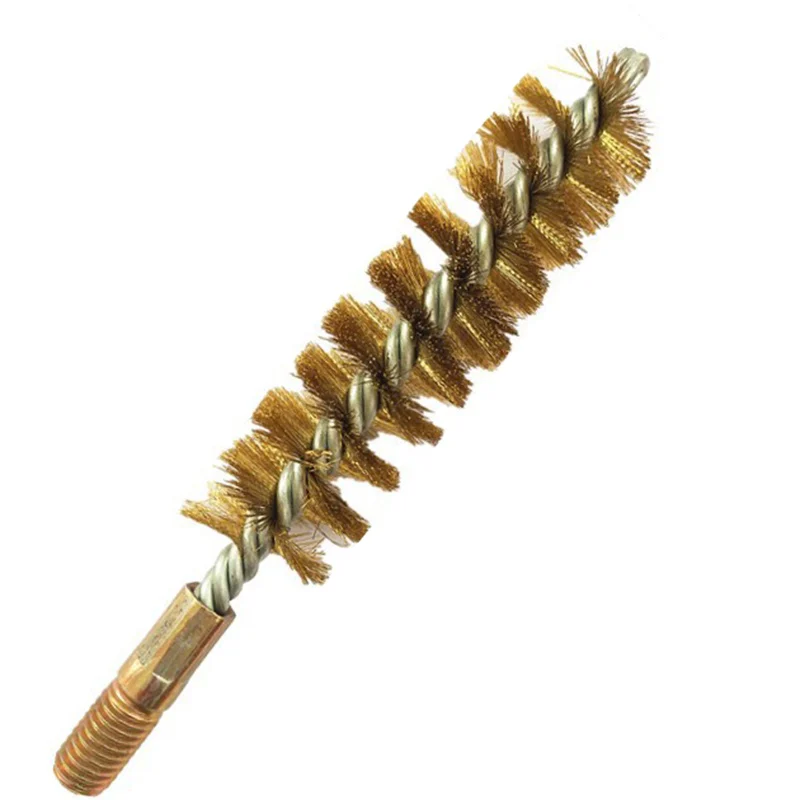
The open turns, exposed folded tip and short coupling distinguish this head from the capped nylon reference. Those visible differences belong in the selection, not just the word “wire.”
These three references differ in size, filament, head and connection. They help a buyer describe options, but they do not rank nylon, copper and metal wire on a common test. If two configurations are proposed for the same tube, ask which differences are intentional and why. For a sensitive or specifically controlled metal surface, confirm the permitted contact material before treating a stronger-looking construction as progress.
Why do the bristles fill with dirt while the tube remains dirty?
Loosening material and removing it from the passage are related but separate tasks. A brush may detach material from one location while that material accumulates between its bristles or moves into another recess. A photograph of a loaded brush can therefore show that it encountered deposit, without showing that the required tube length is clean.
Sticky material makes this distinction particularly visible. If the spaces between filaments fill with a cohesive layer, the exposed working surface is no longer the same as it was on a clean brush. Simply adding more fill or requesting a larger diameter does not establish that the material will escape. The relevant question includes how the approved cleaning system carries loosened residue away.
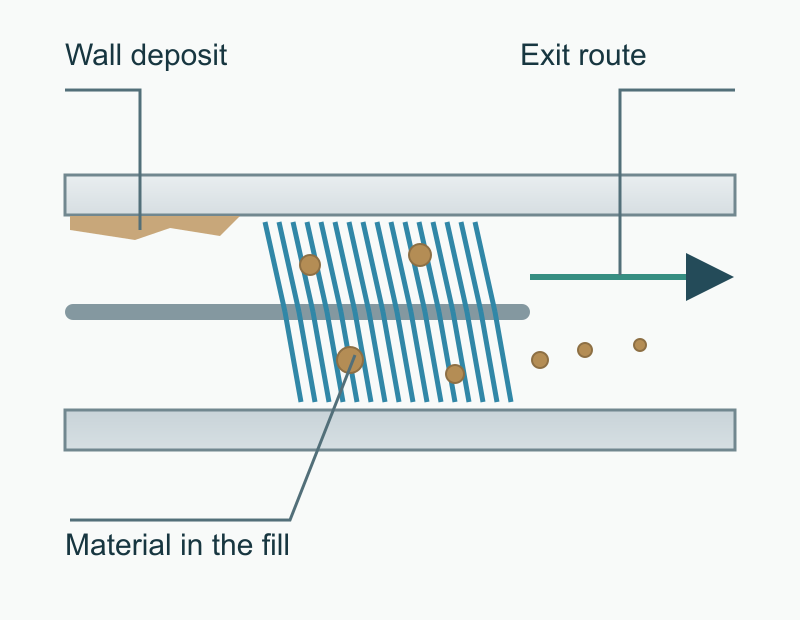
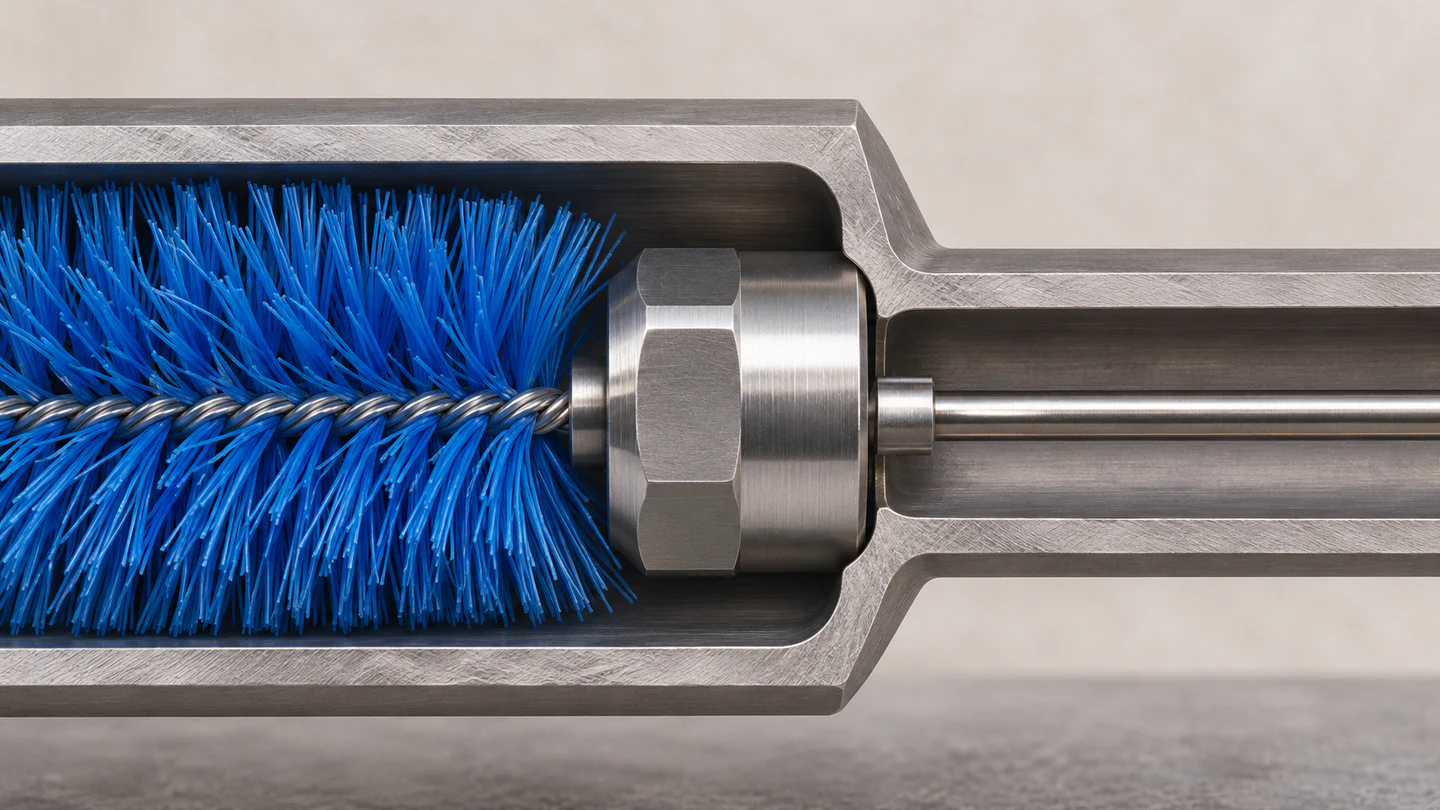
The brush contacts the deposit; the cleaning arrangement must also remove loosened material. The arrow identifies an exit route, not a specified flow rate or pressure.
Wet and dry equipment arrangements handle that problem differently. Goodway Benelux's large-brush information describes the head together with compatible wet or dry flexible shafts. This is useful system context: the head is not the whole cleaning arrangement. Use the requirements of the actual equipment for liquid, extraction or other residue-removal provisions rather than improvising them from a brush listing.
For dry soot in a boiler tube, describe the existing collection method and where material remains. For wet gummy fouling, describe whether the fill becomes packed and where the loosened matter collects. If the residue changes after a water-treatment or operating change, tell the supplier what changed rather than assuming the previous brush has merely worn out.
How do coatings and internal grooves change the decision?
The protected surface can narrow the useful options before removal performance is compared. A coating, lining or specified internal finish must be identified in the enquiry. “Stainless tube,” for example, may not describe the surface actually contacted if there is another layer on the inside. A catalogue recommendation based on a bare base metal cannot settle that different task.
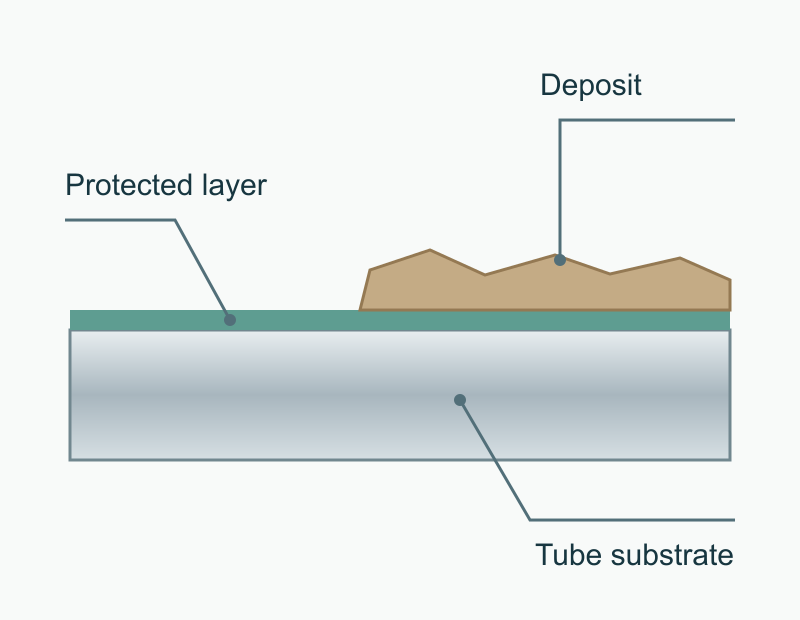
Removal should be judged at the deposit and at the surface beneath it. A cleaner-looking area is not automatically evidence that the protected layer remains acceptable.
With a coated tube, the first useful comparison is not “Which brush takes away most?” It is “Which candidate can remove the required deposit while retaining this defined surface?” The tube or coating requirements determine the inspection. Visual marks, exposed substrate or a changed local condition may matter even when much of the passage looks clean; a photo cannot replace a specified test of that surface.
Internally enhanced tubes add a geometric distinction. The high portions and recessed grooves can hold different amounts of deposit and receive different contact. A result on the visible high surface does not prove that a lower groove was treated. Conversely, a construction intended to reach more deeply must still be evaluated against the same material and surface restrictions. See the enhanced-tube contact explanation before increasing fill merely to compensate for an unexamined recess.
When should I stop asking for a more aggressive brush?
If the passage is substantially blocked, a head that cannot access the deposit cannot establish a cleaning result. If a firmly attached layer remains beyond the capability of the present method, the next step may concern an appropriate removal process rather than another brush of the same form. If the desired cleaning damages the surface, the problem is the combined removal-and-preservation task, not the appearance of the cleaned area alone.
Manufacturers offer scrapers, cutters and other cleaning equipment for particular conditions. Those alternatives require their own equipment and tube assessment. Mentioning them here does not authorize a specific opening or cutting operation. For procurement, the practical consequence is to send the deposit and tube conditions for a method decision instead of ordering an unqualified stronger fill.
A useful escalation describes the limitation: the head cannot enter, the fill repeatedly loads, the groove remains untreated, the bonded layer remains, or the surface changes unacceptably. Each observation points toward a different investigation. “Brush too soft” skips that distinction and can result in a replacement that adds contact without solving the actual problem.
What should a representative comparison and final enquiry include?
Compare candidates on tube conditions that represent the job, including the relevant deposit and protected surface. Keep the geometry suitable for the same accessible passage. If head diameter, filament size, tip or working length also differ, name those differences; the result then compares complete configurations. It does not isolate the effect of material alone.
Inspect the same meaningful locations before and after the approved process. Include the entry, the target working length and the recesses or protected areas that made the selection difficult. Check remaining residue and the resulting surface together. If material was moved into another part of the system, the cleaning target has not been answered merely because the first inspected patch is clear.
An enquiry becomes actionable when it includes the tube material and internal construction, the deposit's observed form, the existing cleaning equipment and residue-removal method, the surface restrictions, and a proposed head with complete fill, core, leading end and connection. State the specific result that the current brush does not achieve. This lets the supplier explain a candidate rather than guess at a universal material upgrade.
For an unchanged task, retain the exact configuration that produced the accepted result. If the deposit or protected surface changes, revisit that selection before repeating the old order. The tube-cleaning purchase route connects the chosen head to its supplied components; the condition guide helps when the unresolved question is damage, packed fill or wear.