Produce Washing Brush Rollers: Can One Specification Clean Two Crops Without Marking Them?
Choose produce washing rollers by crop variety, soil, skin condition and handling geometry. Compare shared specifications without mistaking clean appearance for intact skin.
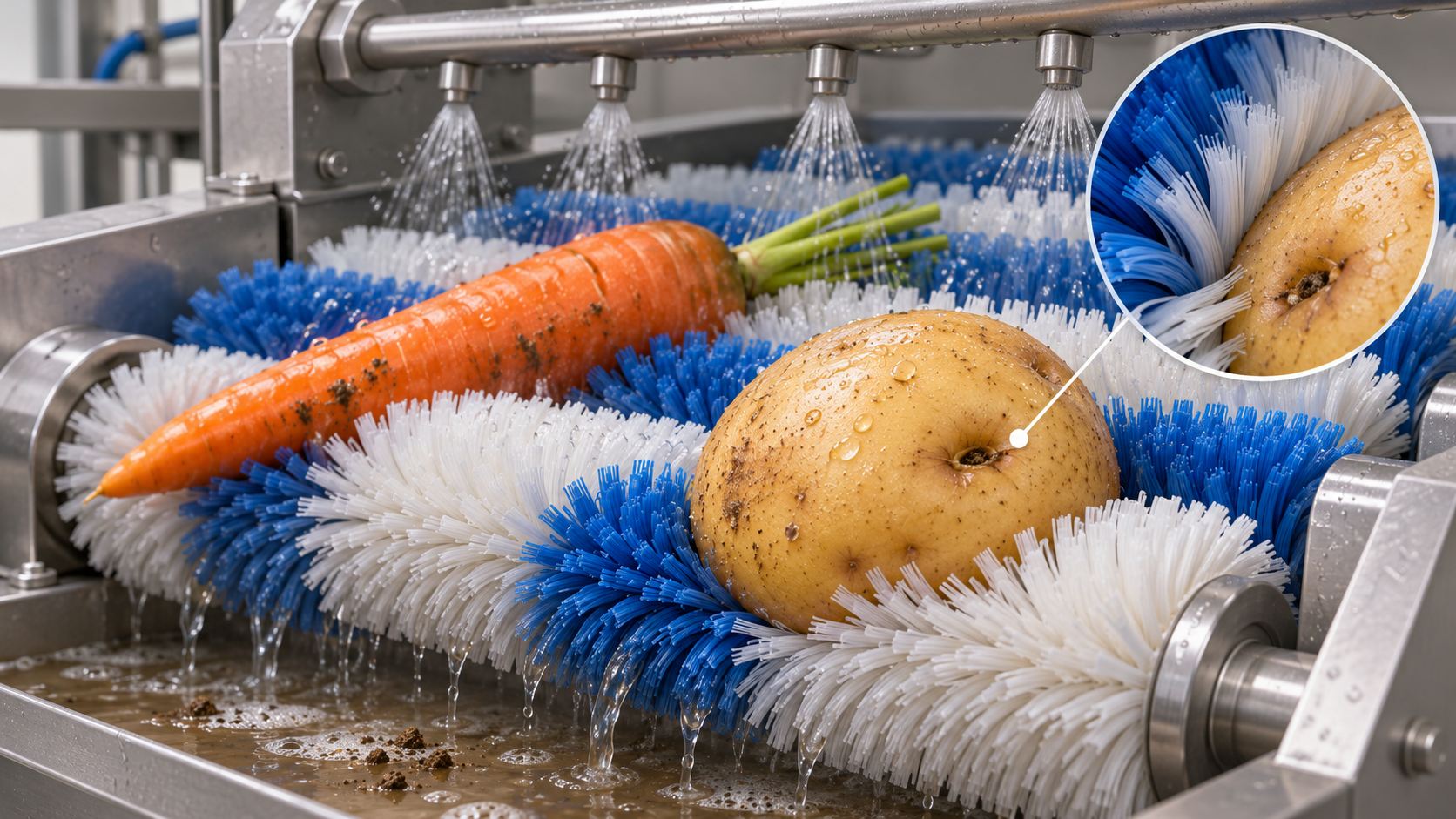
One roller specification can serve two crops only when it cleans each crop to the required condition without unacceptable skin damage or handling problems. A matching shaft and a familiar nylon colour do not establish that result. Compare the incoming soil, crop variety, size range and intended finish before deciding whether shared hardware is practical.
The important distinction is between removing dirt, polishing the surface and deliberately removing skin. Those are different tasks. If a line changes from washing whole potatoes for fresh sale to processing roots for another end use, the acceptable surface change may change even when the washer remains the same. Define the task at the produce surface before changing the brush.
Why can a brush clean one crop but mark another?
Soil removal and surface preservation compete at the contact. A brush can dislodge material from a recess while also rubbing exposed high points. Produce shape determines where contact concentrates, and the skin condition determines whether that contact is acceptable. A crop name alone does not describe those conditions.
Wyma’s selection guidance considers crop variety, incoming soil, water and prewashing, end use, and brush-segment geometry together. It also gives examples of different brush duties within one polishing machine. This is useful evidence that “one brush for vegetables” is too broad a specification. Wyma’s particular brush life figures and machine adjustments are not ratings for another roller. Wyma brush-selection guidance
In a practical comparison, inspect both the cleaned surface and the most vulnerable areas: protrusions, thin skin, ends and existing damage. A visually brighter product can still have an unacceptable scuff. Conversely, a sound skin does not compensate for soil left in the required clean zone. Judge these outcomes separately on the same representative produce.
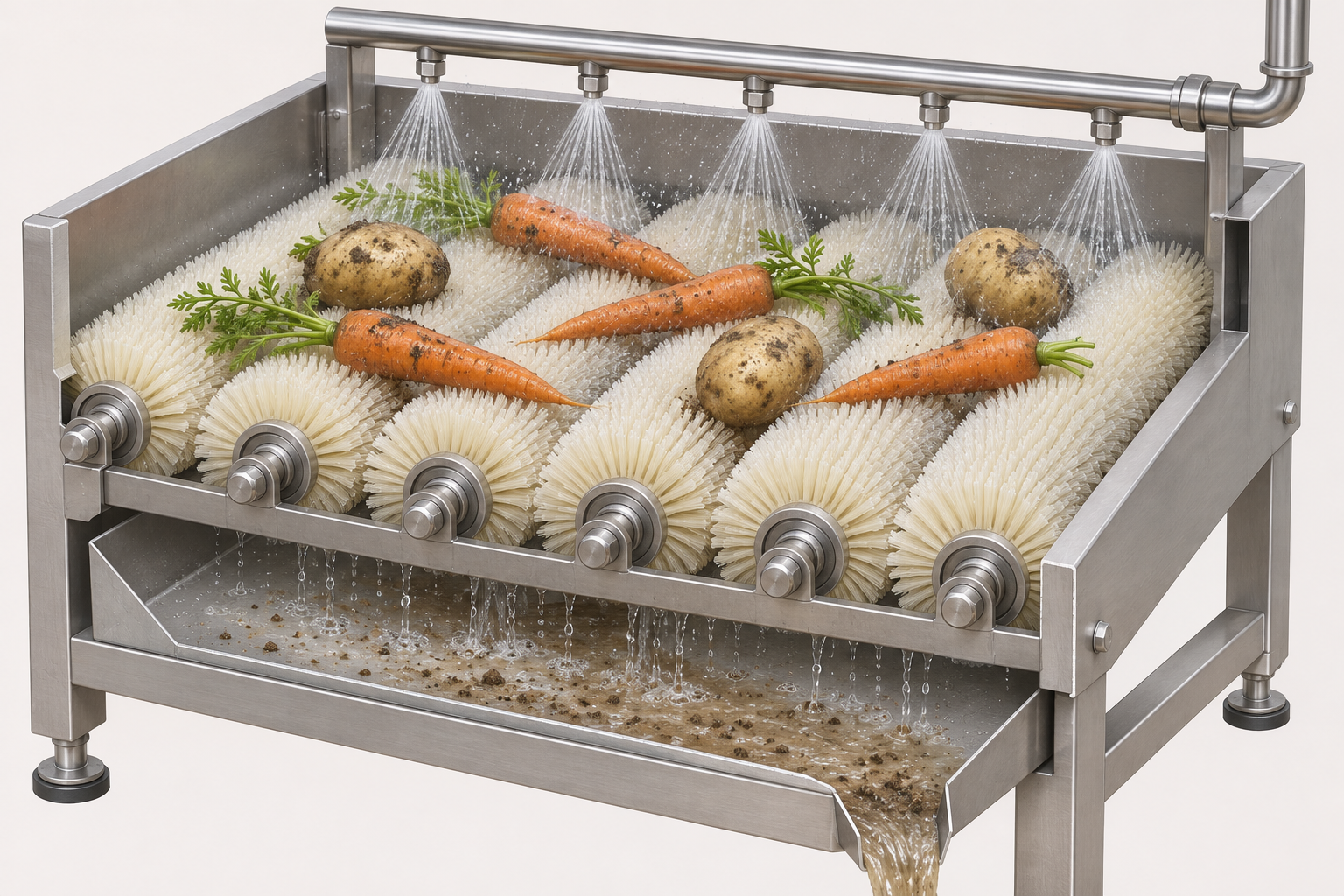
Produce-washing layout illustration: the crops show different shapes to consider when examining brush contact, water supply and drainage.
What changes between dry soil, sticky mud and loose grit?
Dry loose material, adhesive mud and hard stones place different demands on the line. Loose dirt may leave the produce readily but still need to be carried away. Wet mud can remain in crevices or accumulate within the brush. Hard particles can become an additional source of abrasion if they remain in the contact zone.
If a line previously received prewashed roots and now receives material directly from the field, the brush has inherited a different incoming burden. Before ordering a firmer replacement, examine what changed upstream. The relevant comparison may be the same brush with the intended prewash restored, rather than two brush grades facing inconsistent soil loads.
For soil-covered carrots, for example, inspect whether the persistent dirt is on a broad surface, around a recess, or at an end that rarely turns into the brush. If broad surfaces clean but one location remains dirty, movement and access deserve attention. If mud builds up across the roller and transfers back to later produce, cleaning the brush and removing dirty water are part of the problem. A stronger filament alone has not been shown to solve either condition.
Which roller dimensions affect the buying decision?
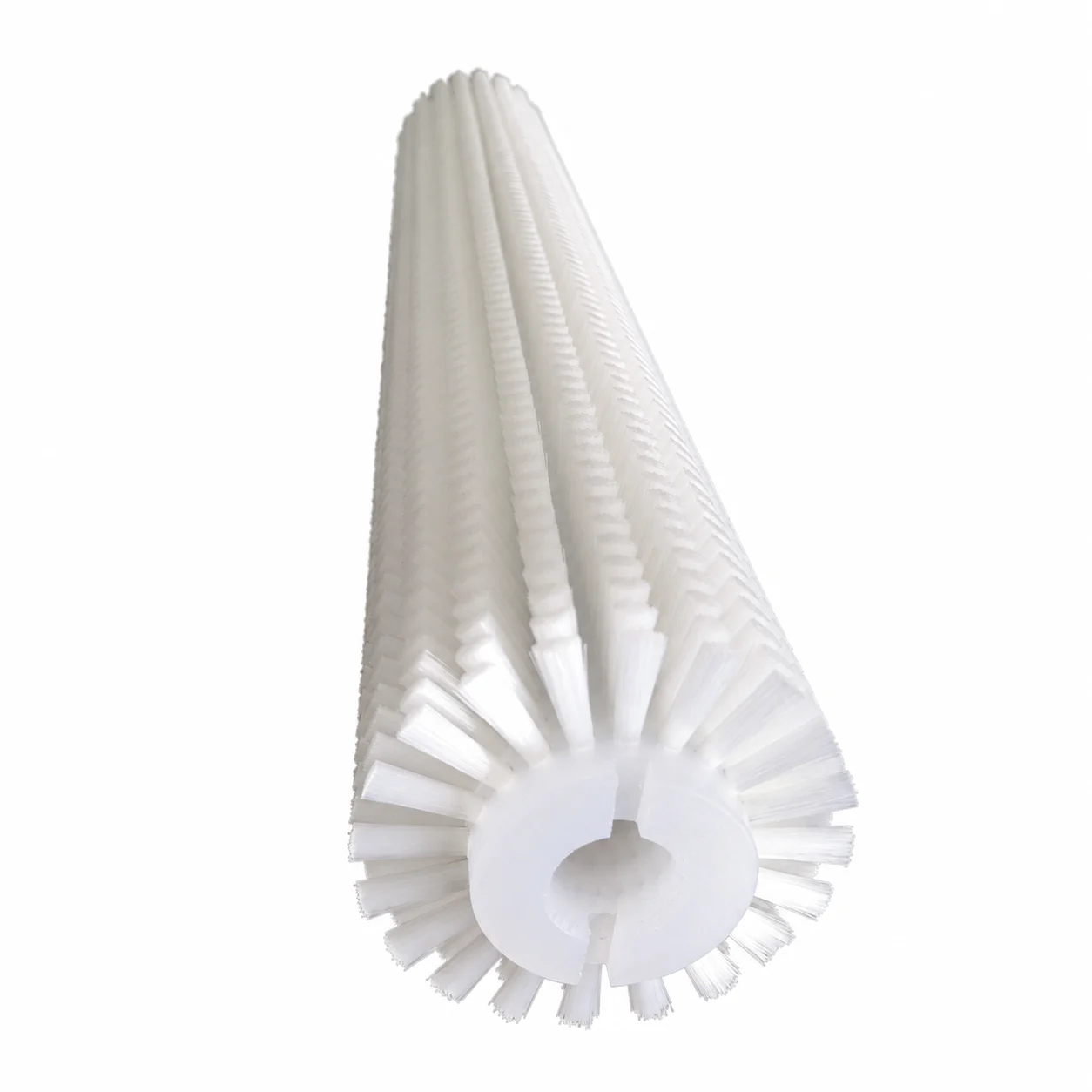
The published SB-RL-0013 nylon tufted roller lists a 600 mm brush face, 150 mm outside diameter, 90 mm core diameter, 40 mm keyed bore and 30 mm free fill length. The relation 90 + 2 × 30 = 150 mm checks the radial geometry. It does not prescribe contact depth or prove crop suitability.
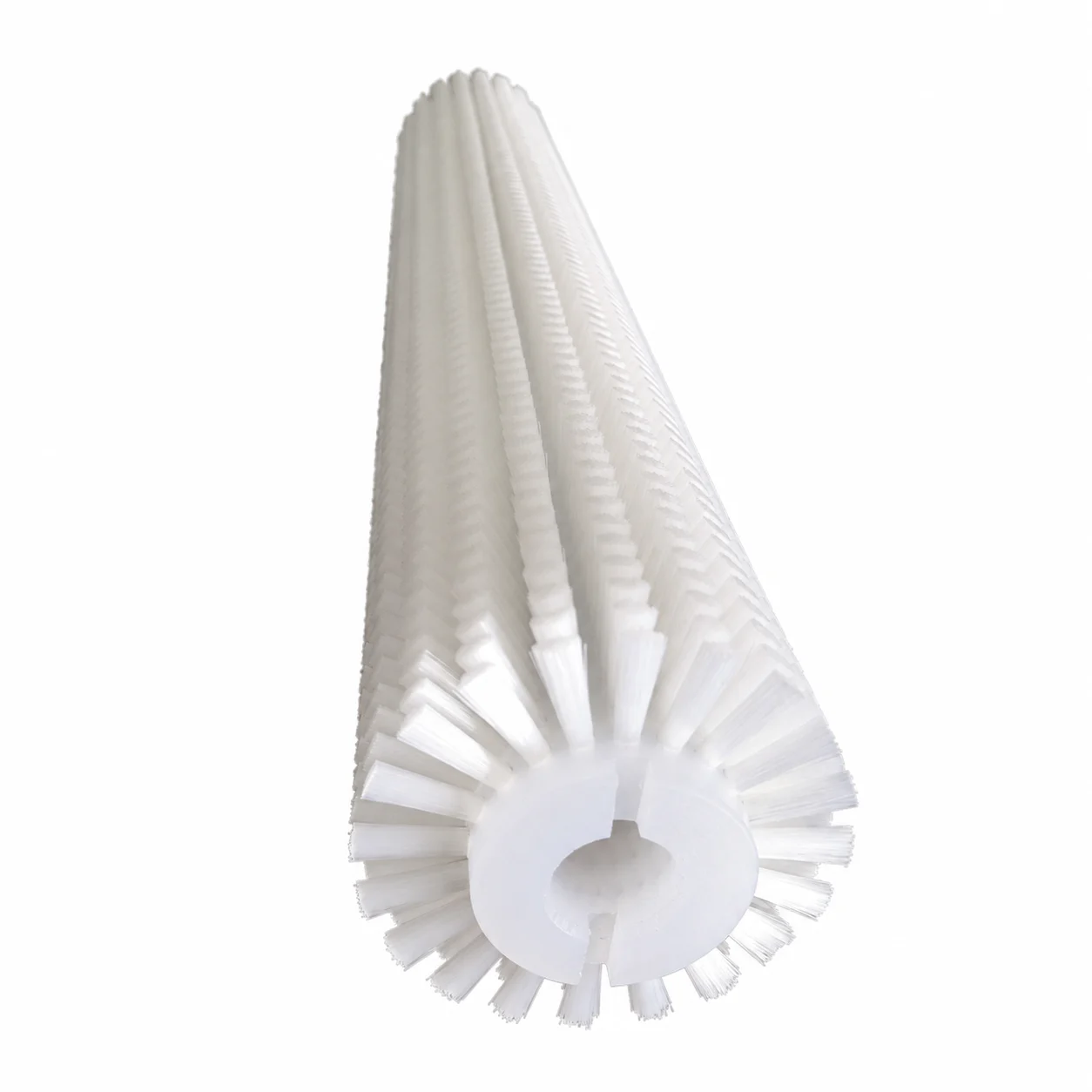
Actual product image. The keyed opening and separate tuft rows identify construction features; white colour does not establish material documentation or a produce-washing result.
Brush face length is the active width along the roller, not the total length of the shaft assembly. The bore does not fully describe the key, fit or axial retention. For a replacement assembly, show the retained shaft and both end interfaces in the roller shaft drawing. A worn brush diameter should be identified as worn rather than copied into the new manufacturing target.
The fill specification also needs more than “nylon.” Filament dimensions, free length and arrangement influence how the brush presents itself to the produce. The core diameter and roller spacing influence the geometry beneath that flexible fill. A buyer changing the fill while retaining the same outside diameter may also be changing the core or working length, so those dimensions should remain explicit.
Why do small carrots or irregular pieces need their own check?
Flexible bristle tips are not a rigid support surface. Small or narrow pieces may settle between adjacent rollers differently from a large potato. The relevant geometry includes the core spacing, fill envelope and the actual shape of the produce. A top-view photograph of a full bed can hide the opening beneath the tips.
Wyma identifies boss size and bristle length as variables that can affect small-produce handling in its own equipment. This supports examining the hardware gap as well as softness; it does not provide a universal gap setting for another washer. Use the actual machine arrangement and its permissible configurations.
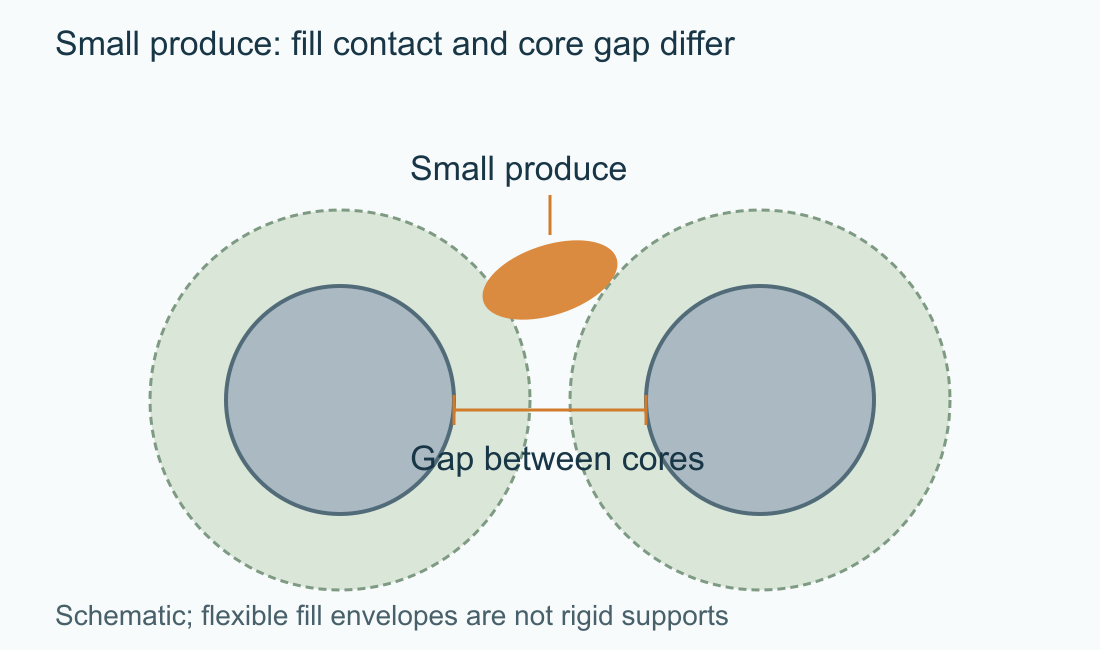
Geometry illustration, without operating dimensions. Dashed outer circles represent flexible fill envelopes, not rigid platforms that guarantee support.
If a buyer wants to add a smaller size grade to an established crop run, include that lower size range in the comparison. Watch for pieces dwelling in one location, entering an unintended gap or moving through without enough surface turnover. Do not solve poor movement by simply increasing contact. Depending on the actual mechanism, the useful change may concern the permitted roller geometry, feed arrangement or separation of size grades.
Is a softer brush always safer for delicate skin?
A softer-feeling loose sample is not a complete predictor of the installed result. The exposed length, support from neighbouring tufts, contamination and contact arrangement matter. A brush that bends readily in the hand can still carry hard particles, or keep rubbing the same region if the produce does not turn as intended.
For a thin-skinned potato lot, compare representative items with similar incoming condition and identify the acceptable surface before the run. Examine dirt remaining in recesses and any new skin disturbance. If the candidate reduces scuffing but fails to remove the required soil, it has solved only one part of the task. Consider whether prewashing, movement or a different fill combination can reconcile the two requirements.
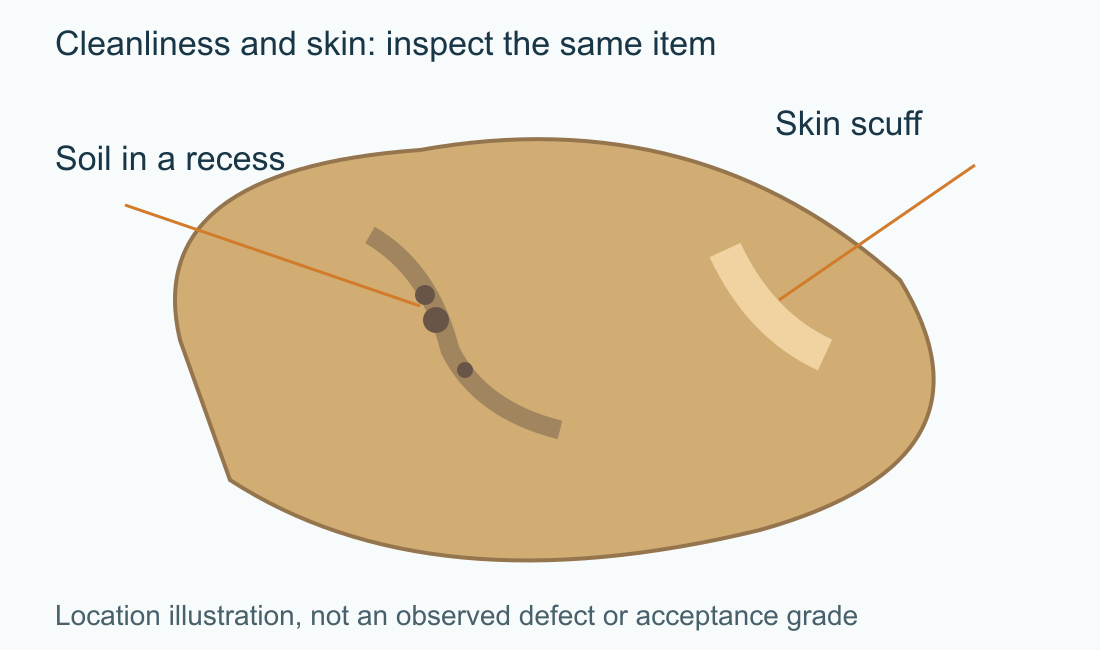
Defect-location illustration: inspect these different regions on the same piece of produce.
If the current brush cleans a tougher root satisfactorily but marks the delicate lot, a shared specification remains unproven. It may be reasonable to retain the established roller for the first crop and compare another arrangement for the second. Shared mounting does not require shared fill, and shared fill does not require identical permitted machine settings.
Should every roller in the washer have the same fill?
Not necessarily. A station receiving the initial soil burden may have a different duty from a later finishing station. That difference must come from the machine design and actual process, rather than an assumption that the entrance always needs the hardest brush.
Map the crop’s path and observe where the condition changes. If the first section removes most loose soil but the last section adds marks, replacing every position with a firmer fill could worsen the final result. If all positions show similar contamination, the common water and cleaning conditions deserve investigation before selecting different brushes for each station.
A position map also prevents maintenance mix-ups. Identify which rollers can be interchanged and which have a specific duty. Where the machine requires a matched set or a prescribed replacement sequence, follow that arrangement. One apparently successful loose roller does not justify an arbitrary substitution in a system whose behaviour depends on the whole bed.
How can two crops be compared without confusing the result?
Compare each crop separately using its relevant size and condition range. Keep the incoming state, loading, water condition and permitted machine configuration comparable within that crop’s candidate comparison. If a factor changes, identify it rather than attributing the whole difference to the brush.
For the first crop, a candidate may remove soil adequately but leave unacceptable marks. For the second, it may preserve the surface but leave dirt. Those are two different failure mechanisms, not an average pass. Inspect produce from the relevant parts of the run and machine path, and use the processor’s established acceptance criteria. This article supplies no universal damage percentage or washing-efficiency threshold.
A useful comparison includes the brush condition after the task. Residue packed into tufts, persistent deposits around the core or an uneven working surface can explain why the first few pieces differ from later ones. Follow the machine’s authorised cleaning and inspection method. A short clean-water demonstration does not establish performance during a sustained dirty production duty.
Does white nylon establish food-contact suitability?
No. Colour and a generic polymer name do not identify the full construction or its suitability for the intended use. The proposed fill, core, retention components and any supplied shaft need to be identified. Obtain the material evidence required for the actual market, contact conditions and cleaning process; a general application listing is not that evidence.
Include the process liquids and the established cleaning agents, concentrations and temperatures in the enquiry. Material compatibility must concern the finished assembly and its intended exposure, not just a loose filament. The design also needs to fit the site’s removal, cleaning, drainage and inspection procedure. A recess that cannot be reached during the intended cleaning method remains relevant even if the visible bristles look clean.
Keep these questions distinct from washing performance. Documentation cannot prove that a crop leaves the line undamaged, and an attractive trial sample cannot fill a gap in the material information. Both are needed for the intended use, but they answer different questions.
When is a shared specification a sensible purchase?
A shared specification is useful when the exact construction serves both defined crop duties, including their representative sizes and incoming states, within the machine’s permitted arrangements. Preserve the separate crop requirements and recipes even if the hardware is identical. That avoids treating a successful clean, firm lot as evidence for every future variety or harvest condition.
If one crop still fails, identify the limiting feature. A retained-soil problem points toward access, incoming burden or removal conditions; skin marking points toward the contact and surface sensitivity; trapping points toward handling geometry. The next purchase should address that mechanism, rather than simply being labelled softer or stronger.
For the enquiry, pair the selected construction with the crop conditions and the machine position where it is intended to work. Use the roller supply-scope guide to distinguish a complete assembly from a refill or retained-core arrangement. The useful result is one shared construction for two demonstrated duties, or two clearly different constructions that preserve the required produce quality.
Related buying guides
Replacing Sanding Brush Strips: Which Dimensions Must Match the Existing Head?
Flat Glass Washer Brushes: Which Surface Is Marked, and Is the Brush Really the Cause?
How Do You Choose a Sanding Brush for a Profile Without Damaging Its Edges?
Conveyor Belt Cleaning Brushes: Why Does Residue Remain After the Brush?
Roller Brush Fill Patterns: Why a Narrow Part Can See Different Contact from a Wide Panel
A Roller Brush Starts Leaving Stripes: Which Component Needs Replacing?