
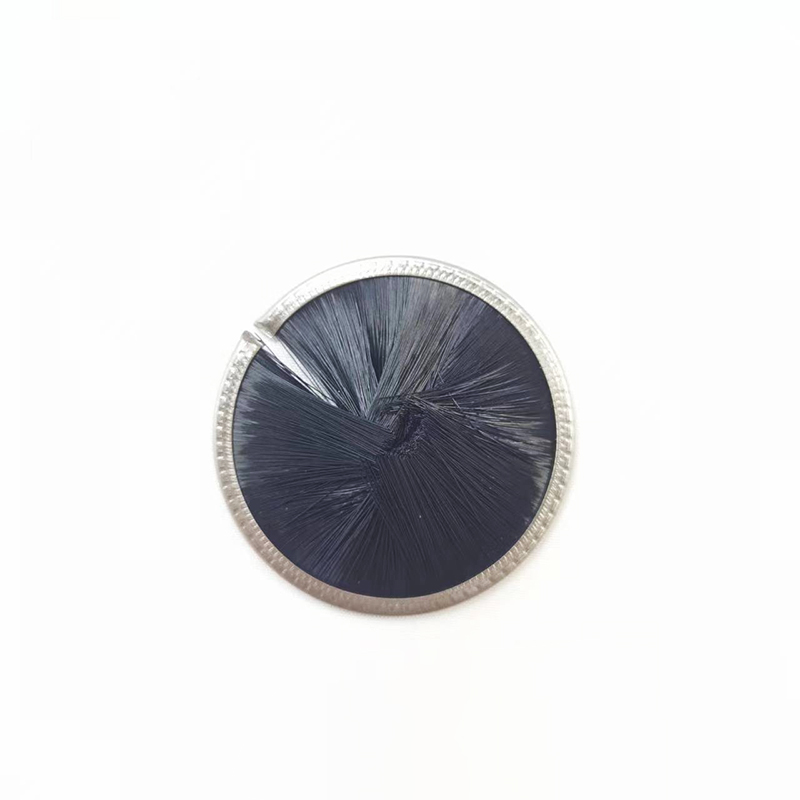
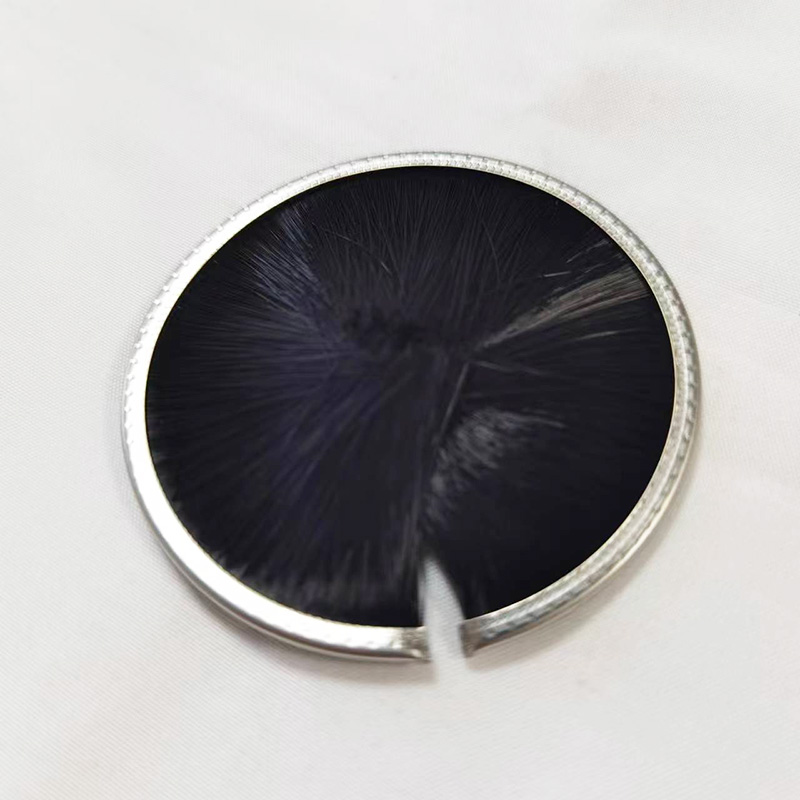
Overlapping Nylon Split Ring Brush Seal
Split metal ring brush with overlapping inward Nylon fill for flexible circular access barriers and particle control.
- SKU
- SB-ST-0004
Product specifications
- Outside diameter
- 150 mm
- Ring split gap
- 3 mm
- Inward filament reach
- 75 mm
- Bristle material
- Nylon
- Filament diameter
- 0.25 mm
Starting price for the listed reference and specifications. We confirm your final quote for the required dimensions, material and quantity.
Production estimate10–20 business daysShipping & details
After design approval and the agreed deposit. Schedule confirmed with your order.
Estimated transit
After dispatch, excluding customs clearance. Timing varies by destination.
Samples and one-off builds quoted separately. Freight, duties and taxes excluded.
Published by Rowan · Spirvobrush
Product Overview
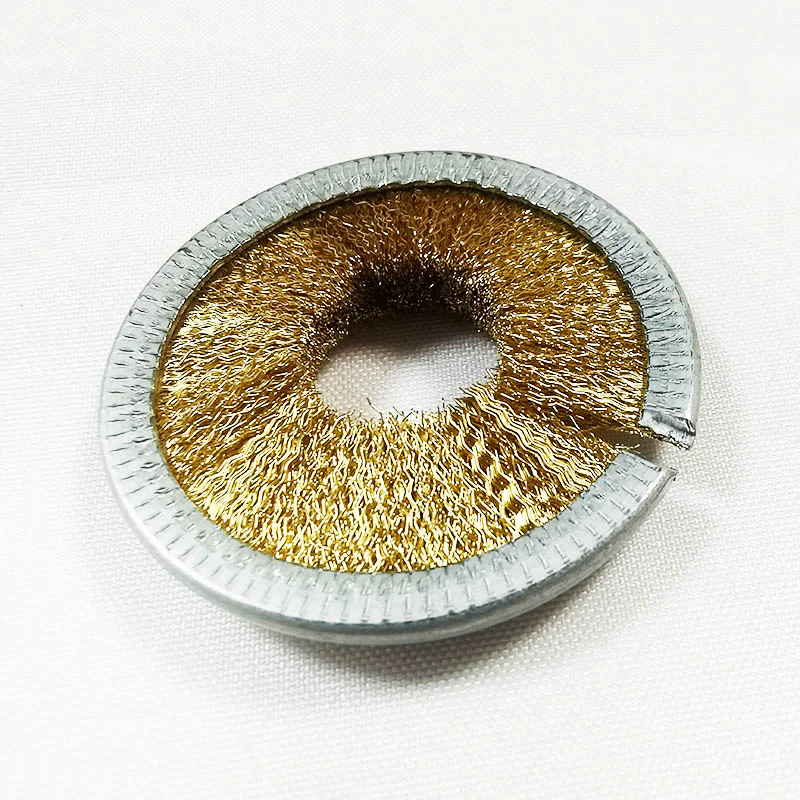
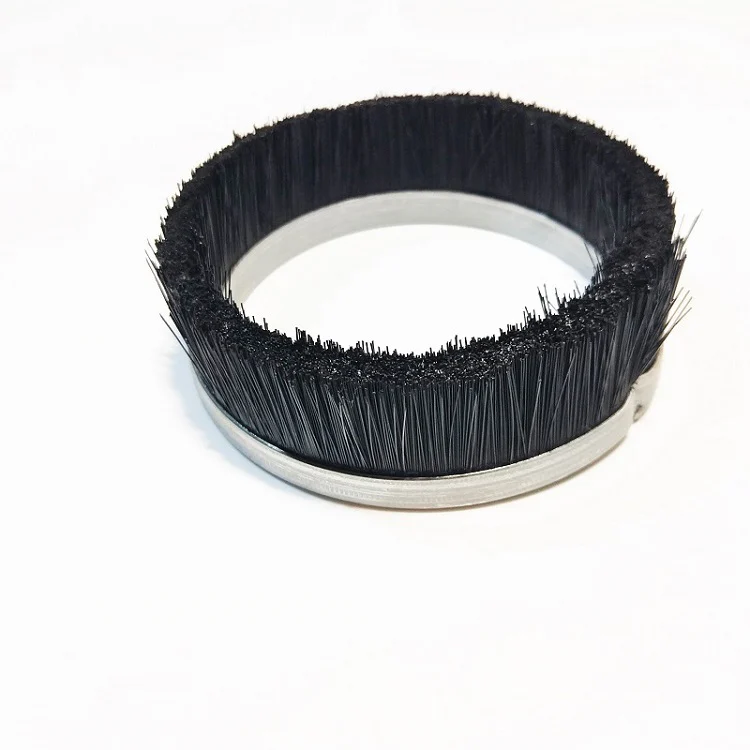
Long black Nylon filaments extend inward from the split metal channel and overlap across the center of this formed ring. The fill creates a flexible brush barrier instead of a fixed circular bore. The ring can surround a cable or component access point, with filament reach and contact selected to suit the opening and the movement through it.
Technical Specifications
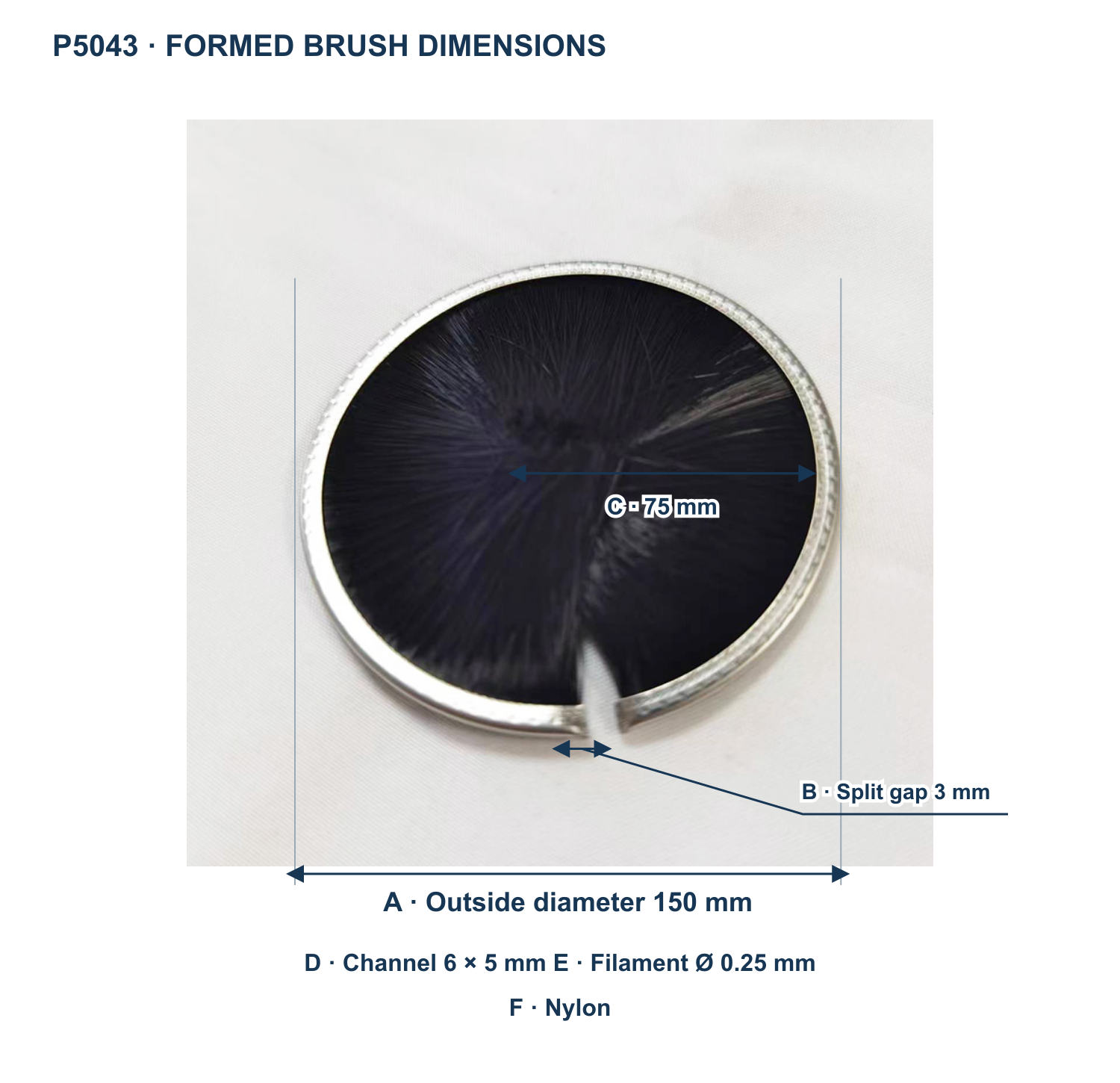
Parameter | Reference configuration |
|---|---|
A — Outside diameter | 150 mm |
B — Ring split gap | 3 mm |
C — Inward filament reach | 75 mm |
D — Channel profile | 6 × 5 mm |
E — Filament diameter | 0.25 mm |
F — Filament material | Nylon |
Filament profile | Straight |
Filament color | Black |
Backing construction | Formed metal U-channel with split joint |
Fill orientation | Radially inward with center overlap |
Production | Made to order |
Product Features
Overlapping Center Fill
The inward filaments cross the center region, so the brush does not have a fixed clear opening like a conventional bore brush. The overlap can be changed to suit the passing part and required coverage.
Defined Backing Split
The 3 mm split gap is the opening between the metal channel ends. It is separate from the flexible passage formed when the Nylon filaments deflect around a component.
Long Nylon Reach
The 75 mm inward reach supports center overlap within the 150 mm outside ring. Reach is measured along the filament direction in the ring plane, not as axial thickness.
Metal Channel Support
The formed backing locates the flexible fill around the perimeter. Support and retain the ring at its channel, keeping clamp edges away from the working filaments.
Customization
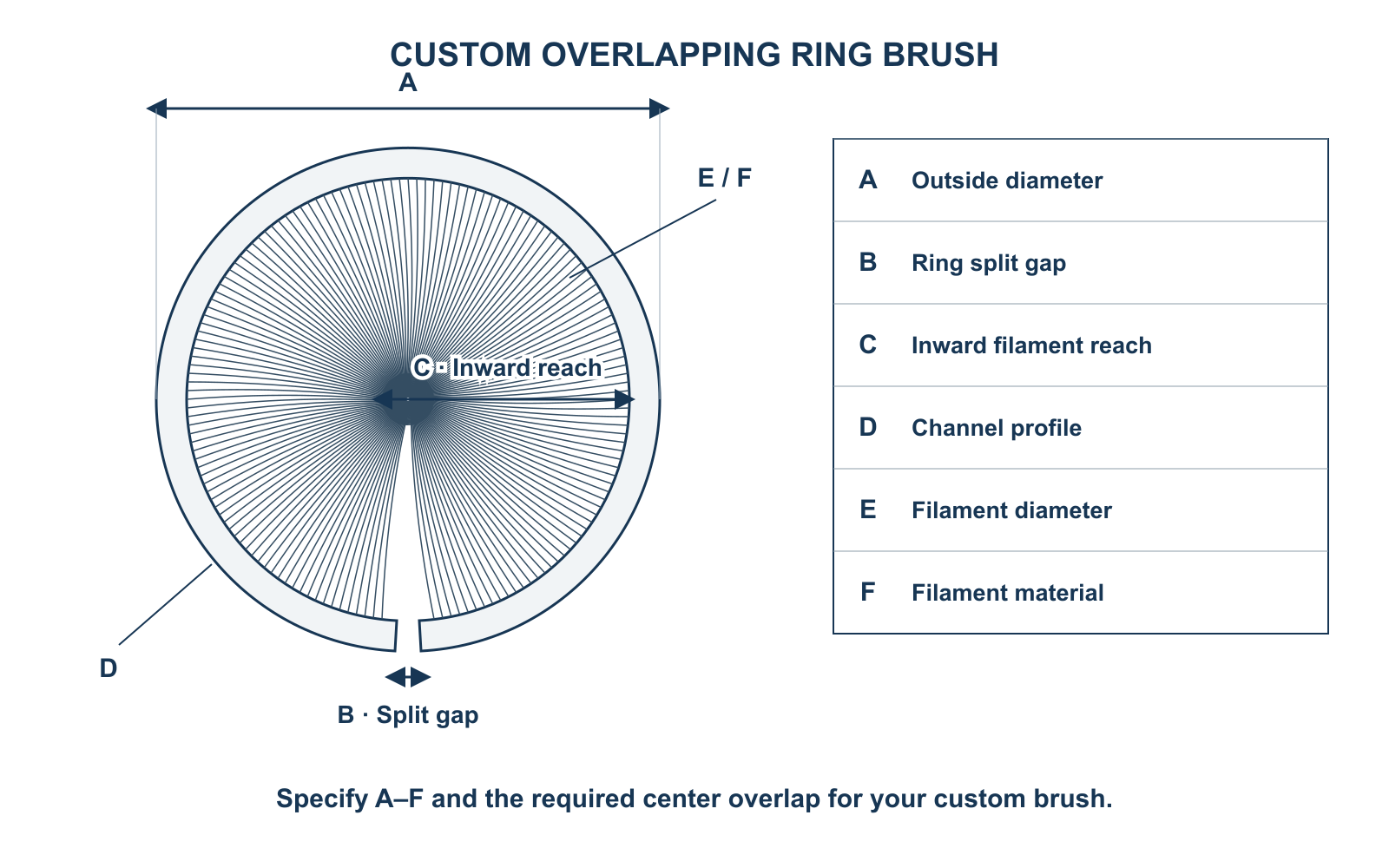
Specify dimensions A–F and the mating housing or contact surface to configure this ring brush for your assembly. Send a drawing or sample with the working conditions, required center overlap, backing material and order quantity for a matching quotation.
Applications & Operating Conditions
Cable and service openings: Create a flexible brushing barrier around a circular access point.
Machine access barriers: Reduce open gaps around passing components with deflectable inward fill.
Light particle control: Help interrupt the movement of loose particles through an opening.
Custom circular brush seals: Configure overlap and backing geometry for an equipment recess.
Use light, even filament contact and support the metal backing securely. Share temperature, liquid exposure, chemical contact and movement requirements when specifying the Nylon fill; check the contact setting on the actual installation.
Bulk Order Packaging
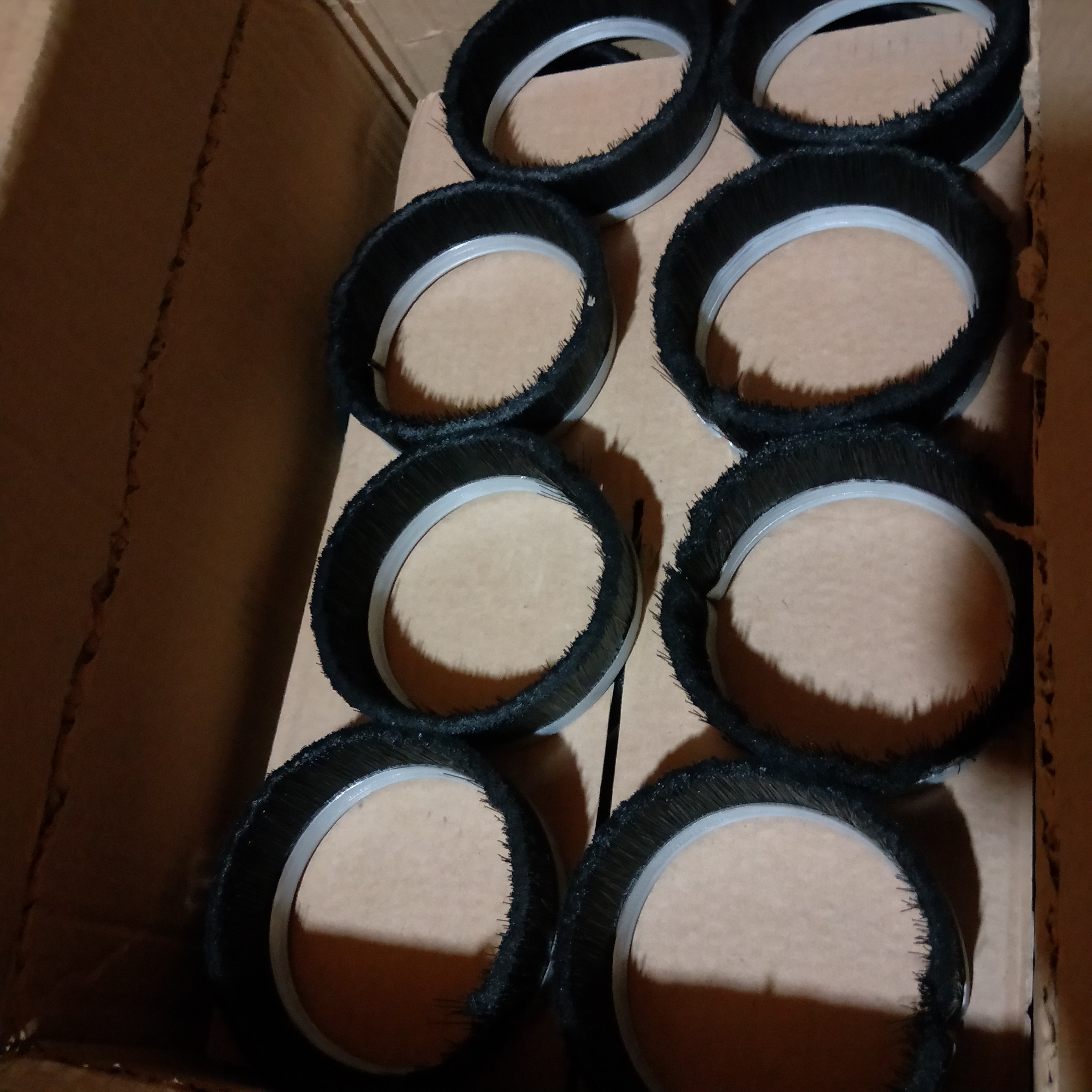
Formed ring brushes are supported at the metal backing and separated to protect the working fill. Carton quantities and internal protection are arranged to suit brush size and shipment requirements.
Product codes, dimensions and quantities can be included on the order labels. Packing method and any additional shipping protection are agreed with the order.
Product FAQ
Why is there no fixed inner diameter?
The Nylon tips overlap at the center. The usable passage forms as the filaments deflect, so specify the passing component and desired contact instead of assuming a fixed bore.
What does the 3 mm dimension describe?
It describes the split gap between the metal channel ends. It is not a central opening diameter or the axial brush width.
Can the overlap be reduced?
Yes. Filament reach, ring diameter and fill arrangement can be changed together to create more or less center coverage.
Is this an airtight or waterproof seal?
No performance of that kind is specified. This is a flexible filament barrier for contact and light particle control, rather than a pressure-retaining gasket.