Narrow Bound Steel Wire End Brush
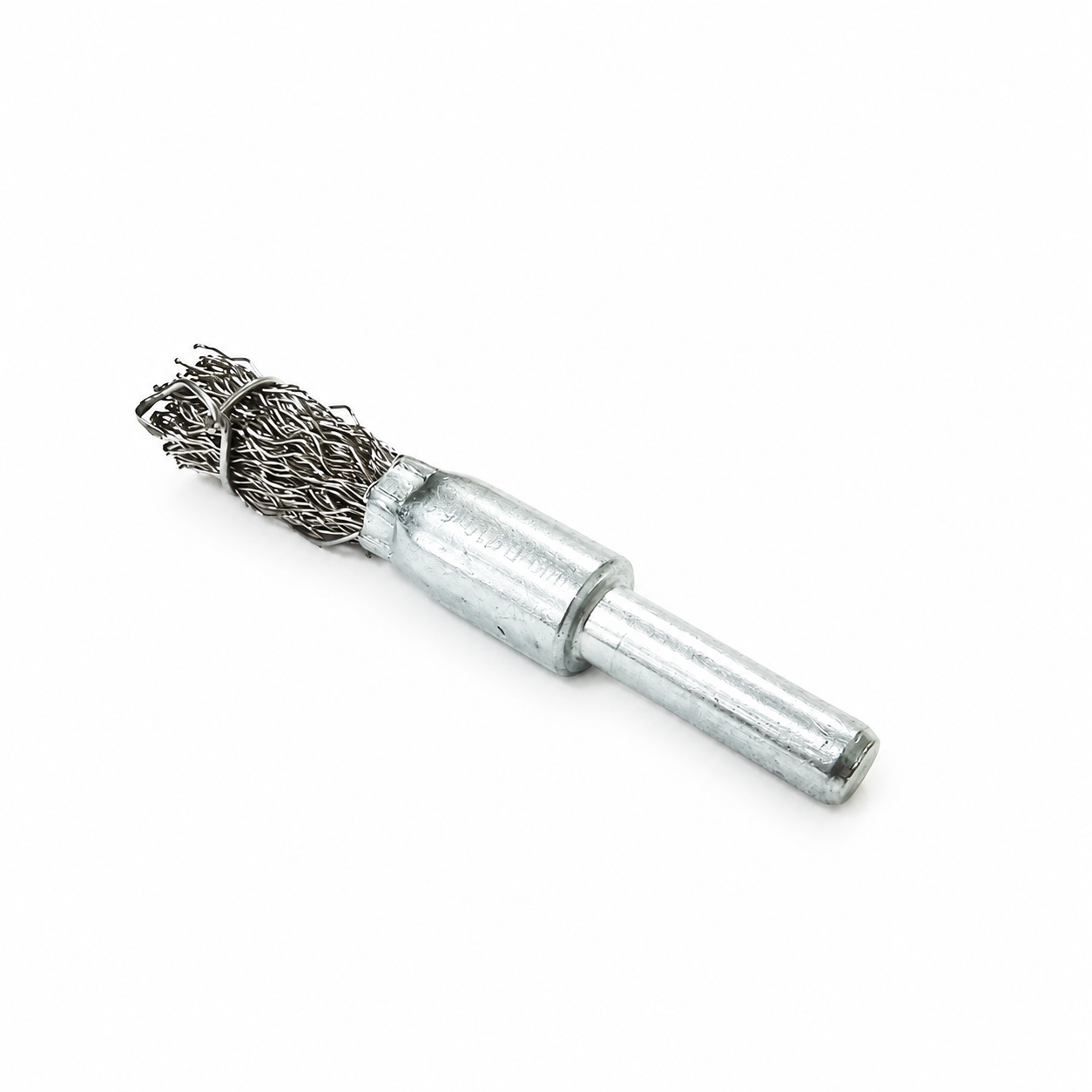
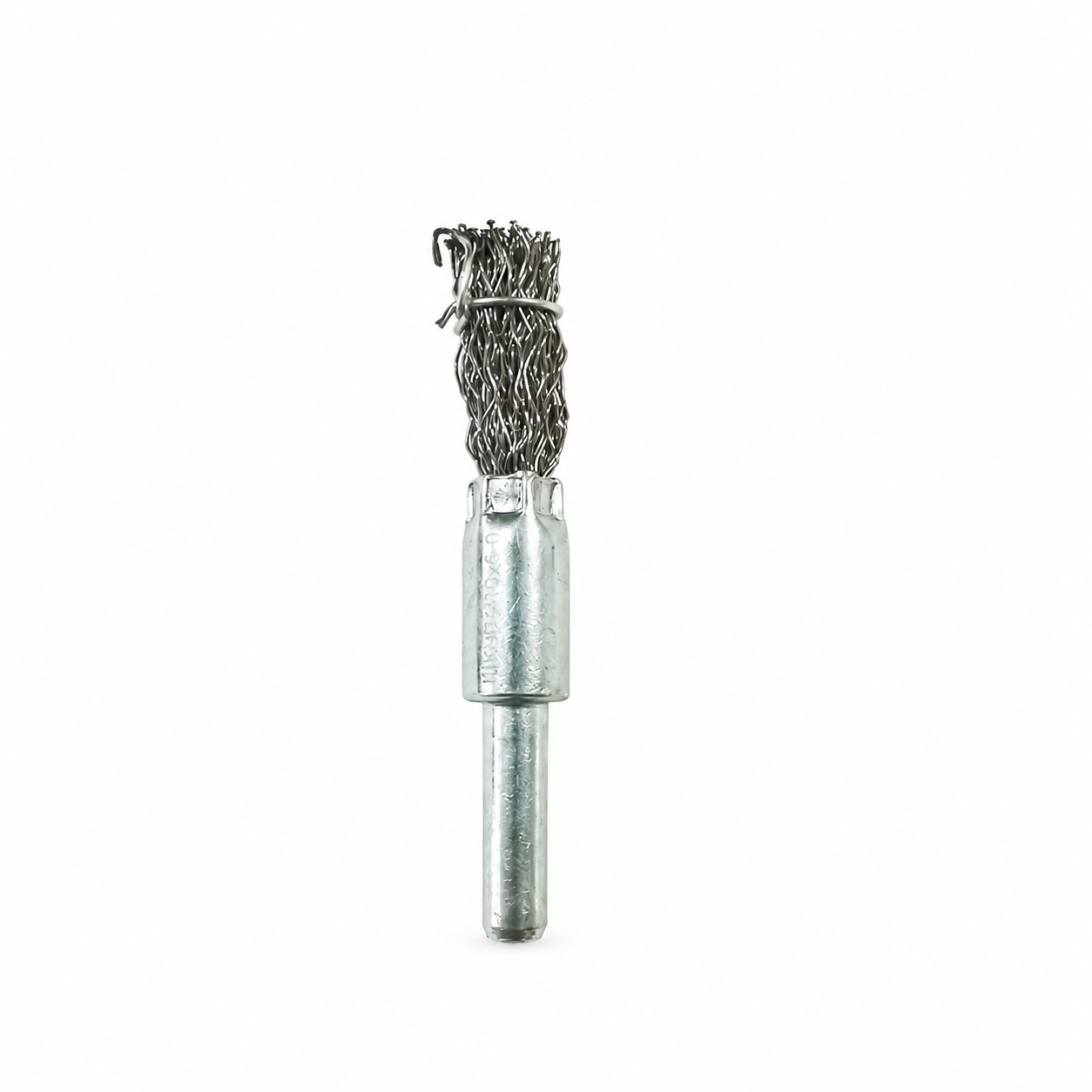
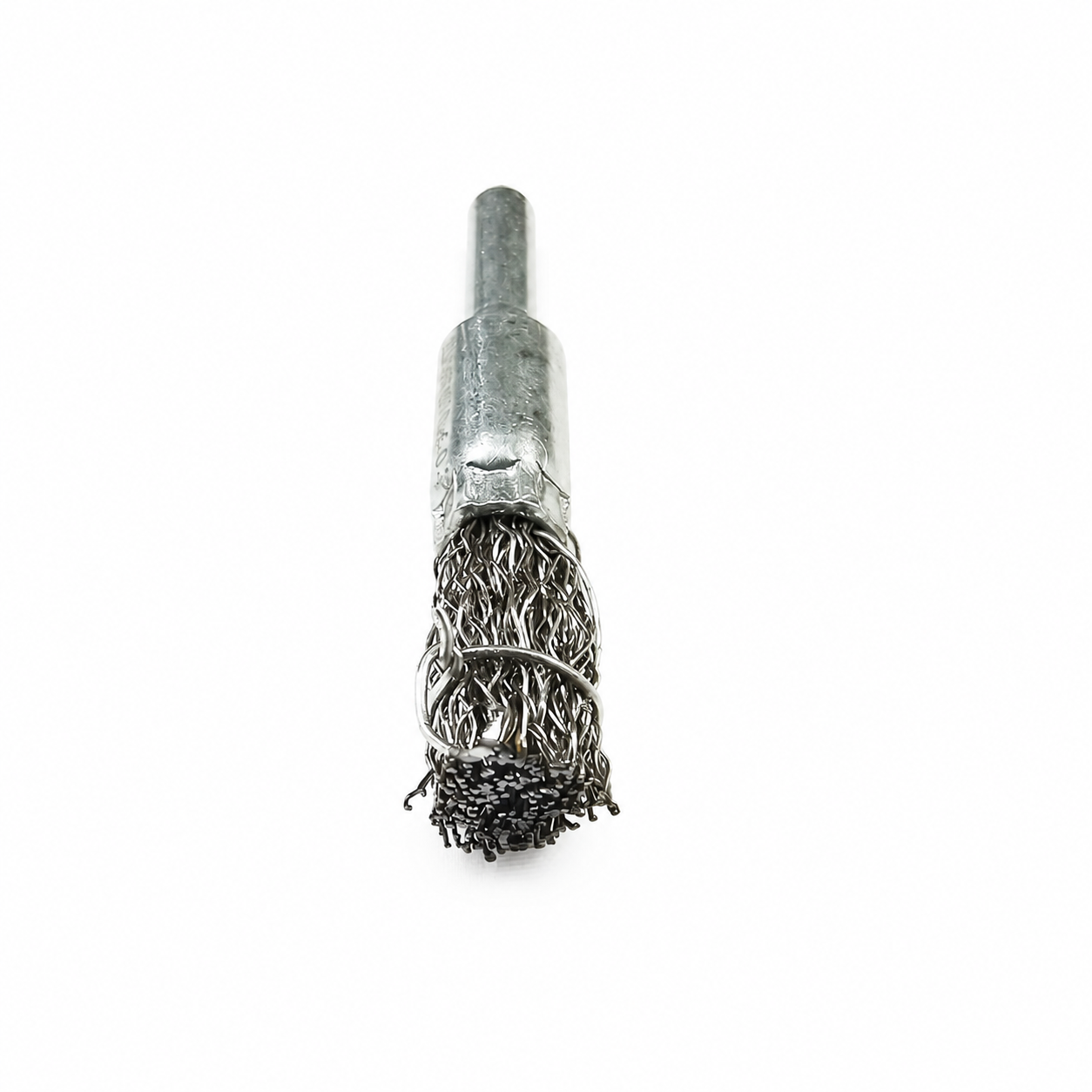
A 10 mm bound steel wire end brush with crimped fill, 18 mm fill length and a 6 mm shank.
- SKU
- SB-PW-0011
Product specifications
- Overall length
- 50 mm
- Fill length
- 18 mm
- Brush outside diameter
- 10 mm
- Shank diameter
- 6 mm
- Fill material
- Steel wire
Starting price for the listed reference and specifications. We confirm your final quote for the required dimensions, material and quantity.
Production estimate10–20 business daysShipping & details
After design approval and the agreed deposit. Schedule confirmed with your order.
Estimated transit
After dispatch, excluding customs clearance. Timing varies by destination.
Samples and one-off builds quoted separately. Freight, duties and taxes excluded.
Published by Rowan · Spirvobrush
Product Overview
A narrow crimped steel wire end brush with a slim stepped ferrule and one retaining tie around the fill. The 10 mm working diameter and 18 mm fill length suit localized cleaning of reachable metal features, with a straight 6 mm mounting shank.
Technical Specifications
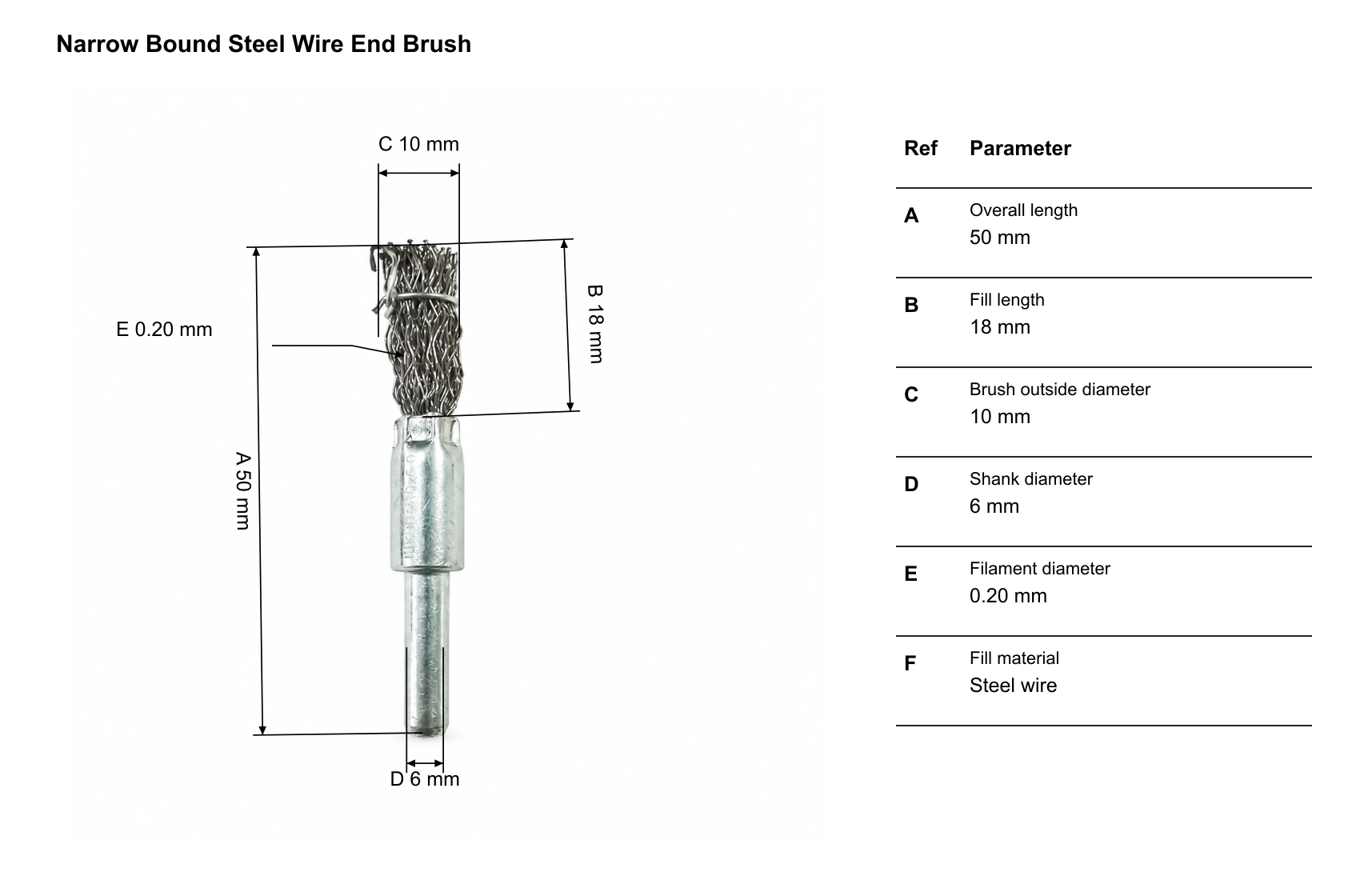
Parameter | Reference configuration |
|---|---|
A — Overall length | 50 mm |
B — Fill length | 18 mm |
C — Brush outside diameter | 10 mm |
D — Shank diameter | 6 mm |
E — Filament diameter | 0.20 mm |
F — Fill material | Steel wire |
Fill profile | Crimped steel wire with a retaining tie |
Mounting | Straight shank for a compatible chuck or collet |
Ferrule material | Metal |
Maximum operating speed | Specify for the final brush and tool combination |
Product Features
Narrow Bound Fill
A retaining tie gathers the crimped wire into a compact working bundle.
Crimped Wire Contact
Wavy steel wire provides multiple contact points for compatible metal cleaning.
Stepped Ferrule
The slim metal ferrule supports the fill while keeping the head compact.
Straight Mounting Shank
The 6 mm shank provides a defined mounting size for a suitable holder.
Customization
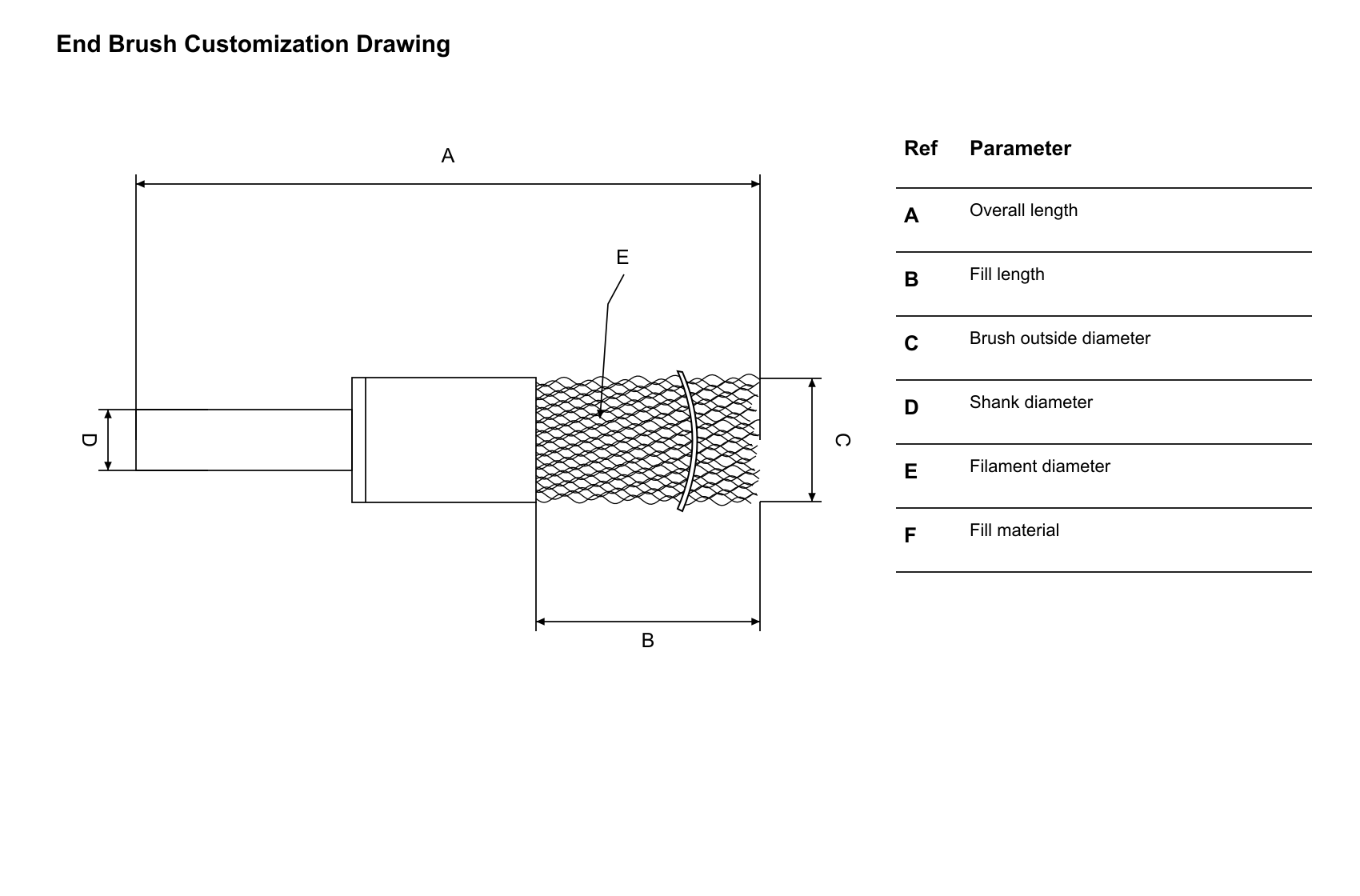
Provide the workpiece material, surface condition, access dimensions and desired finish, together with the tool holder and operating conditions.
Specify overall length, exposed fill length, brush diameter, shank diameter and filament diameter. The wire material, fill density and working profile can be configured for the application.
Applications & Operating Conditions
Narrow Recess Cleaning: Brushing accessible recesses and small metal features.
Localized Rust Removal: Cleaning light rust from confined areas on compatible steel parts.
Weld Area Maintenance: Removing loose deposits near accessible joints and weld features.
Machine Part Cleanup: Spot cleaning fittings, brackets and service components.
Secure the shank in a compatible holder with adequate engagement, maintain tool clearance and use controlled tip contact. Follow the supplied brush and machine speed limits; excessive pressure or prolonged contact can spread the fill and affect the surface. Verify suitability for the workpiece and any coolant or chemical exposure before production.
Bulk Order Packaging
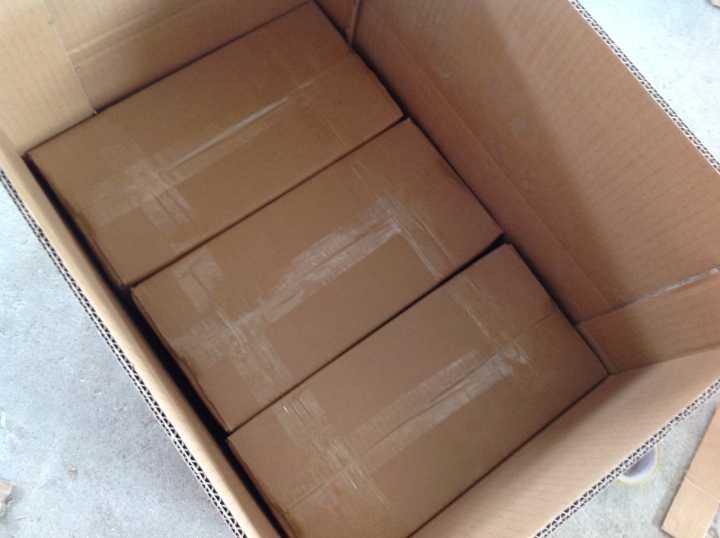
Protect the brush head and shank during handling and transport. Separated inner packs or protective wrapping can be arranged to limit contact between brushes.
Carton layout, pack quantity and labels are agreed with the order. The packaging image illustrates a general carton packing method; final packing depends on the brush configuration and shipment.
Product FAQ
Is the retaining tie part of the fill construction?
Yes. The crimped wire is gathered by a retaining tie. Retain this construction in the order specification when matching the brush.
Where is fill length measured?
Fill length runs from the ferrule opening at the filament root to the working tips. It excludes the metal ferrule and the shank.
Can the dimensions be customized?
Yes. Provide the required brush diameter, fill length, overall length and shank size, plus the available working space and holder details.
What operating speed should be used?
Use the rating agreed for the supplied brush and the tool, and observe the lower applicable limit. The required speed depends on the configuration, workpiece and process.
How should the brushing result be checked?
Trial the specified brush on a representative workpiece using controlled contact. Check the surface finish, edge condition and any dimensional sensitivity before establishing production settings.