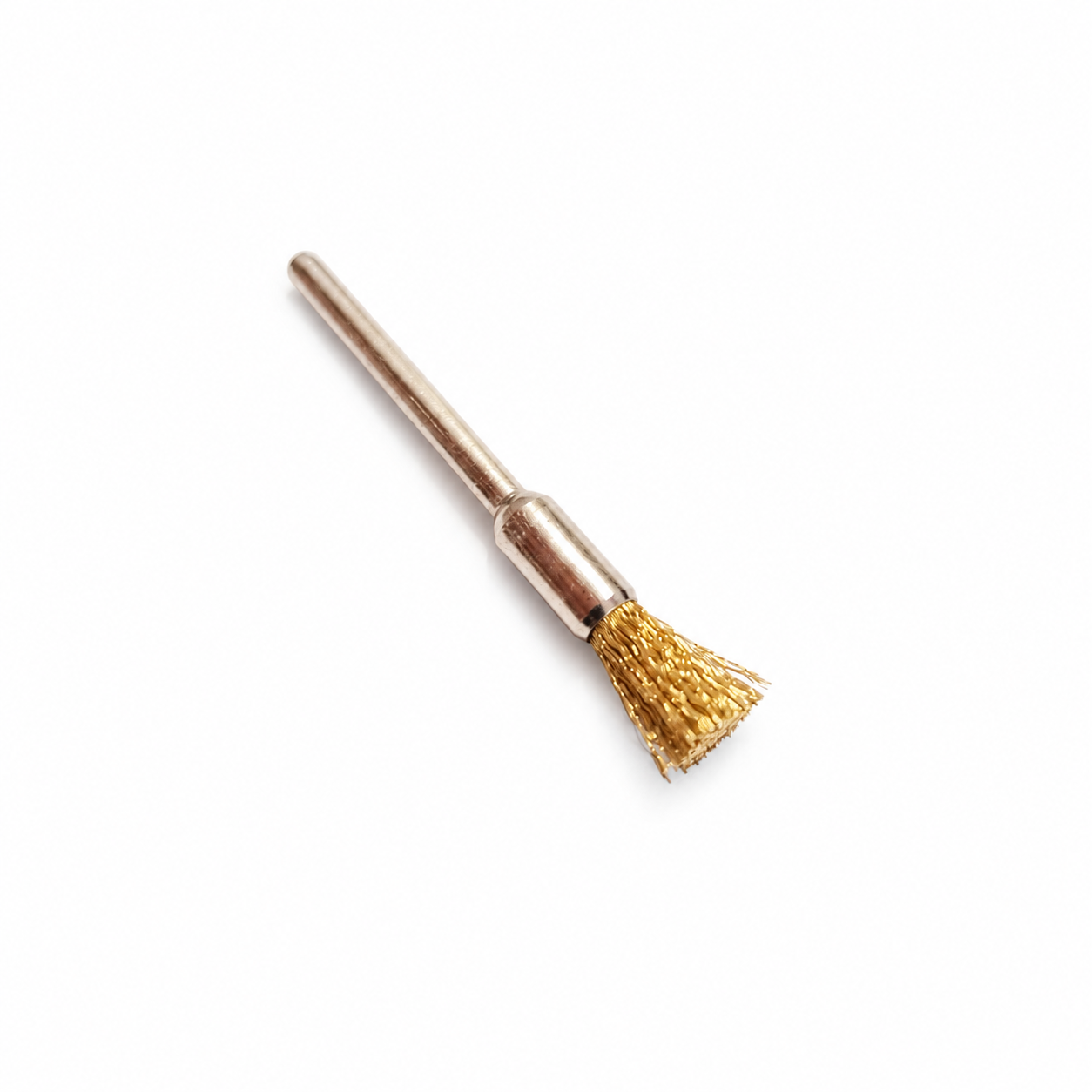
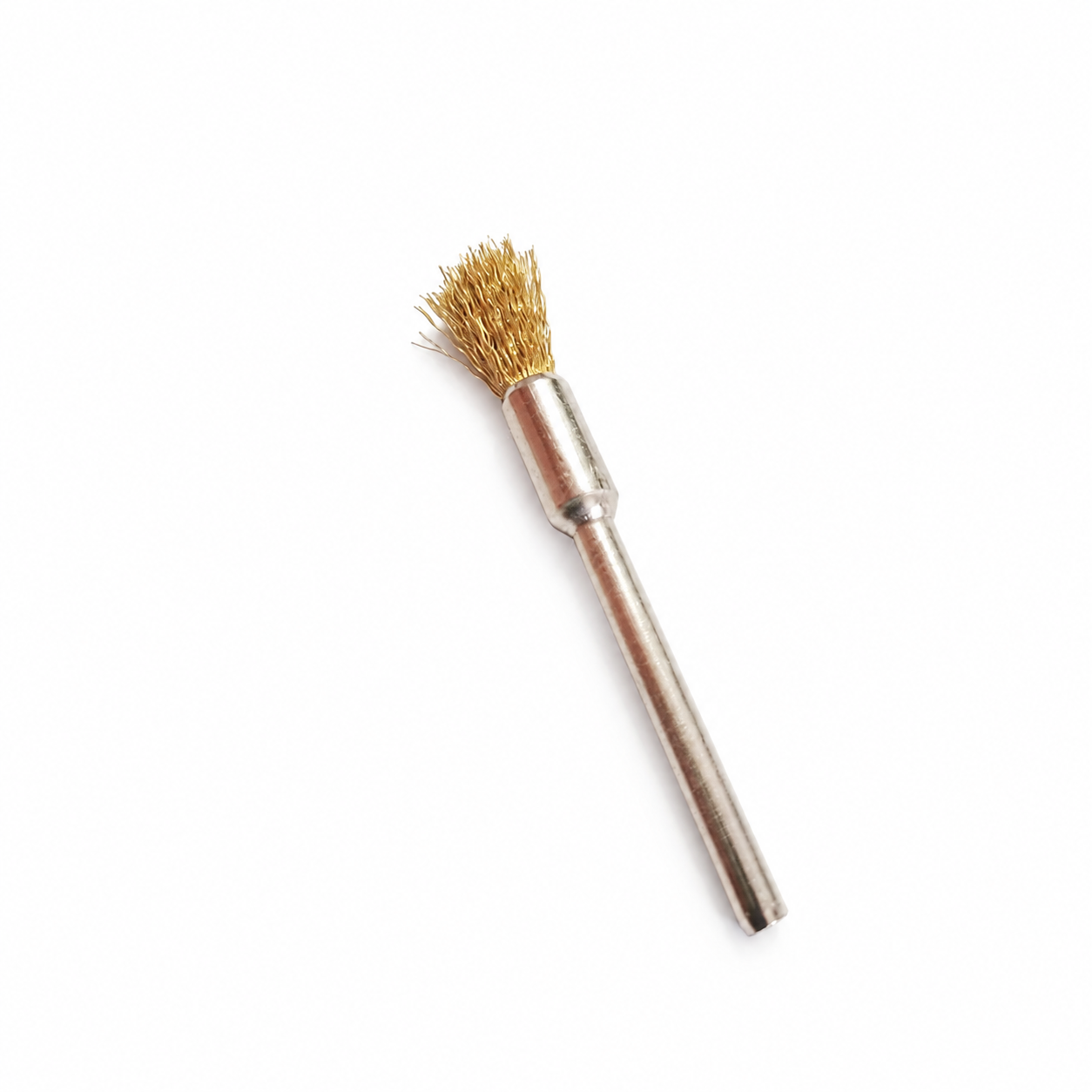
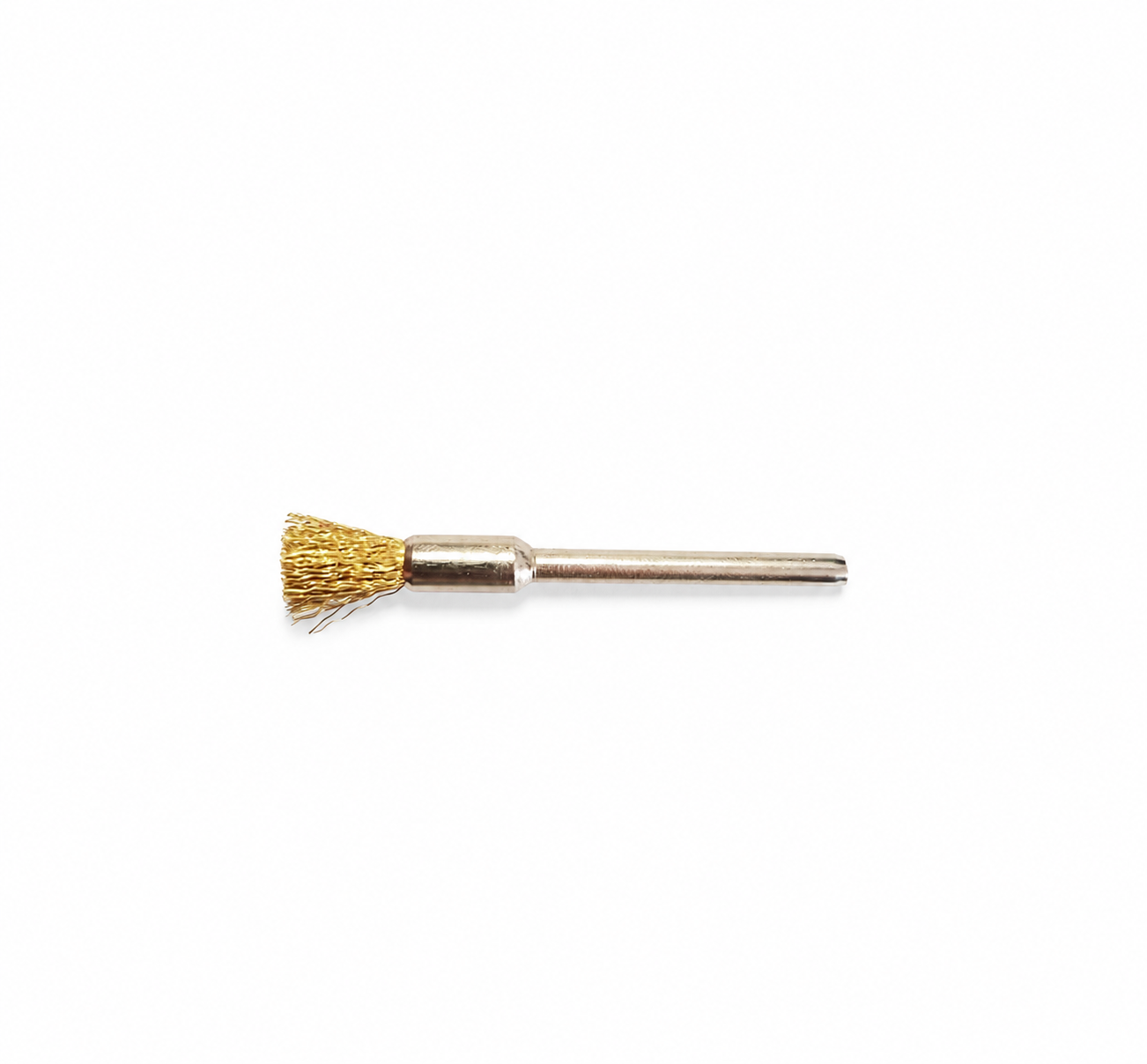
Miniature Brass-Coated Steel Wire End Brush
A miniature end brush with fine crimped brass-coated steel wire, an 8 mm flared working end and a 2.35 mm shank.
- SKU
- SB-PW-0005
Product specifications
- Overall length
- 45 mm
- Fill length
- 10 mm
- Brush outside diameter
- 8 mm
- Shank diameter
- 2.35 mm
- Fill material
- Brass-coated steel wire
Starting price for the listed reference and specifications. We confirm your final quote for the required dimensions, material and quantity.
Production estimate10–20 business daysShipping & details
After design approval and the agreed deposit. Schedule confirmed with your order.
Estimated transit
After dispatch, excluding customs clearance. Timing varies by destination.
Samples and one-off builds quoted separately. Freight, duties and taxes excluded.
Published by Rowan · Spirvobrush
Product Overview
A miniature end brush with fine crimped brass-coated steel wire, a long narrow shank and a compact metal ferrule. The wire flares at the working end, giving an 8 mm contact diameter and 10 mm fill length for small, accessible metal features.
Technical Specifications
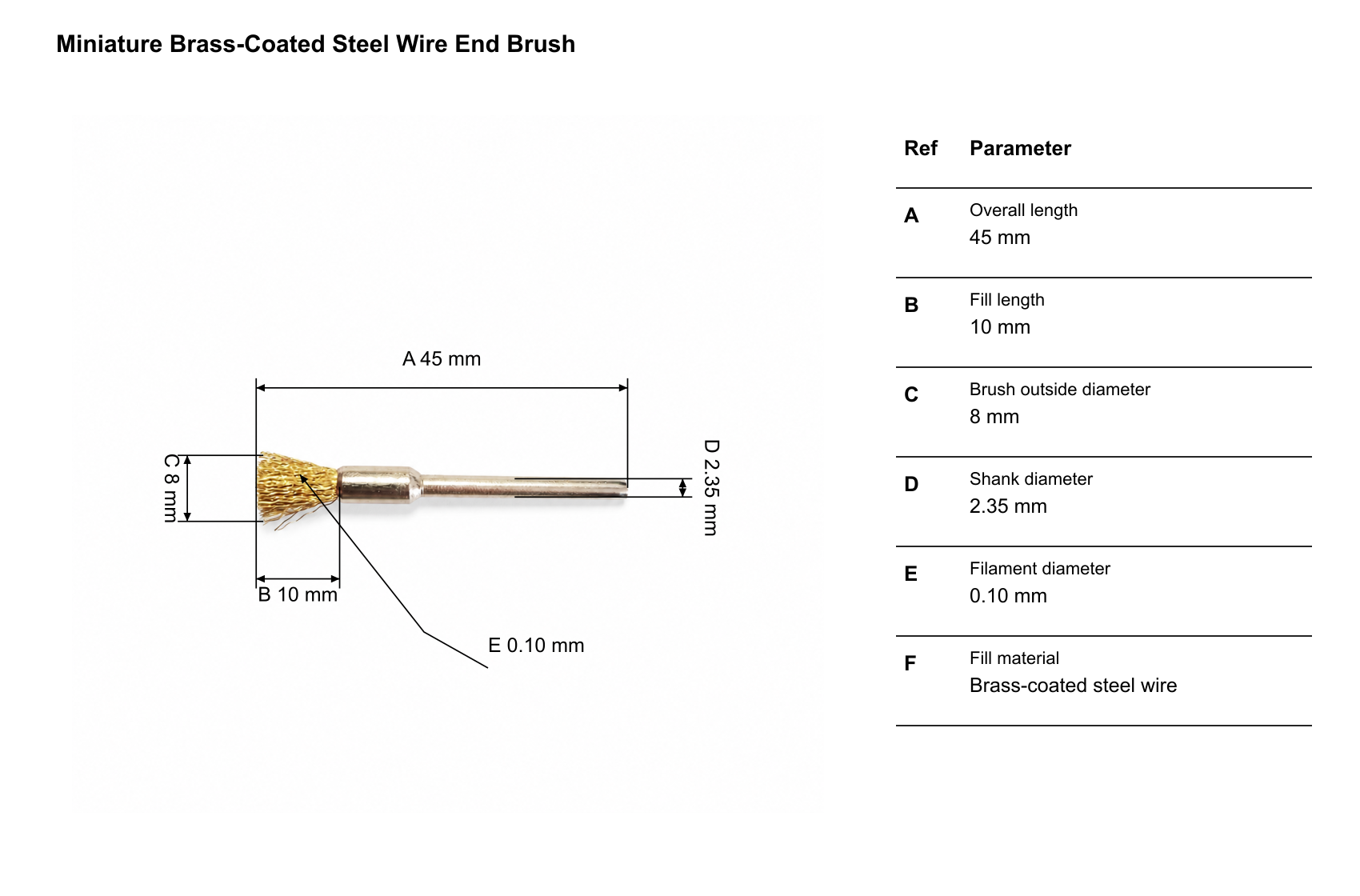
Parameter | Reference configuration |
|---|---|
A — Overall length | 45 mm |
B — Fill length | 10 mm |
C — Brush outside diameter | 8 mm |
D — Shank diameter | 2.35 mm |
E — Filament diameter | 0.10 mm |
F — Fill material | Brass-coated steel wire |
Fill profile | Fine crimped wire with a flared tip |
Mounting | Straight shank for a compatible chuck or collet |
Ferrule material | Metal |
Maximum operating speed | Specify for the final brush and tool combination |
Product Features
Miniature Working End
The compact flared tip provides contact around small accessible features.
Brass-Coated Steel Wire
Fine 0.10 mm crimped brass-coated steel wire forms the flexible working bundle for controlled detail brushing on compatible surfaces.
Long Narrow Shank
The slim shank provides reach while keeping the mounting envelope compact.
Small Metal Ferrule
The short ferrule supports the fine fill without a large housing near the contact area.
Customization
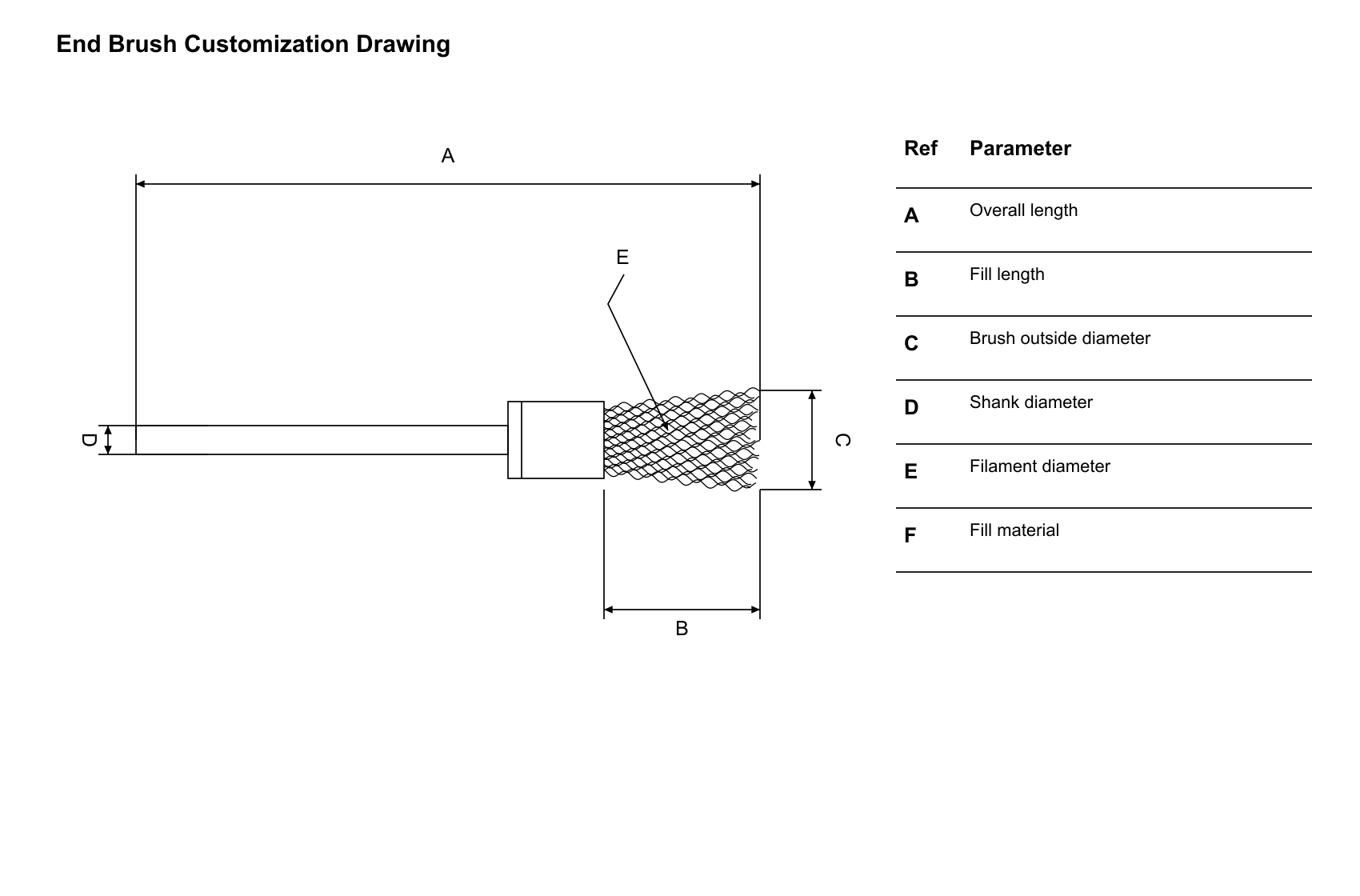
Provide the workpiece material, surface condition, access dimensions and desired finish, together with the tool holder and operating conditions.
Specify overall length, exposed fill length, brush diameter, shank diameter and wire diameter. The brass-coated steel wire fill density and working profile can be configured for the application.
Applications & Operating Conditions
Small Part Detailing: Localized brushing of compatible small components.
Recess Cleanup: Removing loose deposits from accessible fine features.
Tooling Maintenance: Detail cleaning on suitable fixtures and tooling surfaces.
Surface Preparation: Preparing small accessible areas before the next finishing step.
Secure the shank in a compatible holder with adequate engagement, maintain tool clearance and use controlled tip contact. Follow the supplied brush and machine speed limits; excessive pressure or prolonged contact can spread the fill and affect the surface. Verify suitability for the workpiece and any coolant or chemical exposure before production.
Bulk Order Packaging
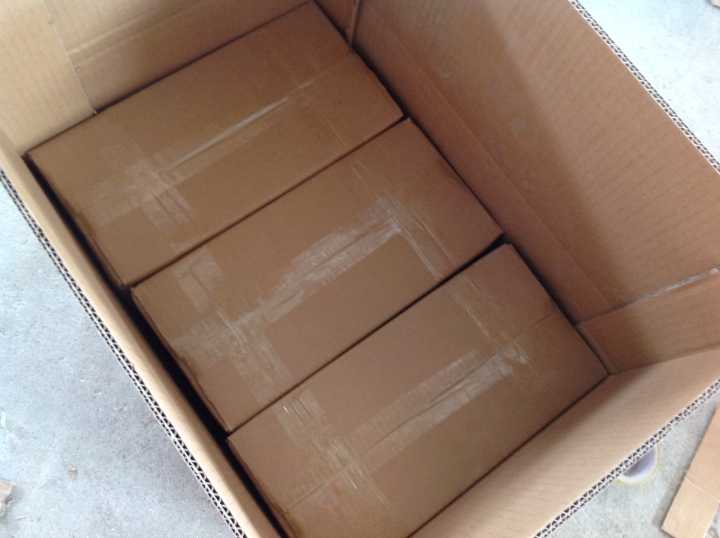
Protect the brush head and shank during handling and transport. Separated inner packs or protective wrapping can be arranged to limit contact between brushes.
Carton layout, pack quantity and labels are agreed with the order. The packaging image illustrates a general carton packing method; final packing depends on the brush configuration and shipment.
Product FAQ
What is the fill material?
The fill is brass-coated steel wire. Include the workpiece material, coating requirements and desired surface result when specifying the brush.
Where is fill length measured?
Fill length runs from the ferrule opening at the filament root to the working tips. It excludes the metal ferrule and the shank.
Can the dimensions be customized?
Yes. Provide the required brush diameter, fill length, overall length and shank size, plus the available working space and holder details.
What operating speed should be used?
Use the rating agreed for the supplied brush and the tool, and observe the lower applicable limit. The required speed depends on the configuration, workpiece and process.
How should the brushing result be checked?
Trial the specified brush on a representative workpiece using controlled contact. Check the surface finish, edge condition and any dimensional sensitivity before establishing production settings.